


SUNY microcredentials are compact academic credentials—courses or courses and internships and/or preparation for an industry certification, taught by SUNY faculty that empower you with essential skills, knowledge, and practical experience in high-demand fields. SUNY microcredentials were intentionally designed to meet you where you are and to provide multiple pathways to success. SUNY microcredential students have a wide range of life and career goals that include:

Seasoned professionals looking to add specialized skills to advance or make a change.

Dedicated adults who have been away from the workforce for a while and are looking to come back.

Innovative workers who need to upskill to keep pace with changes in their job or to advance

Current students and recent graduates who want to add certifications or complementary skillsets to stand out in a competitive job market.

Anyone seeking to leverage microcredentials to meet any career goal, plus earn college credits to earn or finish an initial or advanced degree.
With every microcredential we want you to see a path to getting a job or advancing in a job. SUNY microcredential students already have degrees, have degrees in progress, or are exploring microcredentials as their first college experience. Learn more about our commitment to meeting you where you are:
SUNY is proud to support New York State Direct Support Professionals (DSPs), dedicated staff who support and advocate for and with people with developmental disabilities. Through a new series of microcredentials, now offered at 21 SUNY campuses, existing DSPs and those seeking to enter the profession can earn SUNY college credit and up to three national certifications through the National Alliance for Direct Support Professionals. This is a unique and time-limited grant-funded opportunity, in partnership with the New York State Office for People With Developmental Disabilities (OPWDD), that pays for your tuition, fees, books, an academic coach on every campus, and eligible students earn a $750 stipend for successful completion of each level.
Program details Explore campus options here
News about DSP program expansion:
Governor Hochul Announces $32 Million to grow Workforce to Support New Yorkers with Developmental Disabilities
Determine whether you prefer a campus that is geographically located near you or if a microcredential offered fully online would work for you. If you do not have a quiet place at home to work or a good internet connection or if you are interested in utilizing the campus computer center, in-person library and tutoring supports, then a local campus might be preferable. On the other hand, an online program offers flexibility, especially if you have a busy schedule or live far from the institution offering your desired microcredential. And online access to the library and student supports are available. You can sort to find microcredentials available fully online in the microcredential catalogue by going to the Filter by Delivery Tab and selecting ‘Online.’ You can verify which SUNY campuses are nearest you by viewing the SUNY map at this link and/or typing in your address.
For those returning to the workforce after time away or those in the workforce now, but seeking a change, it can be challenging to figure out which path is best. There are some free tools available to help you match your skills and interests to jobs or job categories such as the Career OneStop Skills Match Toolkit or the New York State Virtual Career Center which can be accessed by creating a NY.Gov ID. If you have been out of the workforce for some time, you might benefit from a microcredential that helps refresh essential skills, such as Microsoft Office or other fundamental tools commonly used in your industry. This can help bridge the gap and make you more competitive when re-entering the job market. Your experience in taking such a microcredential can help you plan next steps. From the SUNY microcredential directory, select Professional Development from the Main Category dropdown to see examples of these types of microcredentials.
Each SUNY microcredential description has been updated to indicate whether it is a good fit for those just starting out and seeking an entry- or junior-level position and/or if the microcredential can be used to add specialized skills for current professionals. If you have a clear idea of the field you are interested in and are seeking an entry level position, you may want to prioritize microcredentials that offer internships, industry certifications, or direct pathways to employment. Both can provide practical experience and enhance your resume, making you more attractive to potential employers. If you are already in the field and looking to keep pace or advance, you may want to look for microcredentials that stack to the bachelor’s level or graduate level.
Both your education background and your experience are important factors here. If you have a high school diploma or equivalent you may be looking for microcredential descriptions that indicate the microcredential is a good fit for those seeking to enter a given field. However, if you also have years of experience, you will want to look for references to microcredentials for existing professionals. If you have some college but no degree, check with an advisor at the campus offering the microcredential you are interested in to see if there is an opportunity to build on existing credits. If you are currently enrolled in a degree program at SUNY or elsewhere, please check with your faculty advisor before registering for the microcredential if you are hoping to have the academic credits apply to your degree program. There may be some cases where that is possible – especially if your current degree program has open electives, and other cases where a microcredential will not fit into your current degree program but could be a valuable addition. If you already hold a bachelor's degree or higher, you may want to look at graduate-level microcredentials. These programs are designed to provide you with advanced knowledge and skills, and they often focus on specialized areas within your field of study. Importantly, SUNY has a strong Credit for Prior Learning program and your previous employer-provided training or military experience can be considered for the award of academic credit by evaluation. Be sure to ask the campus offering your desired microcredential for additional information.
All SUNY microcredentials are prepared under the same quality rubric established by SUNY Trustee policy. They are of such quality that academic credit in registered and accredited degree programs can be issued. They have been developed in partnership with representatives from business and industry. SUNY microcredentials are recognized by the Business Council of New York State as a workforce innovation. SUNY's microcredential program is recognized as a national and international exemplar.
Microcredentials are designed to be completed faster than degree programs so that you can get into or advance in the workforce more quickly. Each microcredential has an indicated time within which it can be completed – 1 semester equals 15 weeks or less, 2 semesters equals 30 weeks or less. In most cases, you can complete the microcredential faster or take longer if needed.
SUNY microcredentials are available at a fraction of the cost of a full degree program but may be more expensive than some other credentials offered by individual companies or on popular online platforms. The distinction is that SUNY microcredentials are taught by SUNY faculty, award academic credit, serve as building blocks to degree programs wherever possible and are aligned to local, regional and state priority occupations. You will receive the skills, knowledge and experience you need to get a job or advance in a job.
In New York State, certain microcredentials at SUNY community colleges and technology colleges are eligible for a recently enacted New York State Part-Time Tuition Assistance Program for Non-Degree Credentials. Please see the Paying for Your Microcredential section below.
Yes. SUNY offers a number of microcredential series, levels I, II and II or beginner, intermediate and advanced that allow provided you with advancement toward a state or industry recognized credential. In addition, the majority of SUNY microcredentials are "stackable" to a degree, meaning that the credits from the microcredential can be applied toward the credit requirements of a degree program. Even most non-credit microcredentials at SUNY can be stackable as faculty will assess them for the award of credit by evaluation so that you can move forward on a path to an initial or advanced degree or advanced certificate.
Microcredentials can be a great fit for you if you are already in the workforce and may not be able to commit two- or four-years for a degree right now. You may be able to fit in a series of microcredentials in a more flexible timeframe that works for you and the plus side is that in most cases you earn academic credit toward a degree that can be used now or later. Microcredentials are also a great fit for any existing professional who needs to add specialized skills to keep pace in their job or to get a promotion. For those who have been out of the workforce for a while and need an academic credential or even a degree, microcredentials can be a more manageable way to get started. Many adult learners were concerned about starting with say five classes and preferred a smaller microcredential of say two classes that allowed them more time to get used to the college environment, for the first time or after time away. Finally, microcredentials can also be a great fit for students enrolled in degree programs who want to add skillsets complimentary to their major.

Build toward an initial or advanced degree

Bolster your qualifications

Add specialized skills for a career change or promotion

Gain practical experience with an internship
While a microcredential generally costs just a fraction of the cost of a full degree program, paying for an expense you may not have budgeted for is never easy. Listed below are five different ways to seek financial support to help you pay for your microcredential:
New York State Part-time Tuition Assistance Program (TAP) for Non-Degree programs
See the list of eligible microcredentials here and check back often as the list is updated every semester. This new aid program is administered by the New York State Higher Education Services Corporation and their website has additional details. A key eligibility factor is income: for 2024-25, your net taxable income cannot exceed $125,000 for dependent students; $60,000 for married students with no dependents; $30,000 for independent single students with no dependents. If you believe you earn less than the amount listed in the criteria above, apply by completing the FAFSA applications which will direct you to the NYS TAP application. Please note you have a lifetime of eight semesters of TAP, prorated for the number of credits you earn.
Employer or union tuition reimbursement programs
If you are currently employed, reach out to your Human Resources Administrator to see if your company or organization has a tuition reimbursement program.
Your Career One Stop Center or local Workforce Investment Board
Certain microcredentials may be eligible for federal WIOA (Workforce Innovation and Opportunity Act) funding.
Grant funding
Check with the campus offering your microcredential to see if they have grant funding from county, state, federal or philanthropic sources that would apply.

"Within the construction technology program, I took a Surveying Technician Microcredential that just completely changed my whole direction and I’m glad it did because it ended up being a passion for me. It’s worked out well for me for sure. If you have any kind of interest in construction or building, definitely get involved with the program or the microcredentials."
- Michael Lambert, Michael Lambert, Civil Engineer, Surveyor, Drone Pilot, TC3 Surveying Microcredential Alum
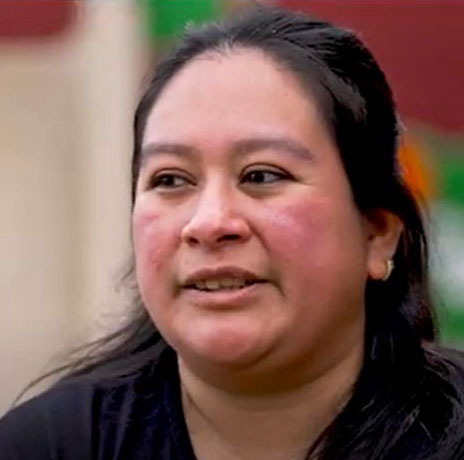
"I started as an Aide and then moved to a Teaching Assistant. The microcredential helped me to see, and also to show my children, that its never too late to go to college,"
- Yadira Torres Ocotitla, SUNY TC3 Early Childhood Microcredential Alum
Your SUNY microcredential is a valid college credential that should be widely shared and highlighted in any new job search or conversations about advancement. Whether you are an established professional, someone looking to enter or reenter the job market, or a current college student, completion of a microcredential signifies all positive things about you and your work ethic: your commitment to your profession, to your professional growth, and your willingness and interest in learning new skills. Your SUNY microcredential matters:
In New York State, 61% of business leaders cited Self-Motivation as the number one non-technical skill that they found missing in new hires! (2023 Business Workforce Survey, Business Council of NYS, NYS Department of Labor).
Nationally, "95% of business leaders said that they saw benefits from microcredentials…they show a willingness to develop skills (76 percent); demonstrate initiative (63 percent); and communicate competencies and skills (60 percent). Leaders were particularly interested in stackable credentials leading to a degree with 80 percent saying that increased their appeal." (2023 Colleges and UPCEA Survey).
Make sure everyone knows you are a SUNY Microcredential alum! Your transcript and your Digital Badge are both evidence of completion of your microcredential. The Digital Badge will list relevant skills and courses completed and often has a weblink to your work.
Receive updates once a month on the SUNY Microcredential program. Unsubscribe any time.
Request a 30 minute virtual meeting to find out how microcredentials could benefit your company or organization
Browse our full directory of hundreds of Microcredentials across 100+ in-demand fields!

