

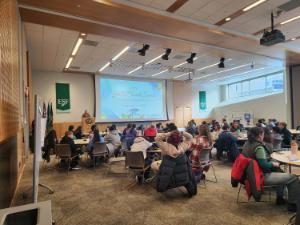
On a biting -10° day that served as a stark reminder of our planet’s increasing volatility, the SUNY College of Environmental Science and Forestry (ESF) campus buzzed with the warmth of purpose. The 2026 Central New York Youth Climate Summit (YCS) reached its maximum capacity this year, bringing together 200 students, 35 teachers, and 15 expert presenters for a day of radical collaboration. Under the theme "Climate Action Now: Youth Unite!" The summit moved beyond awareness toward practical empowerment, providing the scientific literacy and networking tools necessary to build "Climate Action Plans" for schools across the region.
STEM Content: Local Data, Global Impact
The day kicked off with a keynote from News Channel 9 Meteorologist Jim Teske, who bridged the gap between global trends and Central New York’s backyard. For the Master Teachers from the SUNY Cortland region in attendance, the session was a masterclass in grappling with advanced content to enrich classroom instruction. Roseann Inzalaco, a Central New York Region Master Teacher (Math) from the Oswego City School District, noted that the presentation was particularly enriching because math is the primary tool used to prove climate change. She plans to integrate Teske's data into her proportional relationships units so students can use local statistics to discover the reality of climate change for themselves. Similarly, Robyn Love, a Central New York Region Master Teacher (Biology) from the West Genesee Central School District, found deep value in the session on "environmental sentinels," noting that testing the blood and feathers of the Common Loon can reveal mercury levels in our freshwater ecosystems, a concept she plans to bring directly into her lessons on human impact.
Pedagogy and Professional Practice
The summit served as a collaborative space for educators to share expertise and adapt their practices to meet the needs of a generation facing a climate crisis. Katrina Vant, a Central New York Region Master Teacher (Technology) in the Central Square Central School District, reflected that deepening her understanding of issues like deforestation has provided fresh ideas for “connecting real-world environmental impacts to career opportunities for her technology education students.” This focus on concrete application was echoed by Margaret Barrett, a Central New York Region Master Teacher (Life Science) in the West Genesee Central School District, who found the summit invaluable for reaching out to community scientists. Following the event, she was able to secure several guest speakers for her school’s science club, providing her students with direct access to local experts.
Community and Student Connection
True to the NYS Master Teacher Program’s mission, the summit emphasized a deep knowledge of students and their unique local environments. Ryan Poley-Baier, a Central New York Region Master Teacher (Math) in the Solvay Union Free School District, emphasized the importance of staying conscious of the student experience, noting that a session on climate justice and privilege shifted his perspective. He shared that as an educator staying informed and thoughtful regarding these social complexities is crucial for the sake of his students. Jodi Cosbey, a Central New York Region Master Teacher (Chemistry and Forensic Science) in the Chittenango Central School District, was equally impressed by the community energy at the Green Fair, observing the enthusiasm as students interacted with vendors and collaborated on plans to address local impacts, from blue-green algae in Oneida Lake to the protection of shipwrecks in the Lake Ontario Marine Sanctuary.
Building the Climate Action Plan
The heart of the summit was the transformation of knowledge into leadership. Brooke Head, a summit Facilitator and Central New York Region Master Teacher (Agricultural Sciences) in the Homer Central School District, praised the long-term impact of the model, noting that the event has been a success since its inception because students always walk away with specific action plans in their own communities. This work aligns directly with the newly approved climate education requirements under the NYS Portrait of a Graduate. Approved by the Board of Regents in March 2026, these standards mandate that all New York students learn the causes, impacts, and solutions to the climate crisis across all grade levels. Scott Duda, a Central New York Region Master Teacher (Advanced Placement Biology) in the West Genesee Central School District, summarized the urgency felt by the faculty, stating that because presenters provided real-world data showing our species are in trouble, teachers now have the power to persuade the future scientists who will deal with these problems for centuries.
As the summit concluded, participants left the ESF campus with a shared vision. From new graduation pathways to local conservation, the ripples of the 2026 YCS will be felt long after the winter winds have died down.
Climate & Sustainability Resources for NYS Educators, Students & Families:
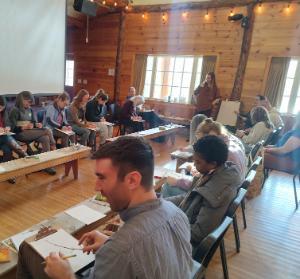 Educators from across the Mid-Hudson region and beyond recently gathered at The Ashokan Center in Olivebridge, NY, for the 3rd Annual Sustainability Conference Centering Biodiversity and Decarbonization. This immersive event co-organized with the Mid-Hudson Teacher Center’s Science and Sustainability Program, led by Samrat Pathania, a Master Teacher Emeriti. This conference brought together NYS Master Teachers and regional environmental leaders to strengthen the bridge between climate science and K-12 classrooms.
The gathering was particularly timely, as it directly supports the newly approved New York State Portrait of a Graduate framework, which officially integrates climate education as a core component of student success. By aligning classroom instruction with the competencies required by this state mandate, conference attendees are positioning themselves at the forefront of a shift that prepares students to be informed, resilient stewards of a changing world.
The day opened with a powerful keynote by Tim Guinee, President, Climate Action Now and New York Legislative-Action Director with The Climate Reality Project New York State. The discussion moved beyond the "what" of the climate crisis into the "how" of New York’s policy response, emphasizing the teacher's role as a vital link in student response. "The speakers inspired us to take action and be the change we wish to see in our world," noted Stephanie, a third grade teacher in the Arlington Central School District and a Mid-Hudson Region Master Teacher, who found the session a motivating call to climate advocacy.
A Holistic Approach: STEM and Mental Health
This year’s conference highlighted a critical, often-overlooked dimension of sustainability education: the emotional impact on students. The inclusion of NYS Master Counselors provided a unique perspective on "Climate Anxiety" and the toll student mental health can take as they navigate complex environmental challenges.
Rebecca, a High School Counselor in Hyde Park CSD and Mid-Hudson Region Master Counselor, noted the value of this cross-disciplinary networking sharing that the event allowed her to explore potential collaborative opportunities such as addressing the toll on student mental health as they learn about climate change. This holistic approach ensures that as we build STEM knowledge, we are also building student resilience.
Connecting Content to the Classroom
The conference reflects the NYS Master Teacher Program’s core framework integrating STEM content, pedagogy, and community knowledge. Workshops ranged from biodiversity and data visualization to a unique session titled "We All Wear Clothes: Teaching Sustainability Across Content Areas Through Textiles," which used textiles to teach material science and consumer ethics. Patricia, an Elementary Teacher in Mahopac CSD and Mid-Hudson Region Master Teacher, emphasized the shift in student engagement: "When students see how science relates to issues affecting their communities and the planet, the learning becomes more meaningful."
Beyond the Classroom: Youth Leadership
A major focus of the day was empowering the next generation. A Session titled, “Youth Climate Summits That Center Voice, Action, and Hope” provided educators with blueprints to help students lead sustainability efforts within their own school districts. Nicole, a Regents Chemistry and concurrent Dutchess Community College teacher in the Biology, Millbrook Central School District and Mid-Hudson Region Master Teacher, shared that the experience would directly influence her work by "integrating more real-world climate data and interdisciplinary problem solving" into her curriculum.
The Road Ahead: More to be Done
While the Mid-Hudson region continues to build significant momentum, the work of climate literacy is an ongoing, statewide mission. This commitment reached a historic milestone in March 2026, when the New York State Education Department Board of Regents officially approved the inclusion of Climate Education within the Portrait of a Graduate framework.
This policy requires that all climate-related curricula focus on the causes of climate change, its environmental and societal impacts and the development of actionable solutions. This shift ensures that every New York State graduate possesses a fundamental understanding of environmental stewardship and critical thinking skills necessary to navigate a changing world.
To truly prepare students for a changing world, the Master Teacher Program is committed to continuing to help teachers integrate sustainability into every corner of the New York State curriculum. The NYSMTP remains committed to this growth, but the journey requires collective action, a mission reinforced by SUNY’s system-wide dedication to sustainability and environmental leadership across all 64 campuses.
Climate & Sustainability Resources for NYS Educators, Students & Families:
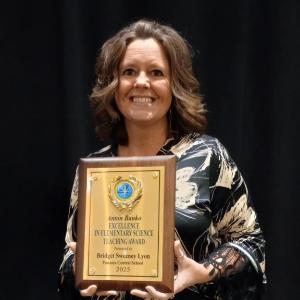 There is a distinct synergy that occurs in a classroom where students are empowered to investigate biological decomposition on a slice of bread or utilize meteorological data to track a passing storm. At the center of this inquiry-based environment is Bridget Lyon, this year’s recipient of the Anton Banko Excellence in Elementary Science Teacher of the Year Award.
Presented at the 2025 STANYS Conference, this statewide honor is reserved for one K–6 educator in New York who doesn't just teach science, but lives it. For Bridget, a Western New York Region Master Teacher from the Panama Central School District, the award recognizes a career built on evidence-based instruction, innovation and a signature enthusiasm often compared to the iconic “Mrs. Frizzle.”
A Win Driven by Community
While the award itself is a career milestone, the most meaningful part for Bridget began within her professional network. She was nominated by her fellow Master Teacher colleagues who recognize the rigorous curriculum mapping, phenomena-based lesson design, and collaborative spirit she brings to the field.
“Being nominated by this community was such a rush,” Bridget shared. “It was a professional validation. To be recognized by peers who truly understand the interdisciplinary nature of our work and the dedication required to engage young learners... that means everything to me.”
The "Frizzle" Method: Inquiry and Engineering
In Bridget’s classroom, the motto is simple: “Go Forth and Be Fabulous.” Known affectionately by her students as their own real-life Mrs. Frizzle, she treats science as an open-ended conversation rather than a set of facts to memorize. Whether it’s through the "STEM Wars" initiative she launched, a school-wide event that has every single student hands-on with engineering or the reflective journals her students keep, her focus is on the thinking, not just the results.
“I want them to leave my room with something they can actually use in the world,” she explains. For Bridget, that starts with a relationship. Bridget prioritizes the social-emotional foundations of learning, knowing that when students feel a sense of belonging, they are more likely to take risks in scientific experimentation and data analysis.
Professional Growth Within the Master Teacher Program
Bridget credits the NYS Master Teacher Program as the catalyst for her instructional leadership.
Through professional development workshops like Building Thinking Classrooms and ongoing dialogue with her Master Teacher peers, she has refined her approach to active learning and problem-based instruction. This professional community in the Western New York region provided a space to analyze pedagogical shifts, pivot instruction strategies and stay energized in an ever-changing educational landscape.
Looking Ahead
Bridget is now expanding her impact by leading a Professional Learning Team (PLT). There she will mentor other other educators in cultivating inquiry-driven classrooms and sharing the “spark” of scientific discovery across the state.
We are incredibly proud to celebrate Bridget’s achievement. Thank you, Bridget, for demonstrating that exemplary science teaching is a blend of technical rigor, creative inquiry and a profound commitment to student success.
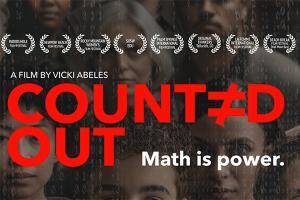 This past fall, SUNY Buffalo State, SUNY Cortland, SUNY Geneseo, and SUNY New Paltz campuses that serve as regional hubs for the New York State Master Teacher Program hosted in-person screenings of Counted Out for Master Teachers and Master Counselors. Designed and facilitated by NYSMTP Regional Directors, this professional learning experience invited educators to explore the unforeseen ways math shapes our daily lives and influences access, opportunity, and civic participation.
In a period dominated by data, algorithms, and constant information exchange, Counted Out highlights how math shapes our everyday experiences, affecting the news we consume, the opportunities we access, and even how we understand the world around us. Yet the film exposes a troubling reality: many Americans do not consider themselves “math people,” and math proficiency often declines as students advance through school. The consequences extend far beyond the classroom.
Through personal stories, expert commentary, and real-world examples of educational innovation, Counted Out challenges viewers to rethink what math literacy means, who has access to it, and why it is essential for an equitable and thriving democracy. For Master Teachers and Master Counselors, who are committed to improving STEM learning across New York State, the film sparked reflection, conversation, and inspiration.
Many Master Teachers shared how the documentary connected directly to their teaching practice. Lauren Lewis, a Central New York Region Master Teacher from the Phoenix Central School District, found the film eye-opening, particularly the segment about an algebra class in Miami designed for struggling learners. She noted, “many of my students do not like math and feel they are not good at it.” The screening, coupled with the follow-up discussion, inspired her; “ I plan to share this with teachers in my building during our staff development day, with hopes that we can design engaging activities that connect math concepts to real-world applications.”
Similarly, Tearney Hirschey, a Central New York Master Teacher from the Baldwinsville Central School District, reflected on the “inequities students face in accessing meaningful STEM opportunities.” The film reinforced her commitment to inclusive teaching practices and representation in her classroom, ensuring that every student feels capable and encouraged to explore STEM with confidence.
Other educators were struck by how numbers and statistics can be misleading when presented without context. Jessica McKay, a Finger Lakes Master Teacher from the Caledonia-Mumford Central School District, emphasized that students and adults alike struggle to interpret data, making statistical literacy a critical skill. Insights from the film encouraged her to teach students not only how to calculate and use statistics but also how to critically question results and verify accuracy.
Szilvia Tobak, a Mid-Hudson Region Master Teacher from the Newburgh Enlarged City School District, who teaches chemistry, shared that the documentary opened her eyes to the broader societal and political implications of math education. Even in non-math classes, math is a daily necessity, and students often struggle with scale, proportions, and quantitative reasoning. Counted Out inspired her to revisit classroom practices, emphasizing multiple approaches to problem-solving so students understand that their thinking matters and that there are many ways to reach a solution.
Colette Jurman, a Mid-Hudson Region Master Teacher from the Rockland County School District and BOCES appreciated the film’s focus on the human side of STEM, including collaboration, persistence, ethical considerations, and curiosity. She highlighted how these insights reinforced her approach to mentoring students, fostering interdisciplinary learning, and sharing innovative strategies with colleagues.
The documentary also reminded Master Teachers of the profound responsibility and impact educators have on students’ futures. Stephen Johnson a Western Region Master Teacher from the Amherst Central School District, noted that the film reinforced the importance of mindful teaching choices, while William Gallagher a Western Region Master Teacher from the Frontier Central School District, reflected on how classifications and long-term perceptions of students’ abilities can shape their relationship with math. Elise Connor, Finger Lakes Region Master Teacher from the Pittsford Central School District added that she now considers math literacy not just as a skill but as a matter of civic empowerment, recognizing how access to numeracy can include or exclude individuals from fully participating in society.
Through professional learning opportunities like this, NYSMTP educators engage in critical dialogue about math literacy, equity, and student opportunity. The reflections and commitments shared by Master Teachers and Master Counselors highlight the program’s mission: to empower exceptional STEM educators, support their ongoing professional growth, and expand access to high-quality STEM learning for all New York students.
As Counted Out illustrates, a mathematically knowledgeable society is essential for an informed and engaged population. By integrating these insights into their classrooms, NYSMTP educators continue to lead the way in preparing students to navigate, understand, and shape the world around them. To learn more about the film Counted Out and its exploration of math, equity and democracy, visit the official documentary website.
In November 2025, the University at Albany opened the doors of its state-of-the-art Emerging Technology and Entrepreneurship Complex building to more than 400 children, families, and community members for the annual STEM and Nanotechnology Family Day. Sponsored in part by the New York State Master Teacher Program (NYSMTP), the event brought together over 35 Master Teachers from 17 Capital Region school districts alongside UAlbany faculty, STEM educators, and volunteers for a full day of hands-on exploration, discovery, and fun. With more than 20 interactive stations designed for elementary and middle school learners, the program continued its mission of making science accessible, exciting, and connected to the real world.
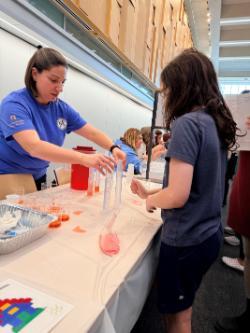 Throughout the vibrant building filled with boisterous energy, families encountered an array of activities designed to spark curiosity and highlight the power of STEM education. The ever-popular oobleck station gave students a chance to mix their own non-Newtonian fluid using only cornstarch and water, an experiment that inspired laughter, amazement, and plenty of messy hands. Children then tested oobleck’s surprising properties with NYSMTP Regional Director and State University of New York at Albany Instructor, Department of Educational Theory and Practice, Dr. Rory Glass in an exhilarating egg drop challenge, where the gooey substance successfully protected eggs dropped from high above. Other demonstrations allowed the student attendees to experiment with magnetic oils, observe 3D printing in real time, try on a clean room suit, build with Legos, and test robots that zipped, spun, and danced across the floor. Families also enjoyed guided tours of the visually striking Science-on-a-Sphere room, offering an immersive look at Earth and space through dynamic, data-driven projections.
The enthusiasm of the day was reflected in feedback from attending families. One parent shared, “My two children loved the hands-on activities. Their favorite activities involved learning about different kinds of clouds, playing with the oobleck, and seeing the egg drop. And, of course, the robots! The New York State Master Teachers were endlessly patient, energetic, and kind. I was impressed with their ability to answer many, many kid questions. All I had to do was step back and watch my kids as the NYS Master Teachers led them through various activities where they learned about science while having fun. My kids left full of excitement about what they had done and learned, while I left with armfuls of STEM-themed crafts they had made. We’ll be back next year!”
For the Master Teachers who volunteered, the event was equally meaningful. Many described the day as a reminder of why STEM education matters, both in the classroom and in the community. Alicia Tommasino, of the Cohoes School District shared, “I don't get to participate in outreach as much as I would like, but I was very grateful for the opportunity to participate on STEM and Nano family day. I definitely would use some of these demonstrations in my own class and it has influenced me to see how I can incorporate nano more in my class, just because of the connection to the real world and the workforce opportunities.” Kevin Shannon of the Bethlehem Central School District reflected on the event’s impact on future programming, noting, “I picked up various fun and engaging demonstrations that I can use with elementary schools in our district. This will help get younger students excited about STEM.” Allison Hudson of the South Glens Falls Central School District echoed this sentiment, adding, “I am able to gather resources and knowledge to bring back to my classroom. I taught some nano lessons over the summer and plan to continue using them throughout the school year.”
STEM and Nanotechnology Family Day continues to demonstrate the transformative role of the NYSMTP in advancing STEM education across New York. By connecting Master Teachers with families and young learners, the event highlights the Program’s commitment to leadership, community impact, and making science both engaging and approachable. As the excitement from this year’s event carries forward, NYSMTP looks ahead to expanding outreach efforts and inspiring the next generation of scientists, engineers, innovators, and critical thinkers.
In October 2025, K-12 educators, counselors, and higher education faculty from across New York State participated in a virtual presentation hosted by the New York State Master Teacher Program in partnership with SUNY Workforce Development and Upward Mobility titled “SUNY Workforce Development: Strengthening Career Pathways for NYS Teachers and Students,” led by Chris White, SUNY Vice Chancellor for Workforce Development and Upward Mobility. The session brought together 95 teachers, 33 counselors, and 2 higher education instructors representing 87 unique school districts.

Vice Chancellor White shared insights outlining how emerging technologies such as artificial intelligence, robotics, quantum computing, and 3D printing are reshaping industries across New York State. He emphasized that while technology continues to advance at an unprecedented pace, human qualities such as communication, empathy, problem solving, and adaptability remain essential and highly valued. Technology, he noted, should be viewed as a tool to support human creativity and connection not a replacement for educators.
Addressing a common misconception that artificial intelligence will replace teachers in the coming decades, White reflected on his experience at the U.S. Department of Labor, where he observed a significant gap between educators and the pace of innovation occurring in industry. Even highly skilled and dedicated teachers and counselors, he explained, often have limited opportunities to stay current with workforce trends and emerging fields.
This gap led him to launch the Teacher Ambassador Program at the New York State Department of Labor and continues to inform his work at SUNY. Through the Office of Workforce Development and Upward Mobility, White emphasized SUNY’s commitment to partnering with campuses, school districts, BOCES, and educator-focused organizations like NYSMTP to ensure teachers are aware of industry changes and the opportunities available to their students.
White also highlighted the importance of “future-proof” skills for both students and educators skills that support resilience in the face of exponential change. He underscored the need for ongoing collaboration between education and industry, noting the importance of both listening to the business community and helping industry better understand the needs of educators and students. Students and workers, he stressed, are not commodities, and aligning systems to meet the evolving needs of New York’s economy requires sustained, iterative partnership.
Teachers responded enthusiastically to the presentation, highlighting its relevance to their work in the classroom. “My key takeaway from this session is how much the workforce is changing and how we as educators need to change the way that we are teaching our students,” reflected Master Counselor, Jen Gibson of the Owego Apalachin Central School District. “The process of joining the workforce is not necessarily linear anymore. There is now a greater importance on skills like problem solving and communication than on content knowledge.”
For Gregory Izzo, a Long Island Master Teacher and middle school educator from the Westhampton Beach School District, the presentation reinforced the need to integrate interpersonal skill development into daily instruction. “This event allowed for a better understanding of our population shifts in the United States and the skills that are most necessary for future careers,” he shared. “There are certain skills like self-motivation and communication that require more intentional instruction in my classroom. I will continue to target the interpersonal skills needed in the future.”
Kenneth Goodsell, a Finger Lakes Master Teacher of the East Irondequoit Central School District, noted that the session provided actionable strategies for connecting classroom learning with career readiness. “After attending the SUNY Workforce Development workshop, I came away with a much clearer understanding of how we can begin transitioning from traditional classroom instruction to more intentional, career-aligned pathways for our students,” he said. “The workshop emphasized the importance of connecting academic content with real-world experiences through internships, apprenticeships, and micro-credentials.”
Higher education faculty also found the presentation valuable for aligning teacher preparation programs with current workforce needs. Karin Dykeman, a SUNY Oswego Assistant Professor and NYS Master Teacher Emeritus, shared that she gained insights she could bring to her preservice technology and engineering education students. “SUNY has a lot of opportunity to support students and citizens in entering the workforce,” Dykeman stated. “A lot of the needs and trends mentioned (of both students and industry) could be supported in K-12 education by expanding CTE and technology education programs; students in these programs are learning and doing much of the skills and work needed for careers and the future.”
Educators also expressed appreciation for learning about current and emerging career opportunities across the state and how this information can directly inform their teaching practice. Kathleen Donovan, Mohawk Valley Master Teacher of the New Hartford Central School District, shared that the presentation “broadened my understanding of current and emerging career opportunities across New York State” and provided “practical ideas for how to connect classroom instruction with real-world applications and workforce needs.”
SUNY continues to strengthen the bridge between education and employment by ensuring educators and counselors are equipped with current workforce knowledge and strategies to prepare students for success in a rapidly changing world. By deepening understanding of workforce trends and future-ready skills, the presentation reaffirmed the critical role educators play in helping students navigate and thrive in the future of work. This focus aligns with the New York State Master Teacher Programs’s commitment to developing teachers and counselors expertise across key knowledge domains and empowering them to lead professional learning that supports students’ interest in STEM studies and careers.
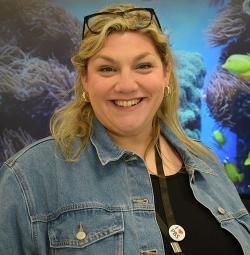 Samantha Gordon, a physics teacher at Wantagh High School and member of the New York State Master Teacher Program (NYSMTP), Long Island region, located at Stony Brook University, was honored with the Science Teachers Association of New York State (STANYS) Excellence in Teaching Award. This annual award recognizes educators who exemplify excellence in science instruction, leadership, and the creation of meaningful opportunities for students to engage in science. Over the years, several NYSMTP teachers have been awarded https://stanys.org/ExcellenceInTeaching.
For Gordon, the award is both a personal and professional milestone. “Receiving the STANYS Excellence in Teaching Award is deeply meaningful to me both personally and professionally,” she shared. “Personally, it’s an affirmation of the time, care, and energy I’ve invested in my students and in my own growth as an educator. Professionally, it feels like a recognition from colleagues I admire, which motivates me to continue striving for innovation and excellence in science teaching.”
Her participation in the New York State Master Teacher Program has been a critical part of that journey. “The NYS Master Teacher Program has been an incredible source of inspiration and professional growth,” Gordon explained. “Collaborations with fellow Master Teachers through workshops, PLTs, and regional cohort meetings have challenged me to refine my practice and think more deeply about how to make science accessible and engaging for all students. The opportunities to learn from peers across disciplines helped me bring fresh strategies back into my classroom, which I believe contributed to this recognition.”
At the heart of Gordon’s work is a commitment to empowering students. “More than anything, I want my students to leave my classroom with confidence in their ability to think critically, ask questions, and persist through challenges,” she said. “Science content is important, but the skills of curiosity, resilience, and collaboration are what I hope will truly stick with them.”
She also sees her award as a celebration of the teaching profession as a whole. “Honors like the STANYS Award help spotlight the important and challenging work teachers do every day,” Gordon noted. “They send a message that teaching is a profession worth celebrating, and that excellent teaching has a ripple effect far beyond one classroom.”
Looking ahead, Gordon plans to expand opportunities for students to engage in authentic, hands-on science experiences and to mentor fellow educators. “I’d like to keep building connections between teachers, schools, and professional organizations so that we can collectively elevate science education in New York State,” she said.
Through her innovative teaching, collaborative leadership, and passion for student success, Samantha Gordon exemplifies the spirit of the Master Teacher Program and the excellence recognized by the STANYS award.
Photo courtesy of Wantagh School District
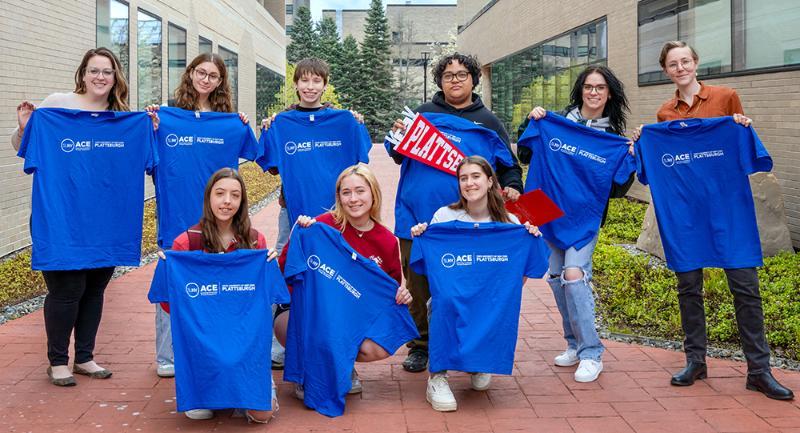
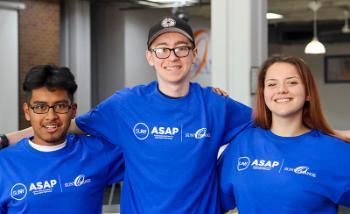 NYS Master Counselors met with Dr. Casey O’Brien, Assistant Vice Chancellor for Student Success and Transformational Initiatives to learn about SUNY’s ASAP|ACE program that provides academic, financial, and personal support to help undergraduate students stay on track and graduate on time. Advancing Success in Associate Pathways (ASAP) focuses on associate degree completion and Advancing Completion through Engagement (ACE) is designed for bachelor’s degree completion.
Fall 2024 enrollment reached 4,270 students across all 25 participating SUNY Campuses. Based on the City University of NY’s successful model, the goal of the ASAP|ACE program is timely degree completion, reducing out of pocket costs for students, and keeping them on track by removing barriers to full-time study. Pell-eligible students are encouraged to apply for post-admission seats in these programs when they have decided to attend a participating SUNY school. Preliminary analyses of the inaugural cohort of ASAP|ACE show that students have higher credit completion rates and higher Spring-to-Fall persistence rates when compared to non-program peers. With Governor Hochul’s additional support, SUNY plans to grow ASAP|ACE to 10,000 students over two years.
Immediately, the Master Counselors recognized what a valuable program this could be for their students. Long Island Master Counselor in the Westhampton Beach Union Free School District, Erika Habersaat, said “This was a really informative presentation on a program I did not know much about. I quickly thought about a number of my students who could be good fits for either ACE or ASAP. I've already reached out to two seniors who have been accepted to participating schools and encouraged them to look into it. I'm also working with juniors right now who can benefit. I contacted the office of a local participating school, Farmingdale State College, and they responded quickly. I also passed it on to the other counselors in my office.”
Dr. O’Brien said, “SUNY ASAP|ACE is transforming the way we support students by providing comprehensive resources that remove financial, academic, and personal barriers to degree completion. I’m thrilled that SUNY now offers this proven and evidence-based program at multiple campuses across the state. The dedication of New York State Master Counselors is invaluable in connecting students to programs like ASAP|ACE, and I sincerely appreciate their commitment to guiding students toward success.”
Master Counselors discussed the ways they could spread the word about these programs including adding brochures to junior year college readiness packets, keeping the map of ASAP|ACE programs in their offices, and identifying possible Pell-eligible students for referrals. The Master Counselors were eager to connect directly with the ASAP|ACE directors to put their graduating seniors on a path to success, right from the start. Master Counselors are now considering how they can continue to share this information with their local counselor associations and within their districts. Capital Region Master Counselor in the Shenendehowa Central School District, Megan Gifford, said “The SUNY ACE/ASAP workshop was outstanding. It was very exciting to learn about this program for students who have financial need. I will present this information at my department meeting next week and am already thinking about good-fit students to connect with ASAP|ACE. Thank you.”
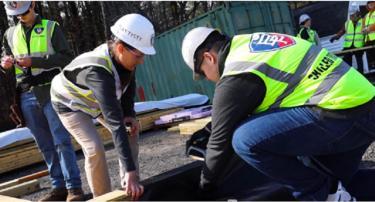 At the base of the Adirondack Mountains, Broadalbin-Perth Junior/Senior High School is home to an innovative Construction and Skills Trades Program that was featured on HGTV. Designed and led by Broadalbin-Perth Technology teacher and New York State Master Teacher Nicole Battisti (Mohawk Valley SUNY Oneonta Region, ‘23), Battisti began the program in 2021 as a way for her students to learn and implement self-reliant homeownership skills as well as advanced construction and trade careers skills.
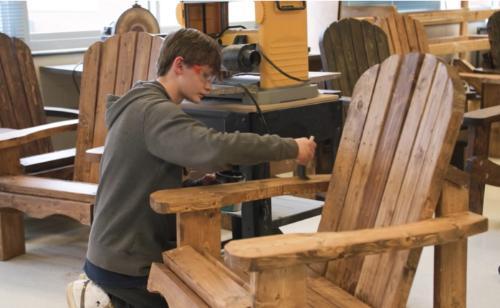
Beginning in 9th grade, students learn about machine safety, power tool use, and residential wiring, plumbing, and drafting. Progressing through the program, students build on introductory skills to include advanced woodworking and construction, where students build furniture, pole barns, and tiny homes alongside local contractors who volunteer their guidance.
“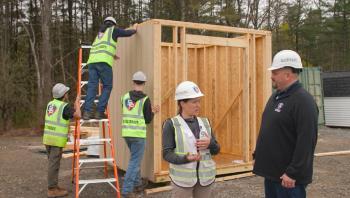 Our program wouldn’t be what it is without our community,” Battisti states, expressing her appreciation for John Young, owner of Kucel Contractors Inc., and Erik Kohler, owner of Kohler Builders LLC.
Prior to becoming a NYS Master Teacher in Technology, Battisti worked in the construction industry herself, in design at an engineering firm as well as in the field with a contractor. Battisti has also completed renovations on her own home. Her passion for STEM careers and the opportunities she has created for her students to engage in hands-on, real-world experiences has excited students, generated pride in their work, and filled the program to capacity.
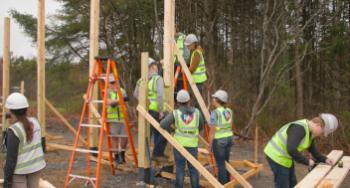 In May 2024, the Broadalbin-Perth community overwhelmingly voted in approval of a $37,845,000 capital project to include an expansion of the Construction and Skills Trades Program. Battisti is thrilled to accommodate more students in the program, create dedicated spaces for woodworking and trades, and provide additional opportunities in metalworking and welding. The expansion also includes an outdoor space accessible from the classroom where students build and sell tiny homes. Proceeds from the sales are reinvested back into the program to purchase materials for the following year’s projects.
Battisti is a passionate educator, committed to providing the most innovative, engaging, and supportive learning environment for her students, continually evaluating, refining, and adapting her practice to better meet their needs. Her dynamic approach not only ignites interest in STEM careers but also empowers students to tackle real-world projects that make a meaningful impact on their community.
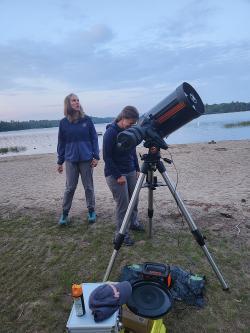
NYS Master Teachers from around the state returned to the SUNY Cortland Outdoor Education Center at Raquette Lake this summer to immerse themselves in three days of learning with NYS Master Teacher Program Regional Director for Central New York, Betsey Schuhle. The series of professional learning opportunities in the Adirondacks featured distinguished professors from SUNY Cortland, focusing on the advancement of STEM knowledge that Master Teachers can bring back to their K-12 classrooms.
Master Teachers explored the waterways with SUNY Cortland Distinguished Service Professor Dr. Beth Klein, during a biology kayaking excursion, discovered the geological marvels at the Barnett Garnet Mine with SUNY Cortland Distinguished Teaching Professor Dr. Robert Darling, and delved into the wonders of the night sky with SUNY Cortland Lecturer and Planetarium Director, Sean Nolan, and Instructional Support Technician, Zachary Eridani, through expert-guided stargazing. Cooperative and leadership skills were strengthened through ropes course activities. Master Teachers explored the beauty of the Adirondacks including wildlife marshes with renowned guide Ed Kanze.
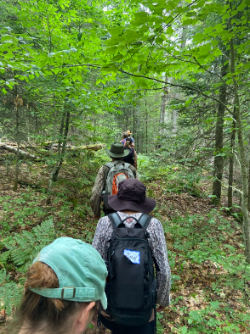
“The best part about this experience was the connections I made with other NYS Master Teachers. It was especially helpful and motivating to meet teachers from other regions than my own and I now have multiple resources to keep in contact with for many learning opportunities. I grew as a person by participating in the ropes course, [...] I will use the team building activities in my classroom, and some techniques and knowledge gained from spending time with Ed Kanze on our nature walk. What a wonderful experience that ALL Master Teachers should partake in!”
- Jillian Kellogg, Chenango Forks Central School District Kindergarten Master Teacher
“There are 3 primary areas that stand out for me, from this experience:
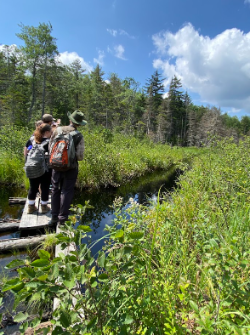
- Frederick Kowanes, Central Square CSD Earth Science and Environmental Science Master Teacher
“This experience is so invaluable. The opportunity to be with other educators to talk about content and students is beyond helpful and meaningful. It is a way to build my peer circle and have time to talk about struggles and successes from the previous year and about thoughts and ideas for the upcoming year.”
- Melissa Walls, Syracuse City SD Earth Science and Physics Master Teacher
 More than 100 participants gathered at SUNY ESF on a Saturday morning in February for the "CNY Youth Climate Summit - We are a Force of Nature" sponsored by the New York State Master Teacher Program and The Wild Center. Beth Krauss, Master Teacher Emeritus and biology teacher at Homer Central School District, organized the event with a team of Master Teachers from Central New York.
There were 61 students representing 13 schools including West Genesee, Liverpool , Altmar Parish Williamsville, Homer, Onondaga Central, Cincinnatus, Fayetteville - Manlius, 31 adults, including teachers from Wild Center, ESF, Belleville Henderson, OCM BOCES, All Saints Parish and St Mary's Parish, 20 presenters, and over 15 green fair participants in attendance. Over the last 7 years there have been between 350 and 400 students that have attended the program. The event allowed students from middle and high schools (7th through 12th grade) to come together to develop climate action plans to take back to their schools. School districts have taken on projects such as composting and solar panels as a result of the students' action plans.
Beth Krauss and the group of NYS Master Teachers, including Maggie Barrett (Camillus MS), Brian Christopher (LIverpool MS), Jessica Halsey (APW), Jason Mauro (OCS), Kristin Reichert (Cazenovia), Mark Sunheimer (Marcellus), Trish Winje (Eagle Hill), lead environmental groups in their schools and collaborate on how to bring the best environmental and climate information to their students. She’s facilitated the event since the beginning, seven years ago. She’s a biology teacher, but ecology has been her specialty, especially climate change and environment education.
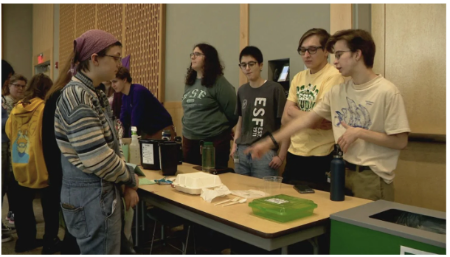 Ms. Krauss explained why the event made an impact on the students involved. "It's just awesome to have all these kids here, learning about the environment and learning about what they can do for the environment. How, even on a small scale, in their household, they can do something."
Having the event at SUNY College of Environmental Science and Forestry (ESF) for the last few years has been terrific for the students and teachers who attend the program. Students are able to spend time on a college campus, especially one that is dedicated to environmental science. The college also provides free resources for teachers who attend. Teachers can attend sessions with the students, or attend teacher-only sessions. There were two blocks of workshops for the day, with a special session for just teachers in each. For example, Kat Chambers and Chris Leece from OCM BOCES led a teacher workshop on Empowering Students to Combat Climate Change Through Public Policy. Amy Samuels and Stephanie Johnson from the Onondaga Environmental INstitute facilitated an interactive workshop introducing teachers to the Onondaga Creek Watershed Curriculum.
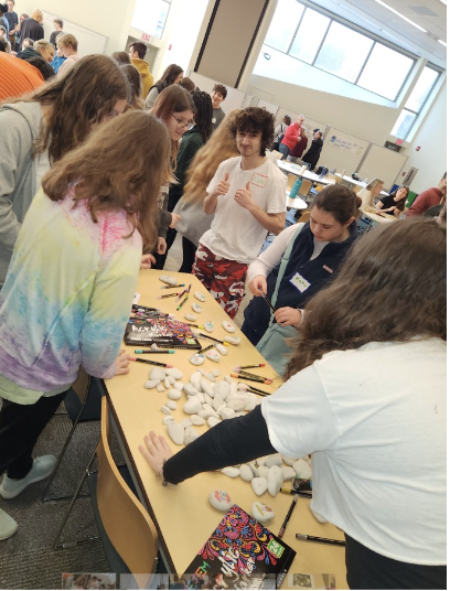 Marua Harling Stefl, Program Manager for “SUNY ESF in the High School” shared about the positive collaboration now in its 7th year: “ SUNY ESF has been excited to partner with the CNY Master Teacher’s group to host the Youth Climate Summit for the past few years. We feel that we can take a role in elevating the conversation by providing access to our faculty and staff who study this topic. ESF is an environmentally based college and climate change issues are part of every program we offer here. As an institution we are also working to make our everyday endeavors more sustainable and we can pass on those values to the participations in areas like program materials and catering. We also learn from the teachers and youth in attendance--their ideas and enthusiasm are so energizing. This is a tremendous opportunity for our K-12 outreach staff and our faculty. “
The annual Green Fair at the Summit allowed local environmental groups and agencies to highlight their work and careers in sustainability. There were a lot of interactive hands-on activities to engage the students. Agencies like the NYS Department of Environmental Conservation and the Onondaga Environmental Institute focused on environmental careers, while organizations like the ESF Mighty Oaks Student Association SustainabiliTEAM introduced students to initiatives happening at the college level.
Ms Krauss reflected on the impact of the day. “There’s a clear community impact, it’s great to see teachers and students working across districts and to have the students see that other young people are energized about the environment and sustainability. They were clearly excited about bringing their action plans back to their districts to implement, and that they could have a direct impact on their local community”. She noted that it was terrific to have students in 7th and 8th grade science clubs attend because if they get excited at the middle school level, she has observed that they will then more likely to be active in high school and interact with high school students who are environmentally minded.
The Summit adapts each year to current events and current topics in climate science, such as climate justice issues. Some teachers attended without students to find resources, connect with agencies, and to learn how to start and facilitate environmental clubs in their schools. It’s also been a way for teachers who bring students to interact with their students in a different way than in their home classrooms. They have time to work together as a team with their students to create the action plan at the end of the day.
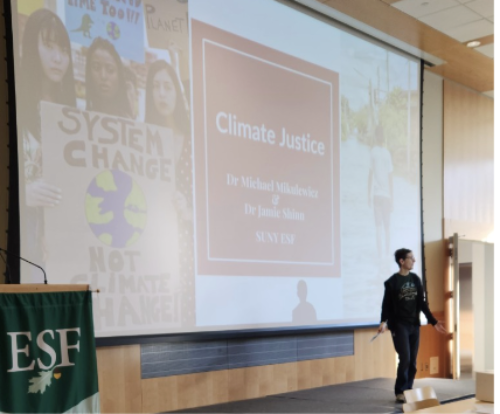
For NYSMTP Regional Director Betsey Schuhle,Central NY Master Teachers SUNY Cortland, one of the highlights of the day was the keynote talk on climate justice. EFS Assistant Professors Jaime Shinn and Michael Mikulewicz spoke to the students and teachers about climate justice and how the consequences of climate change are unequally distributed along lines of wealth and race. They spoke about their work, including equity studies in Kenya, the Dominican Republic, West Virginia and with the Native American population in Syracuse.
 A career exploration highlight was a presentation by New York State Energy Research and Development Authority (NYSERDA) about Road Trip Nation’s newly released docuseries, Empower State. The series follows three young adults as they explore New York State in search of clean energy career opportunities. The talk targeted students interested in pursuing clean energy careers. Another highlight was a workshop on how to combat “fast fashion” in daily life, from reducing consumption to upcycling clothing. Students transformed old t-shirts into dog toys, reusable bags and rugs and learned how a little paint can breathe new life into old clothing.
Dan Collins, Associate Director for ESF in the High School reflected on the impact of the day: “As the world continues to grapple with the reality, effects, and mitigation of climate change, it is more important than ever to educate and engage our future leaders, scientists, and citizens in hopeful, meaningful efforts to preserve our environment. With our unique mission, and as a State University, ESF is uniquely situated to partner with the Master Teacher program and help students and teachers understand what the current research is telling us, as well as how we can all be involved in the solutions. It is a great program that the Master Teachers work very hard to put together, and we are proud to partner with them in that effort. The program really meets students where they are, empowers them to make change in their own community, and charges them to improve our world.”
Ms Krauss summed up the day, “The students are empowered to create an action plan to bring back to their schools. It’s a great way for them to understand that they can make an impact to improve the environment on a local level. Whether they choose an environmental career or not, they have learned how to be good environmental stewards.”
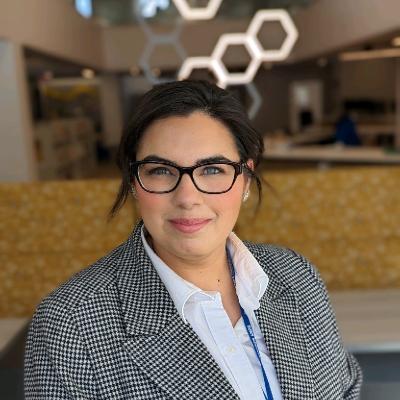
Thanks, Rosanne. I have some great first impressions of the program - it’s exciting and wonderful to see such enthusiastic counselors and teachers. It’s very promising to see professionals in education be so committed and energized about their professional practice.
Have there been any highlights you’d like to mention?
Well of course meeting the counselors and getting to know them! I have also really enjoyed developing and facilitating the counselor-led professional development facilitator training. The counselor-led professional learning opportunities are such an important part of the program so it’s great to be able to develop and provide some guidance for the facilitators of those groups.
Can you tell me a little bit about one of the professional development opportunities that you’ve been working on for the program?
I am very much enjoying our miniseries featuring Jody Mullen and play therapy. Dr. Mullen is the Coordinator of the Mental Health Counseling and Play Therapy Programs at SUNY Oswego, and a recognized expert in play therapy and mental health counseling. It’s such an important modality that has application to many grade levels. It has sparked rich conversations and learning in the counselors’ professional journeys and also has application to their personal lives as well.
What are you looking forward to as the Master Counselor programming grows?
We’re working on ways to encourage counselors and teachers in the program to collaborate in different ways, and building a framework for those collaborations while also meeting the programmatic goals for both groups. I am also looking forward to the cohort growing in the coming years and adding new voices from more school districts to the conversations. It is important to have a sound infrastructure for the program to grow and evolve.
What has been your professional journey in education?
After earning a BA in Communication and Rhetoric from the University at Albany and an MSEd in Higher Education Leadership and Administration from The College of Saint Rose, I started my career in admissions at Albany College of Pharmacy and Health Sciences, continuing on as the Associate Director of Admissions at Albany Law School. Before I joined the NYSMTP, I was Director of Admissions at SUNY Schenectady.
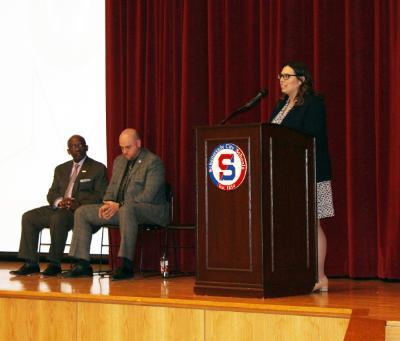 At SUNY Schenectady I was recognized for my work on higher education access and diversity, equity and inclusion by creating the Schenectady Promise, a full class instant admit program. I was chosen as a speaker at the Achieve the Dream Conference in 2023. SUNY now sends letters to all graduating seniors state-wide letting them know that they are accepted into their local community college. I believe the success of the Schenectady Promise led to many other high schools working with their community college to encourage these access agreements.
In my role in Admissions, it was important to me to discuss career opportunities with prospective students and I have counseled many students regarding their goals of pursuing higher education and career exploration. Career exploration is really life-long, something that the Master Counselors also know quite well.
You shared that you’re a first generation college student. Being a first generation college student myself, I am very curious about your journey and would love to hear more. How did you decide on higher education as your career path?
As a high school student, I did not know that higher education was an industry to consider. Growing up in the Capital Region with a large number of education employers, I was unaware of the job opportunities available within higher education. It wasn’t until I attended college at UAlbany that I discovered the many offices and services that colleges provide for students. After college I accepted a receptionist position in the president’s office at Albany College of Pharmacy and Health Sciences which allowed me to learn more about each area of the college and I discovered my interest in enrollment management.
How has your own journey helped you when working with college students and now with Master Counselors?
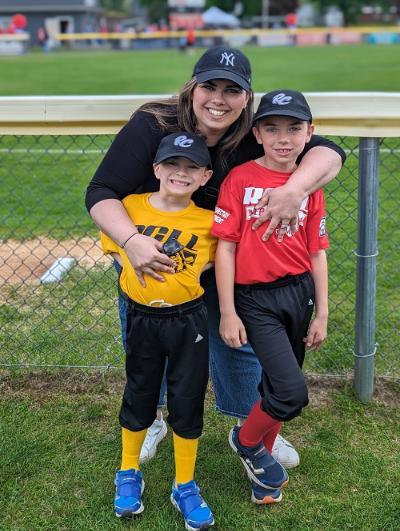 As a first-generation student there was so much to discover about the hidden curriculum of college. It can be difficult to navigate a large university, know what courses to take, know who can help answer questions and get it all right the first time. My experience as a first-gen student helped me be aware of the unasked questions students might have and I hope to facilitate a better understanding of this for our Counselors as well.
Laura, you have such a rich professional career, so, what do you do in your spare time?
I really enjoy spending time in the Adirondacks with my husband, children and extended family. We’ve had a family camp in that area for years. Of course, I also really enjoy cheering on my two sons from the stands of the baseball park!

Teacher visits to observe students in math discussions are integral to the STMC work. Featured here are teachers from Johnson City and Chenango Forks school districts
Southern Tier Master Teachers Lindsey Hendricks in the Windsor Central School District, and Maureen Patterson, in Maine-Endwell Central School District, led the Southern Tier Math Collaborative (STMC) over the course of the 2022-2023 school year and are helping to welcome more participating school districts and expand from the elementary grades to the middle school level in the 2023-2024 school year. The STMC is a peer-to-peer professional learning opportunity focused on a student-centered, constructivist approach to building teacher mathematical communities to support skill development in students.
Mrs. Patterson and Mrs. Hendricks were inspired by similar professional learning, the Buffalo Math Collaborative based at SUNY Buffalo State. The NYS Master Teacher statewide network is dedicated to sharing best practices across the state, helping teachers to implement the strategies in their home district.
The Master Teacher-led STMC initiative fosters a vibrant math community within classrooms, where teachers refine strategies to nurture students' abilities to think critically and engage in meaningful discussions about math lessons. The STMC work is supported by Dr. Kara Imm, adjunct Assistant Professor at Hunter College School of Education. By emphasizing collaborative learning and student-centered approaches, the program is designed to provide educators with innovative tools and strategies to encourage students to be active learners in math class.
Learn more about the Dr. Imm’s classroom-based research that informs the work of the Master Teacher
Mrs. Hendricks shared that one of the most important outcomes for their work is for children to see themselves as mathematical thinkers and to know that it’s OK to take the time to think about what they are doing and not rush right to an answer. “Conceptual development, problem solving and number sense are important parts of the journey to embracing mathematical thinking” , shared Mrs. Patterson.
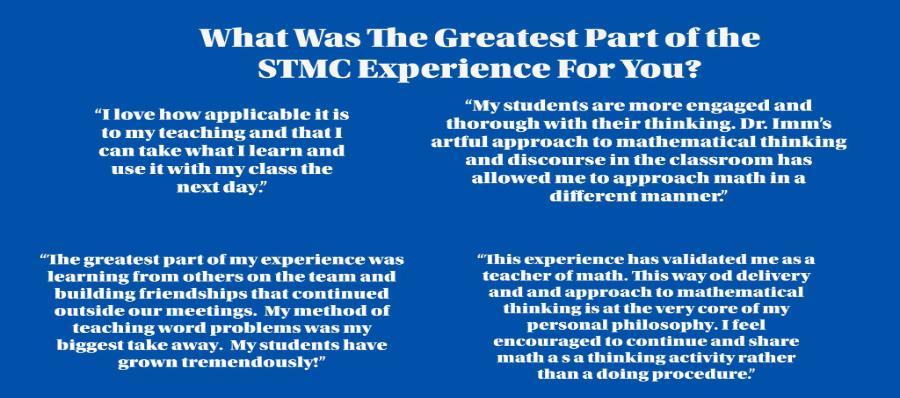
Feedback comments from 22-23 teacher participants.
Dina Hartung, Regional Director of the Southern Tier cohort based at Binghamton University, reflects,
“We continue to expand the fine work we started in the Maine-Endwell and Windsor Central School Districts at the elementary level. The teachers and school and district leaders from these districts will meet to share their knowledge and experiences with our new partners, Johnson City and Chenango Forks School Districts in the elementary, middle and high school.
I would be remiss not to acknowledge the diligent work of Mrs. Lindsey Hendricks and Mrs. Maureen Patterson in reimagining the Math Collaborative model we saw in Buffalo. Visiting with our Western NY colleagues, Dr David Wilson and Dr. David Henry helped us to pave the path forward and make this model meet the goals and needs in the Southern Tier Region.
The Southern Tier Math Collaborative is a perfect example of how NYS Master Teachers collaborate to build and implement an idea, expanding the world of mathematical possibilities and professional learning for both teachers and students throughout the Southern Tier. Together we are working to inspire, empower, and shape the future of professional thinking and learning, in an authentic setting, with a variety of shared expertise in the areas of mathematics, pedagogical understandings, and knowledge of students, their families, and their communities.”
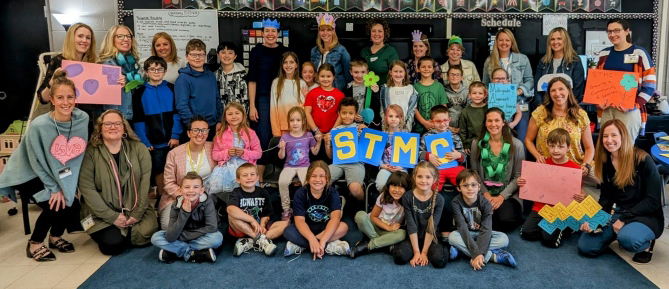
A celebration of mathematics learning.
The New York State Master Teacher Program, established in 2013, recognizes outstanding K-12 public school STEM teachers and counselors and sustains a statewide professional network of educators dedicated to professional growth and development. Master Teachers and Master Counselors are educational leaders committed to sharing best practices and to creating engaging and inspiring learning environments for all K-12 students as well as support for teacher and counselor preparation programs.

Master Teachers participate in a tap water lab, testing samples from their home faucets as part of their experience.
On September 23, The William H. Miner Agricultural Research Institute welcomed Master Teachers from the North Country region for a day-long professional learning event. The K-12 teachers participated in several labs that they conduct as part of their high school chemistry program and then toured the dairy and equine barns and the Heart's Delight Farm Heritage Exhibit. NYS Master Teacher Program professional learning opportunities often serve to deepen the STEM curricular ties to the local industries, helping students see their lessons in the real world context.
Denise Sypek, Director of the North Country Teacher Resource Center, and Alison Puliatte Ph.D, Associate Professor at SUNY Plattsburgh, are the Co-Regional Directors for the North Country regional cohort of Master Teachers based at SUNY Plattsburgh. Ms. Sypek and Dr. Pulliatte first approached the Miner Institute for a professional learning opportunity after Dr. Pulliatte brought pre-service teachers there as part of a science methods class.
The Master Teachers participated in various research-base lab experiments as part of their day. For example, they each brought tap water from home and performed water quality testing for chlorine and lead, among other things. They were able to assess the impact of agriculture land use on both well and municipal water sources.

Master Teachers hear from Stephen Kramer, Director of Lab Studies at the Miner Institute and Adjunct Lecturer in Environmental Science during the tap water lab.
Dr Pulliatte reflected that there are many impacts for teachers in their classrooms as a result of this partnership with the Miner Institute. “It's a way to bring agriculture into the classroom with real-world applications of STEM. New York is an agricultural state and it’s important to expose students to careers in agriculture and the major advances that have happened in agricultural research. There’s so many ways for students to combine a career in agriculture and STEM fields such as engineering, biotechnology and environmental science. Plus, Dr. Pulliatte noted, “The teachers came away with many hands-on experiences to try with their students. They discovered ways to connect agriculture to math, biology, chemistry and technology classes.”
The partnership between the Miner Institute and the NYSMTP grew out of a North Country Master Teacher Program region initiative called the “North Country Challenge” in which Master Teachers are challenged to explore various career possibilities for their students relating to STEM fields and to bring back their results of their exploration to share with fellow Master Teachers to help this information reach more students in more classrooms. The teachers visited manufacturing plants, apple orchards, electricity generating windmill sites, among others. The teachers explored what is unique to STEM about these various fields and how to connect those fields to their classroom work.
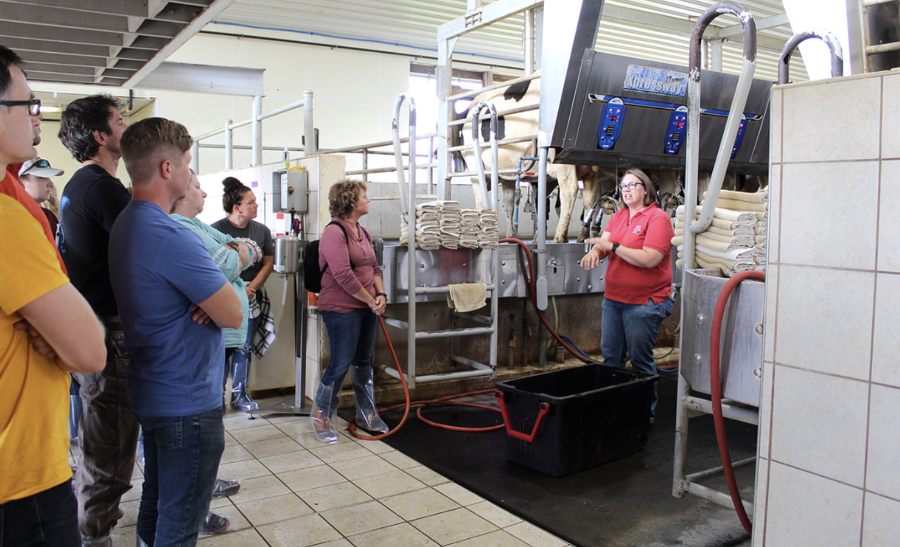
Master teachers learn about the state-of-the-art cow milking automation process.
A reflection from Master Teacher Lisa Beldock who attended the trip: “The tour was really fascinating. The technology they have incorporated into dairy farming is absolutely incredible! It is very important to me to show my students some of the careers they can have and what courses they will need in college. I try to give them ideas from my knowledge and experiences about various job opportunities hoping to spark an interest in them. I have a couple of students who have approached me and are excited about a specific pathway they are choosing to research.”
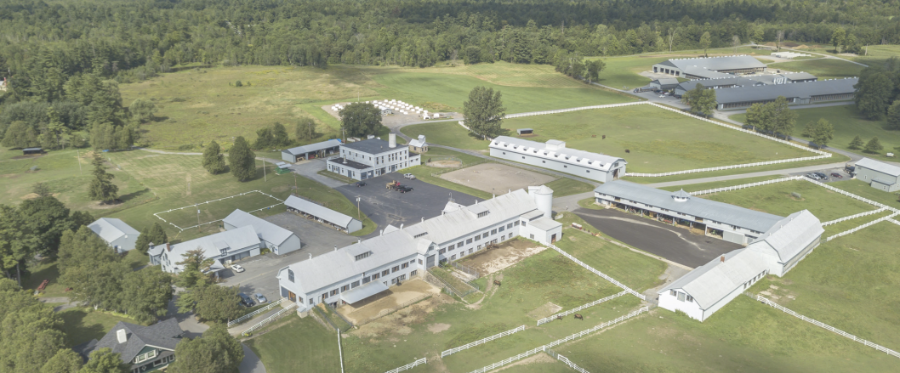
The William H. Miner Agricultural Research Institute located in Chazy, New York on the Adirondack Coast of Lake Champlain
The William H. Miner Agricultural Research Institute conducts research on the dairy-crop interface, equine reproduction and management, and environmental conservation. Its research activities combine a global perspective with a regional application. They offer a range of undergraduate, graduate, and continuing education programs in dairy and field crop science, equine management, and environmental conservation. The Institute provides residential undergraduate and graduate programs in cooperation with a number of regional colleges and universities. They envision a vital agricultural community in northern New York and surrounding regions built on effective use of forage crops and management technologies that optimize animal production and well-being while sustaining the natural environment, particularly in the fragile Champlain Basin.
Master Teacher Adam Staab, Copenhagen School District, noted, “The Master Teacher Program has exposed me to several gems in our region. The visit to the Miner Institute was awesome and one such gem. The history, the innovation of William Miner, his charity, and the fact that he still provides opportunities for students and teachers in this present day, is all very inspiring.”
Master teachers who attended from the North Country region were from Peru High School, Beekmantown High School, Indian River, Ogdensburg City School, South Jefferson, Brasher Falls, Parishville-Hopkinton, Ticonderoga, and Potsdam.
To read about the various educational opportunities with the William H. Miner Agricultural Research Institute, visit https://www.whminer.org/about-education

The panel for "Strategies for Building Semiconductor Partnership Networks".
Dave Czechowski, Hyde Park Central School District teacher for 17 years, recently spoke at From Campus to Industry: A Semiconductor Education and Training Pipeline Summit at the Albany Nanotech Complex, Albany, NY. The Summit was sponsored by The Governor’s Office, SUNY, Empire State Development, the Business Council of New York State and the State Education Department. The goal of the conference was to bring together K-16 educators and industry as partners to inform educators about what the semiconductor industry is, and what the potential career opportunities are in the industry. The Albany NanoTech Complex is home to SUNY Poly's College of Nanoscale Science and Engineering. The site is a research, development, prototyping, and educational facility providing strategic support for onsite corporate partners.
The student panel discusses future career opportunities
Dave was on a panel with various representatives from higher education institutions. The panel was “Strategies for Building Semiconductor Partnership Networks: Leveraging What Works and Expanding Capacity” panel. Dave’s expertise in the field comes from years of teaching high school computer science. He’s also serving on the NYS Education Department Standards Workgroup that is instrumental in developing and evaluating the Computer Science and Digital Fluency Standards that were approved in 2020.
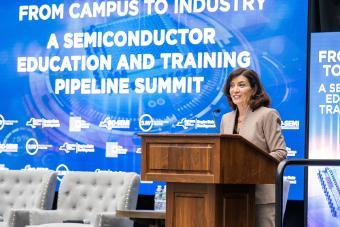
Governor Hochul addresses the conference attendees
Dave represented the K-12 perspective on the panel. He noted that students need to know about semiconductors before they get to college, and need to know about the workforce opportunities that exist. “Students can be afraid of taking STEM classes, and we need to change their perspective. There are very few elective classes that teach about computers and digital fluency, so students don’t envision early on how computers and semiconductors can be a career path. This is a deficit that will affect their career choices when they get to college. Also, there’s a deficit of STEM teachers as well, but the Master Teacher Program has been instrumental in changing that narrative.” His involvement on the panel helps to shift the perspective on the “education and training pipeline” from a higher education focus to a K-16 focus.
6/1/23
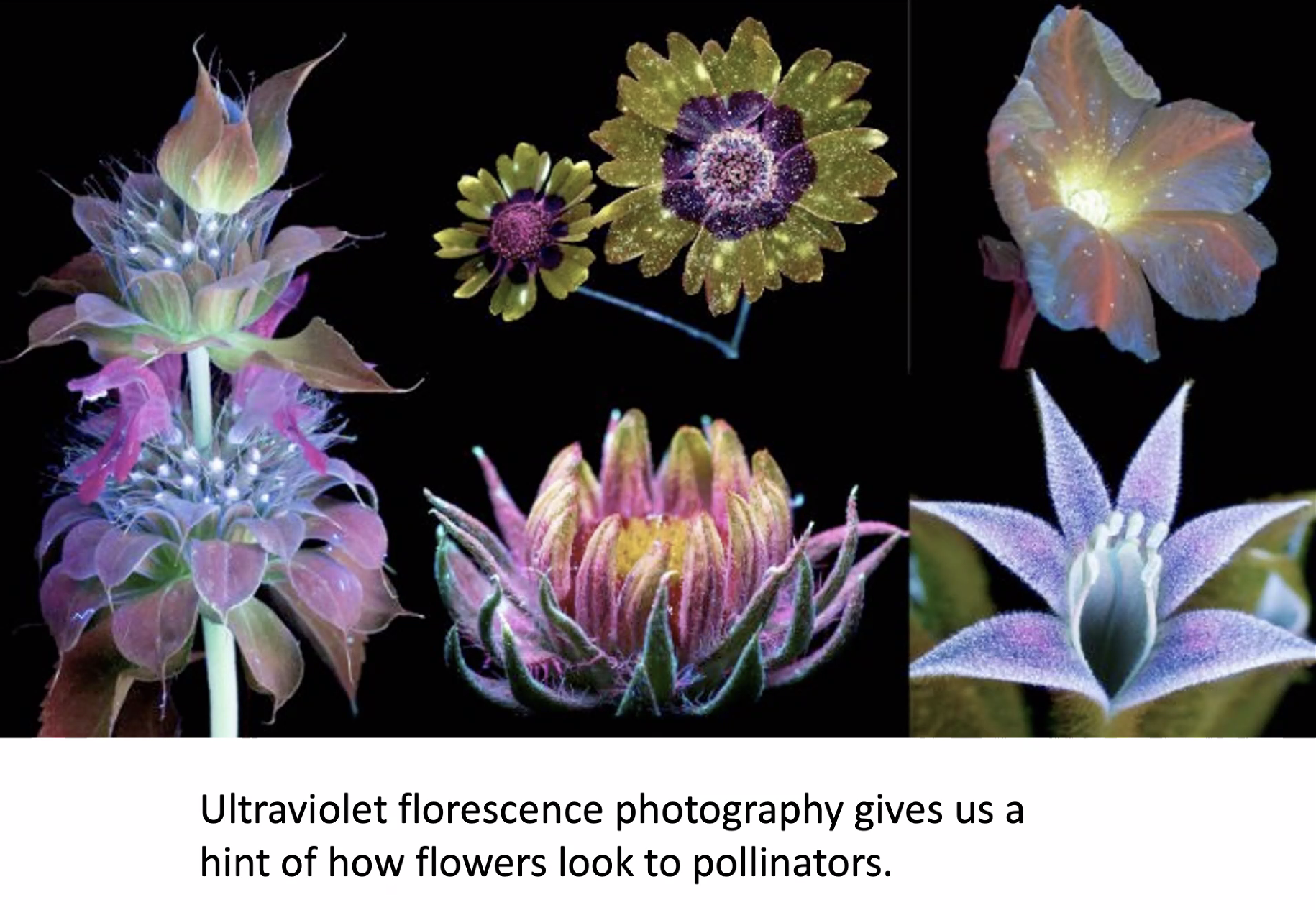
This spring, Cathy Law, Biology, Earth Science and Field Biology teacher at New Paltz High School, led a workshop on The Secret Life of Plants. It was a fascinating look into the inner lives of plants and drew parallels to the human senses to discover how plants have a lot in common with us. Did you know that plants know when their neighbor has been infested by hungry caterpillars, and that they can "hear" sound and respond to features of their environment?
Cathy based the title of her talk on a book,originally published in 1973, entitled The Secret Life of Plants, A Fascinating Account of the Physical, Emotional and Spiritual Relations between Plants and Man, by Peter Tomkins. Cathy explained about concepts such as phototropism, in which auxin molecules in plants move more towards their darker side and provide for more growth. That causes the bending of plants towards light. Another phenomenon is the interesting and complex relationship between trees and fungi to provide nutrients to multiple trees. An equally curious phenomenon is photoperiodism, which is the response of plants to seasonal changes in day length.

Cathy and one of her students planting in the Courtyard Gardens.
Cathy has used her passion for plants to transform a school outdoor space into an oasis for teaching, learning exercise and other creative activities. The “Courtyard Gardens” have developed into fifteen themed gardens including a medicinal garden, bird garden, zen garden and others. Through their interactions in the gardens Cathy’s students can learn first hand about the “secret life” of plants.
For more information about this fascinating topic, you can check out The Secret Life of Plants, by Peter Thompkins and Christopher Bird
3/22/23
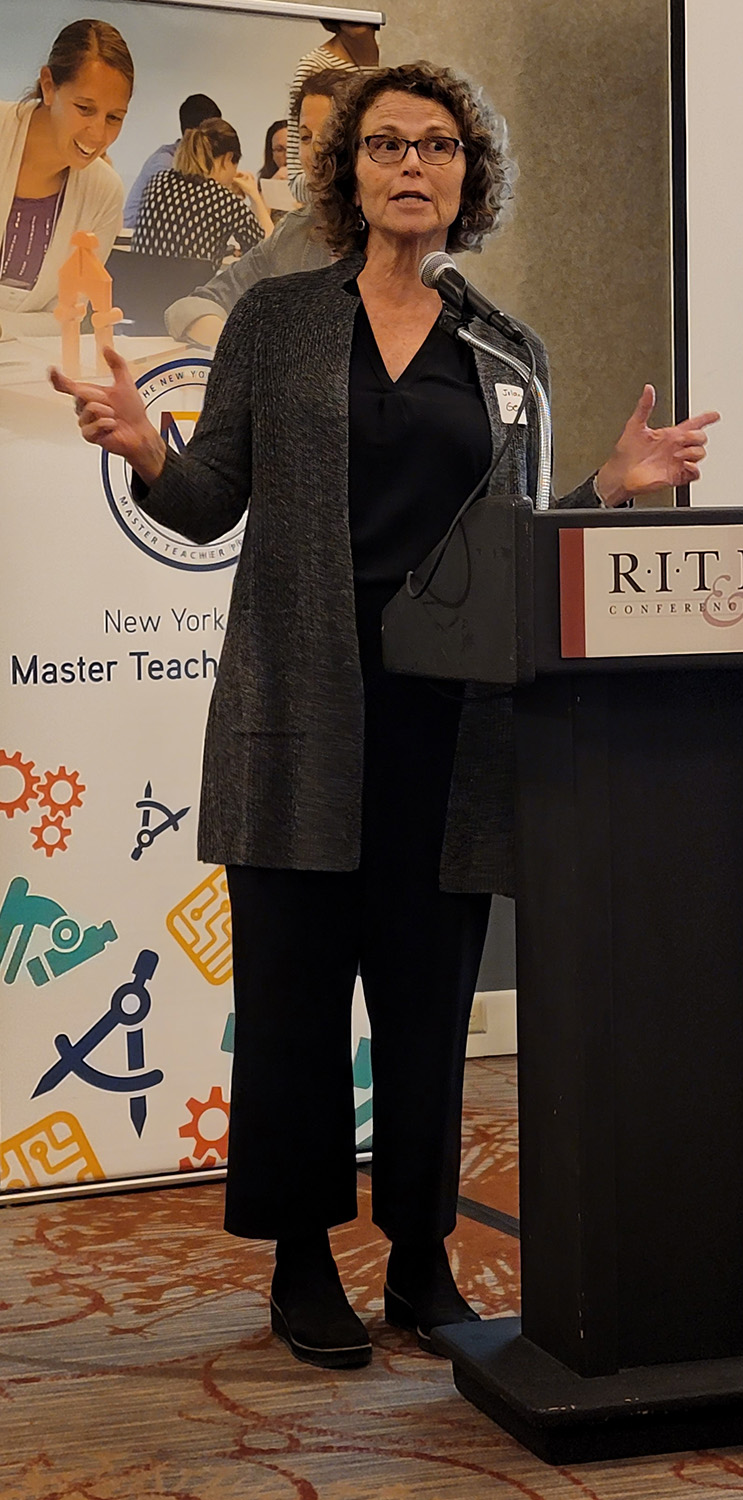
Finger Lakes Master Teachers joined Dr. Jolanda Westerhof, Dean of the School of Education, Dr. Jeanne Galbraith, Associate Professor, and Ms. Jennifer Haines, Director of Field Experiences, in an evening meeting to consider teacher preparation programs.
Dean Westerhof’s keynote, "The Great Reset: Professionalism Post Covid", addressed an observed trend in perceptions of professionalism by preservice teachers, most notably post-pandemic. The Master Teachers were led through a series of Interactive activities designed to challenge participants to consider what constitutes professionalism within the K-12 academy today. The discussion was lively and highlighted the importance of mentoring pre-service teachers in professionalism while also recognizing the shifts that occur over generations.
Members of the SUNY Geneseo-based Finger Lakes cohort from earlier years were also in attendance, strengthening the Finger Lakes regional professional network. Master Teachers reported that discussion to be informative and valuable for their work with pre-service teachers.
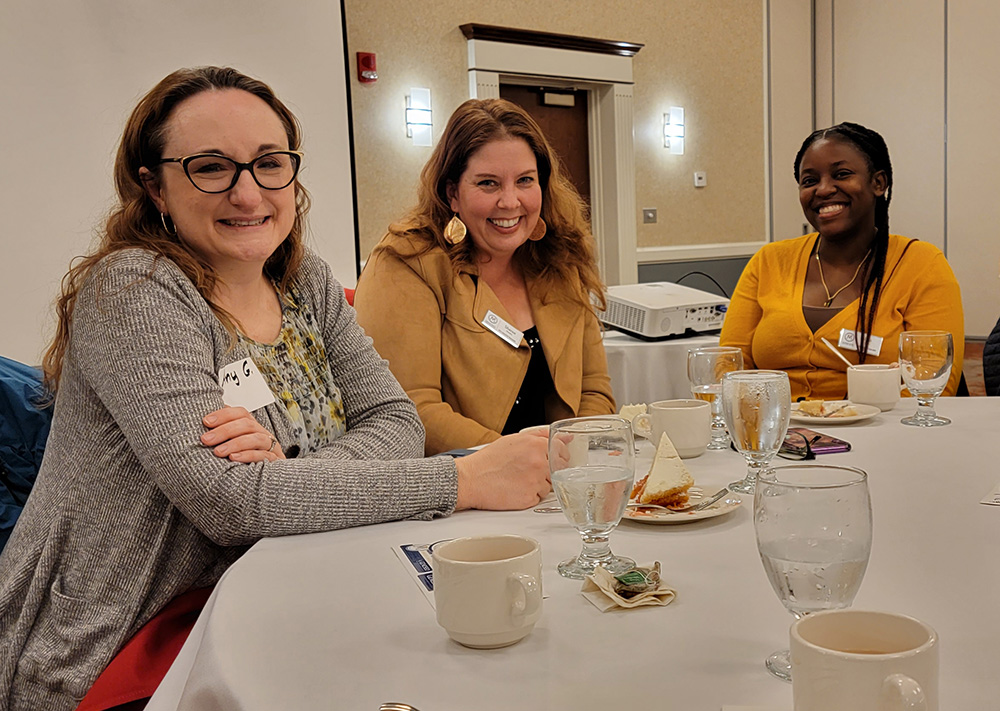 Rochester City School District Science teacher Sharon Beasley noted, “It was so amazing to learn what we can do to provide a better experience for preservice teachers .” She added, “I believe that doing more activities for pre-service teachers like we do for master teachers. Time to collaborate, speaking with experts, having more time to do things with cooperating teachers in addition to instruction or observation hours would help preservice teachers see the value in relationships, and experiences beyond the 40 hours of observations. Allowing student teachers to go on field trips or field studies to become more engaged in current educational trips would create an enthusiasm for learning desperately needed by new teachers and students alike. Preservice teacher workshop days with veteran teachers, demo-ing new technology and the opportunity to be a part of an educational professional network beyond the student teaching placement would be awesome."
Patrick Freivald, Physics teacher in the Naples Central School District said, “The keynote speaker/activity was absolutely fantastic. It's great seeing on-the-ground challenges in preservice teacher training.” He appreciated the opportunity to learn feedback from preservice teachers about their experiences, adding, “ It was an excellent insight into how post-covid Zoomers are looking at teaching opportunities.”
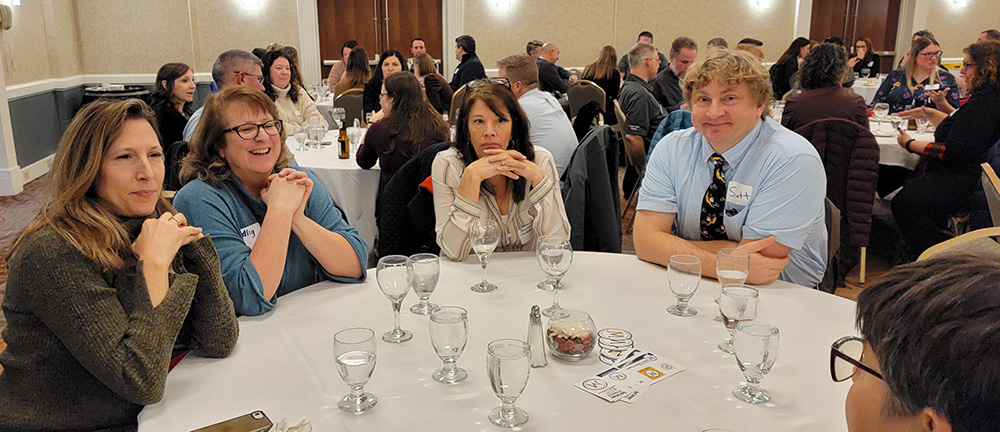 Andrea Robertson, who teaches science in the Gorham-Middlesex Central School District, said, “Dean Westerhof and her colleagues posed several questions to the audience about professionalism and what it meant to us to be a professional. We had time to reflect on these questions individually before sharing them to the whole group. This stimulated a lot of interesting discussion about the generation of students that we are currently teaching and who will become our future educators. Since attending this dinner, I have read the book that the SUNY Geneseo faculty recommended, iGen: Why Today's Super-Connected Kids Are Growing Up Less Rebellious, More Tolerant, Less Happy--and Completely Unprepared for Adulthood--and What That Means for the Rest of Us by Dr. Jean Twenge. This book has provided a lot of useful insight into this generation and how they operate. It has helped me not only as a teacher, but as a parent as well.”
SUNY Geneseo faculty who designed this evening, Dr. Amy Sheldon and Mr. George Reuter shared after the event, “We were so glad to host three members of the Ella Cline Shear School of Education from SUNY Geneseo as they looked to connect with in-service teachers to discuss the joys and sorrows of teaching the next generation about professionalism. The conversations were rich and frank, and the dinner as a whole accomplished the goal of allowing our cohort to network.”
March 22, 2023
The NYS Master Teacher Program is dedicated to helping outstanding teachers share good ideas so that all students in NYS experience the most innovative and engaging STEM learning environments.
Master Teachers join colleagues for professional learning and collaboration at nine SUNY host campuses across the state. Each SUNY campus serves as a home-base for the region and partners with other educational institutions and organizations to provide a robust program tailored to meet their Master Teachers’ unique professional growth and development goals.
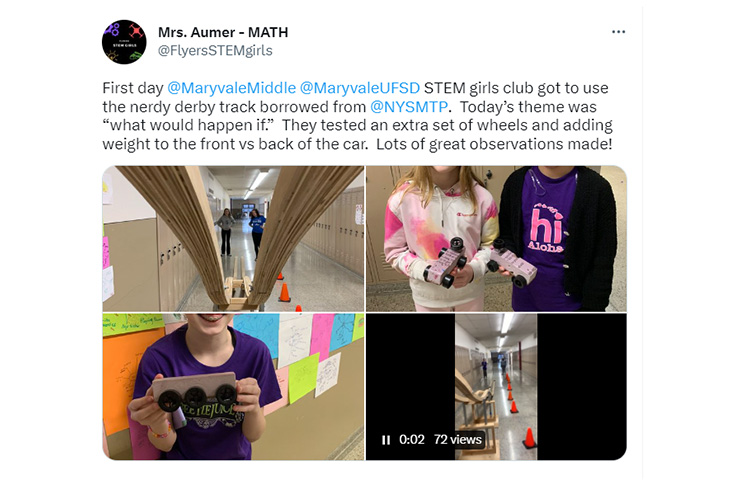
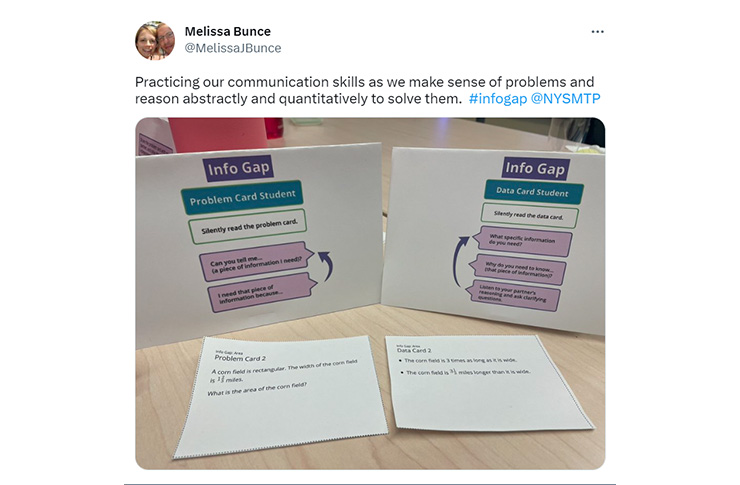
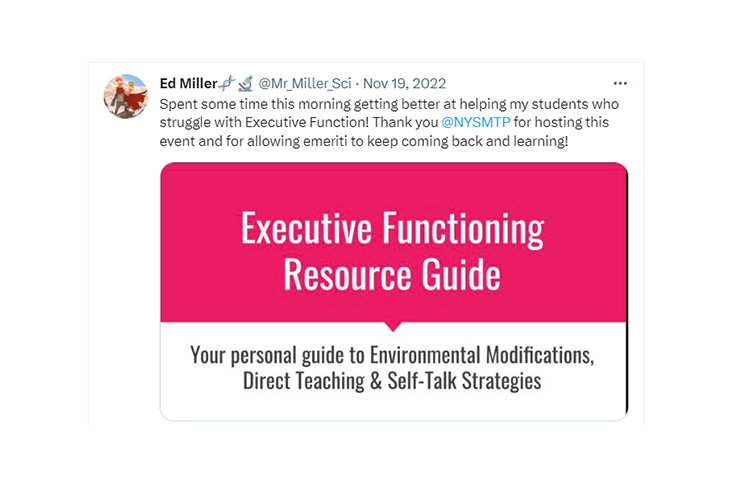
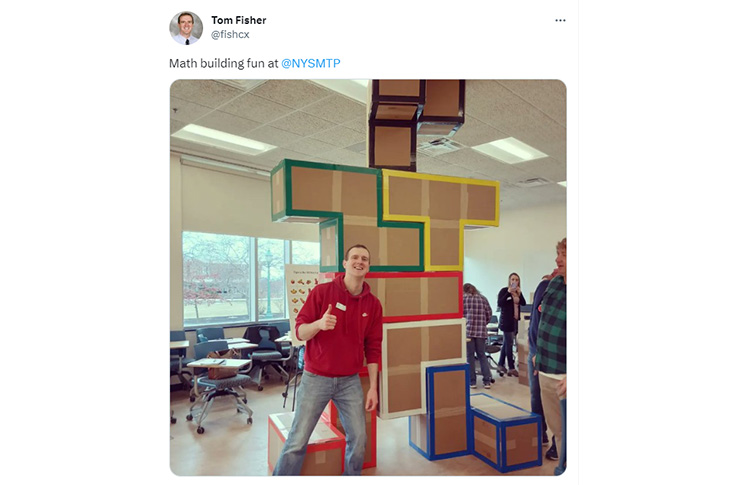
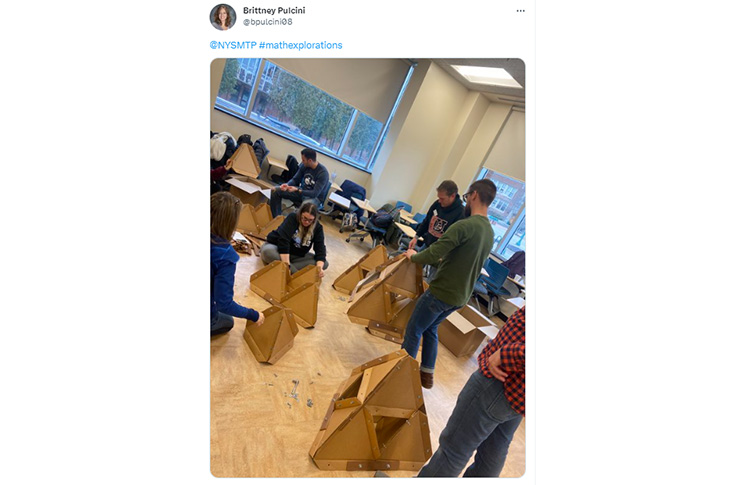
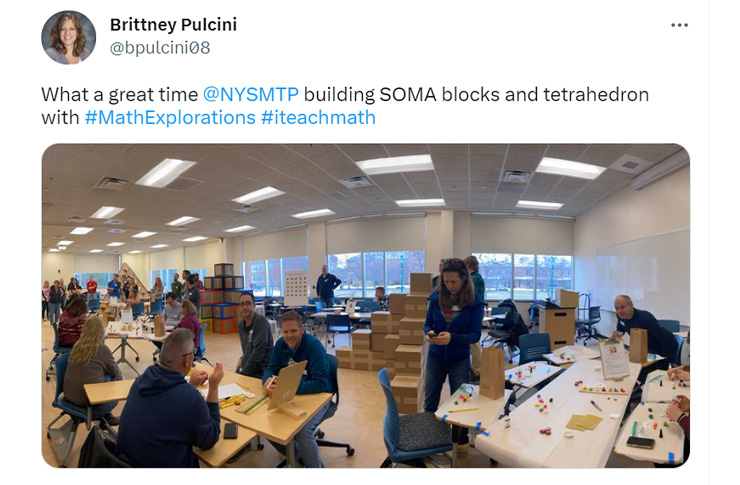
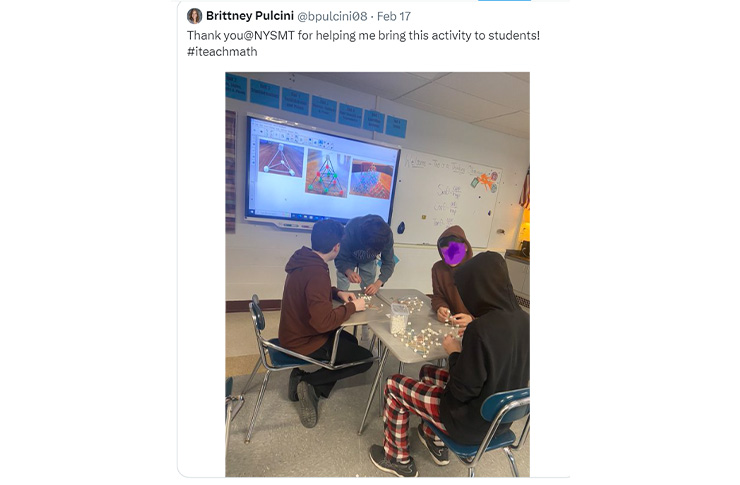
Student learning is at the forefront of the professional learning opportunities. We share a few images with examples below. Thank you to the Master Teachers for sharing the images of their professional learning activities.
Follow us: 


January 27, 2023
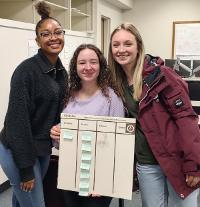
Master Teachers in the North Country designed another outstanding fall conference for the pre-service teachers at SUNY Plattsburgh. An annual event, the Celebration of Teaching and Learning welcomed 61 future classroom teachers to a day of workshops on a variety of topics, including project-based learning, building positive relationships to support student learning, and engaging math lessons.
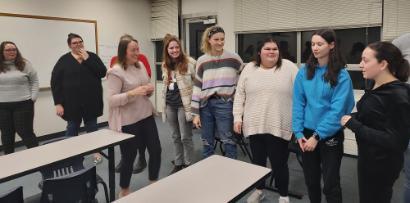
Carol Wright, Canton Central School District, has participants up on their feet to learn.
Carol Wright, agricultural sciences teacher in the Canton Central School District, who lead the workshop entitled “Relationships Before Rigor - Building a Community Within the Classroom,” noted that she “always enjoy sharing tools and tricks to build community and rapport within the classroom to beginning teachers while also introducing ways to create opportunities to practice team building, communication, and leadership skills students need in the real world beyond the classroom setting.”
The education preparation majors appreciated that the Master Teachers shared how they themselves find professional support in addition to engaging classroom practices. One participant shared “I really liked being able to learn about the organizations and sites that are available to me, especially once I become a teacher to help my network.”
Another shared the following comments after the day:
I love the emphasis about how as teachers, we are experts in teaching, although not every subject that we will teach, and how useful it can be to rely on people in your community that ARE experts to come talk to your class or to help provide you, the teacher, with information about the subject.
Jacob Patenaude, math teacher from Northern Adirondack Central School District, couldn’t hide his enthusiasm to work with pre-service teachers. One participant noted:
He was really awesome!! His passion was very apparent and he was able to combine talking enough about math and pedagogy.
One of the 61 participants reunited in a special way with her former teacher: “Mr.Moss [Beekmantown Central School District] was one of my teachers in high school so it was very nice to see him again.”
We thank the SUNY Plattsburgh Regional Directors and North Country Master Teachers for designing the wonderful day of hands-on learning and for their dedication to supporting future teachers.
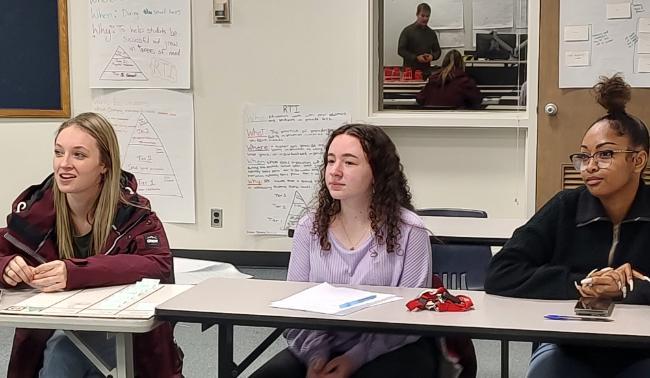
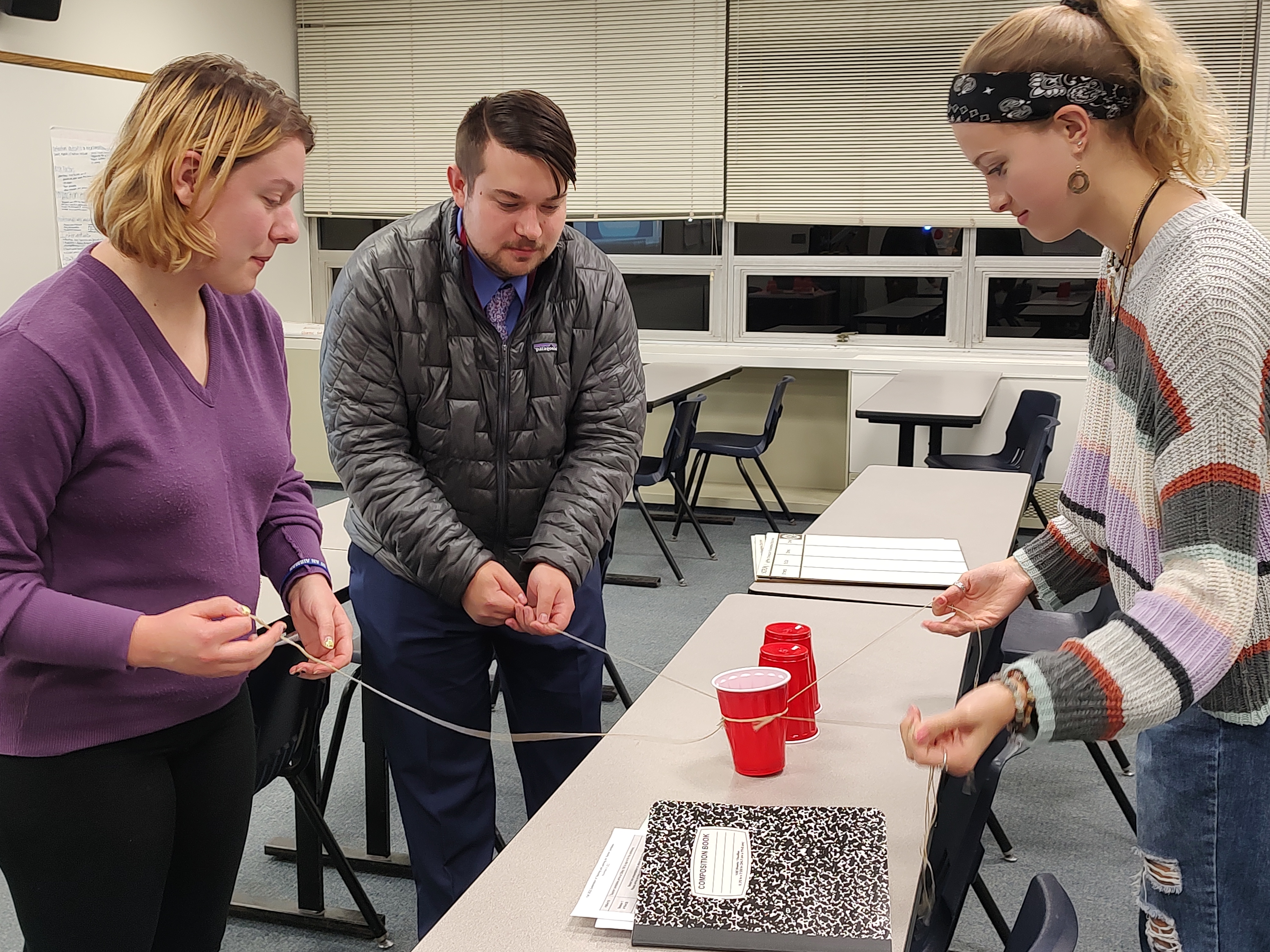
Pre-service teachers working with Leif Sorgule from the Peru Central School District.
January 27, 2023

Dr. Benjamin Yankson and Dr. Amber Silver met with Master Teachers based at University at Albany.
Founded in 2015, CEHC Dean Robert Griffin said, “Our college is the first in the nation to bring together emergency preparedness, homeland security and cybersecurity. We are providing students with the ability to not only learn in the classroom, but also apply their skills in the field.
Capital Region Master Teachers learned about the career-focused study programs meeting with Assistant Dean for Student Success, Michael Baumgerdner, and attending presentations led by CEHC faculty on cybersecurity, homeland security, emergency management, and information sciences, technology and informatics.
After the visit and workshops, Master Teachers were planning ways to bring the information back to their students and colleagues:
Dr. Joanne Clegg, a teacher in the Capital Region Career and Technical School at the Albany-Schoharie-Schenectady-Saratoga BOCES, found the day to be amazing:
I was impressed by the programs offered at ETEC and thought of several of our career and technical programs that could be matched to the programs at ETEC... After the event, I took information to our CTE Coordinator, who then shared it with the Network Cabling and Cybersecurity, Machining and Gaming teachers.
The information about exciting in-demand careers was on many Master Teacher minds:
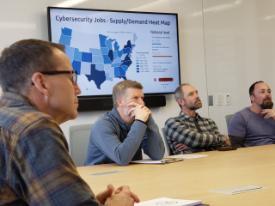 Shannon Terry, who teaches in the Corinth CSD High school, is making plans to bring students in the Science Honor Society to this facility to explore the degree programs.
Lisa McLeod, in Glens Falls City Senior High School noted, “This was so valuable. It gave me information I can bring back to my coworkers and students about the types of degrees currently being offered and the employment opportunities that go with them.”
Guilderland High School Science teacher, Deborah Boyce, said “I was not familiar with the programs and at this college. I can now encourage my students to investigate this school as a potential school to consider. The fields of informatics, cyber security and emergency management are certainly up and coming field with a huge potential for future careers.”
Master Teachers of younger grades also found the day informative. Saratoga CSD Kindergarten teacher, Toni Lynch, appreciated the opportunity to learn about the programs. Ichabod Crane Middle School General Science teacher Jennifer Gecewicz noted “I will be sharing information with my district's technology department about their LEED facility and also - more importantly - about the programs that are available.”
We are grateful for the support of the University at Albany which serves as the home campus for the Capital Region cohort of NYS Master Teachers, and thank the College of Emergency Preparedness, Homeland Security and Cybersecurity for educating us about the programs of study and future careers.
More Than 1,600 Outstanding STEM Teacher-Leaders Earning Master Teacher Recognition Across New York State
New Application Round for K-12 STEM Teachers* and K-12 Counselors Now Open Until February 25, 2023
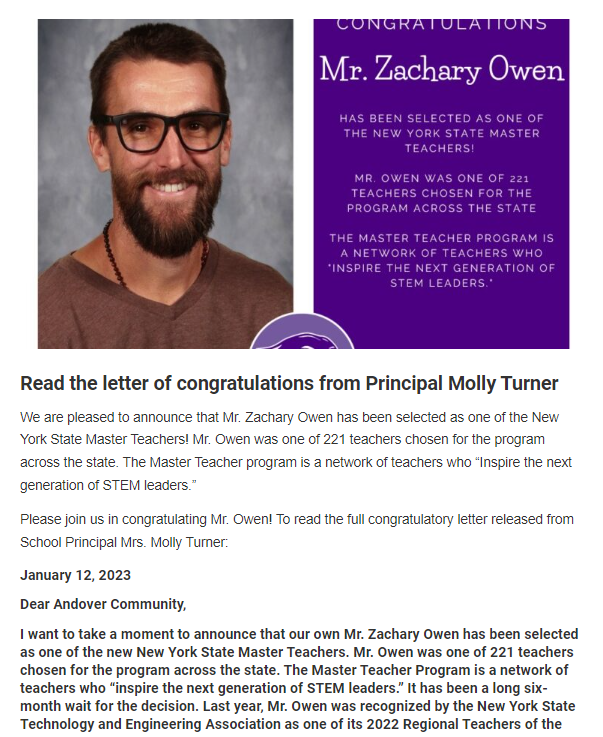
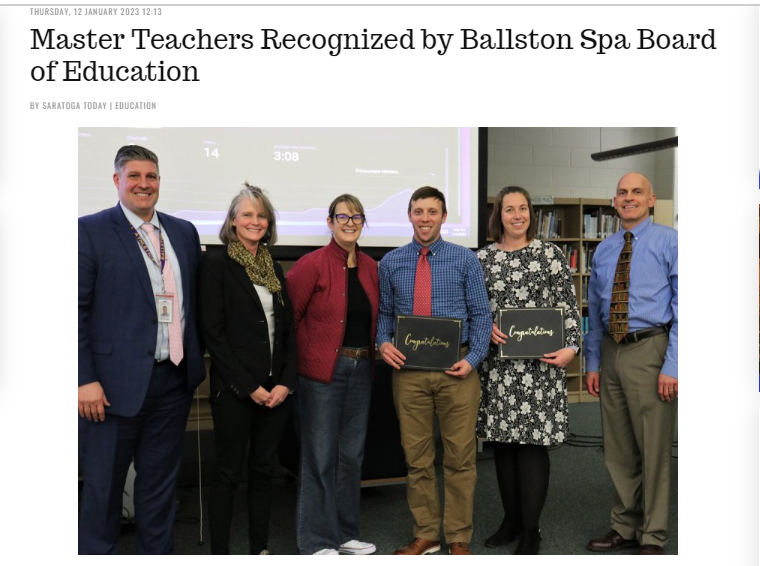
Governor Kathy Hochul announced the selection of 221 educators to the New York State Master Teacher Program, a professional network of public school teachers with a passion for inspiring the next generation of STEM leaders. These educators will join the network of Master Teachers, created in 2013, bringing the total number of selected NYS Master Teachers across New York State to over 1,600.
Governor Hochul also announced the opening of the next round of applications for eligible K-12 STEM teachers and K-12 counselors in all regions. * BOCES and district teachers with CTE certificates related to STEM careers that are projected to be in high demand are encouraged to apply.
"Our teachers are the driving force behind New York's leading education system, and continued investment in our world-class teachers is crucial in the development of our State's future leaders," Governor Hochul said. "I'm proud to announce the expansion of the Master Teacher network and the open application for the next round of STEM teachers and counselors. New York is home to many talented teachers and we owe an enormous debt of gratitude to educators across our state."
The recognition of this achievement was echoed by school district leaders and local publications across New York State:
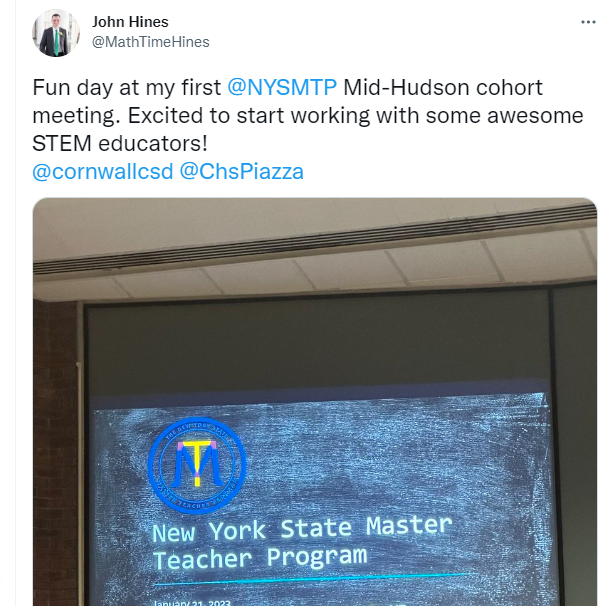
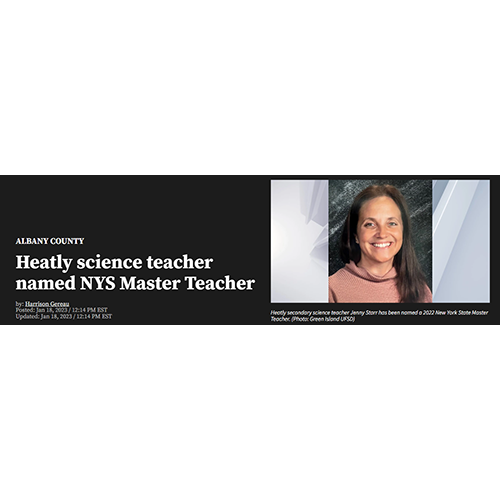
All Master Teachers are teacher leaders, serving as curriculum and department leaders or members of district and State level committees, as well as mentor teachers for student and early career teachers. Many of the 221Master Teachers have been recognized for outstanding service by their peers, local communities, or professional associations.
"When I started my career in education, I was fortunate to have an outstanding mentor to help guide me. Now, STEM teachers across the state will benefit from the guidance and expertise of these extraordinary Master Teacher mentors. I welcome the new class of professionals and thank them for their dedication to educating New York's young people."
State Education Commissioner Betty A. Rosa"The Board of Regents and I congratulate these exceptional teachers and counselors who will serve as mentors to their colleagues in the STEM fields. Providing support to new teachers can have an incredible impact on retaining individuals in the profession and in our districts most in need."
Board of Regents Chancellor Lester W. Young, Jr.
The 221 Master Teachers are dedicated professionals teaching for an average of 14 years. 156 of the newest statewide members hold multiple teaching certifications, 38 certified in Special Education, and 18 teachers certified in Technology Education, offering various courses in Engineering Design & Development, Computer Aided Design, and Automation & Robotics. The program welcomes 52 elementary teachers and 37 teachers from high-needs districts including Albany City, Syracuse, Rochester, Utica City, Binghamton City, and Buffalo City School Districts.
A full list of Master Teachers and their school districts is available here. Brief bios will be added in the coming weeks.
For the full press release, visit https://www.suny.edu/suny-news/press-releases/12-22/12-23-22/
November 7, 2022
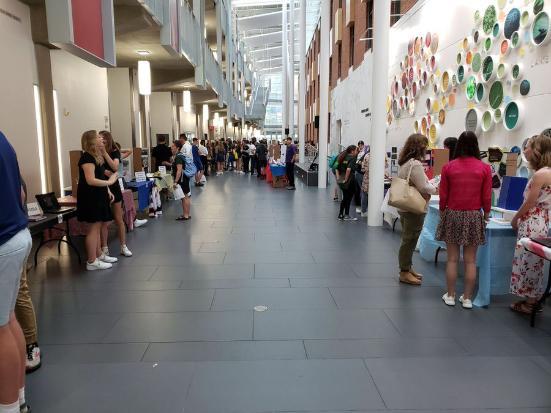 Western NY (WNY) STEM educators and their students, including WNY Master Teacher Emeritus Allen Turton and his Alden Senior High School students, came together for the student-led 2022 WNYIT Conference in June. The event, sponsored by the NYSMTP, is a partnership between SUNY Buffalo State College's School of Education, Erie 1 BOCES, Alden Central School District, and STEM industry professionals. This year's tech partners include MOOG, Microsoft, and the Electronic Gaming Federation.
Dr. Dave Wilson, Buffalo State NYSMTP Co-Regional Director, shared that "Melanie Kitchen, Erie 1 BOCES Coordinator for Instructional Technology, Allen Turton, and a host of others, including Nina Calarco from Lewiston-Porter CSD who was the initial creator of the Innovation Exhibition component of the conference, put together an amazing day of presentations that largely featured 8th grade students. We had around 350 students at the event and it was an incredible success."
WNYIT is a conference designed by students, for students, providing them with an opportunity to connect with peers and industry partners about education and career paths that align with their passions.
The event exposes students to a variety of STEM fields and connects them with local industry professionals. WNYIT student presenters also build important skills such as public speaking, planning, and meeting deadlines. WNYIT provides a special opportunity for participants to consider their areas of STEM interests as possible future career paths.
Amazing day @buffalostate !!! @Erie1BOCES @WACSNews @AmsEnvision @AtlasAlden @AldenCSD @AldenBulldogMFG pic.twitter.com/ahegRhVank
— WNYIT Conference (@WNYITConference) June 7, 2022
But what does student voice & choice, opportunities for empowerment, 21st century learning, identity, social emotional skills, and creating for impact look like? This. Stay tuned. #STEAM #civics #Entrepreneurship #DEI @wny_ric @WNYITConference @NYSMTP @forty3north @buffalostate pic.twitter.com/pOBsqOfu8F
— 🌟Melanie Kitchen📚 (@MelKitchenEDU) June 2, 2022
Allen Turton shared that this year's event came to fruition thanks to Melanie Kitchen coordinating with her crew at Erie 1 BOCES, Dave Wilson and Dave Henry, co-Regional Directors at Buffalo State College coordinating with staff on their campus as well as "the Western NY Regional culture of taking on ambitious ideas for the benefit of the students and not being afraid to fail made this happen." Allen connected with WNY middle and high school students, teachers and industry partners. He attributes a great deal of the day's success to the student leaders. "Much of the website development and student-to-student collaboration was facilitated by Jared B. (class of 2024) and Sylvia W. (class of 2025) from our ATLAS Team." And, in recognition of his NYSMTP colleagues he adds, "The overall NYSMTP helped reach a broader audience of engaged teachers and their students...it really took the most passionate people from around the area to take a chance on a day in June."
Thanks for a great event … @WNYITConference @NYSMTP @AldenBulldogMFG @AtlasAlden @aldenrobotics @MelKitchenEDU @CSOIntl @wnystemhub @MoogSDG https://t.co/hnDX8e47u5
— Allen Turton IV (@allenturton4) June 7, 2022
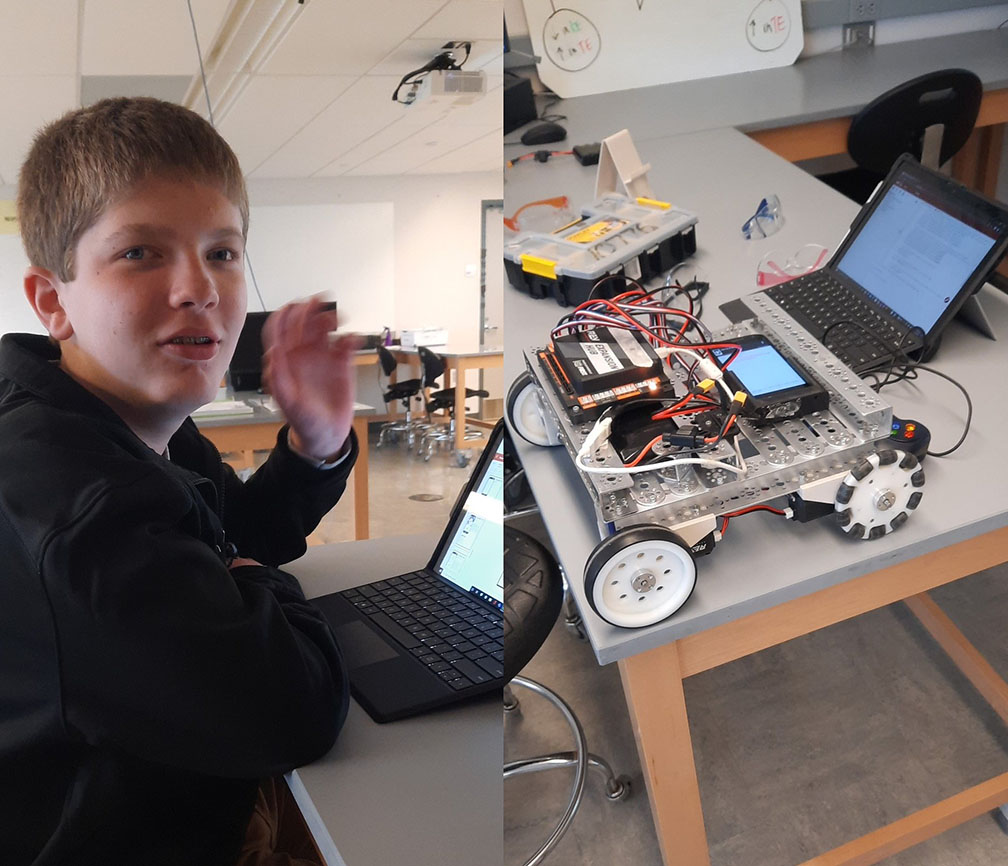
Congratulations to all involved with WNYIT 2022 and a special shout out to the Alden students who are part of the Alden Robotics Team, the AMS Envision Experience, and Alden ATLAS (Alden Technology Leaders as Students)* for your leadership, your presentations, your documentation of the conference, and for helping to make WNYIT 2022 such a successful event!
*A special note about ATLAS: the Alden ATLAS Team is a student-led Informational and Educational Technology Support Team for K-12 students and staff at Alden Central Schools. What an innovative model and excellent opportunity for students to serve their district as STEM leaders!
Students from @WestSenecaCSD showing some of their awesome projects at #WYNIT ! pic.twitter.com/cPaJuuWydO
— Alden ATLAS Team (@AtlasAlden) June 7, 2022
Getting setup for the @FTCTeams sessions at @WNYITConference! We're excited to teach other students and schools all about our team and how to start their own! #omgrobots pic.twitter.com/ZVVMpaFvaG
— Alden Robotics (@aldenrobotics) June 7, 2022
November 2, 2022
NYS Master Teachers designed another successful spring “Girls Rock STEAM” conference for students in grades 5 through 8. Since 2015, Master Teachers based at SUNY New Paltz, the NYSMTP's Mid-Hudson regional campus, have been sharing their passion for science, technology, engineering, computer science and math with a special Saturday of STEM enrichment. This year, 107 students participants came from 19 different school districts throughout the Mid-Hudson region including Middletown City School, Newburgh City School, Saugerties and Pine Planes. They joined in a day of hands-on, and in some workshops, goggles-on learning led by NYS Master Teachers and NYS STEM experts.
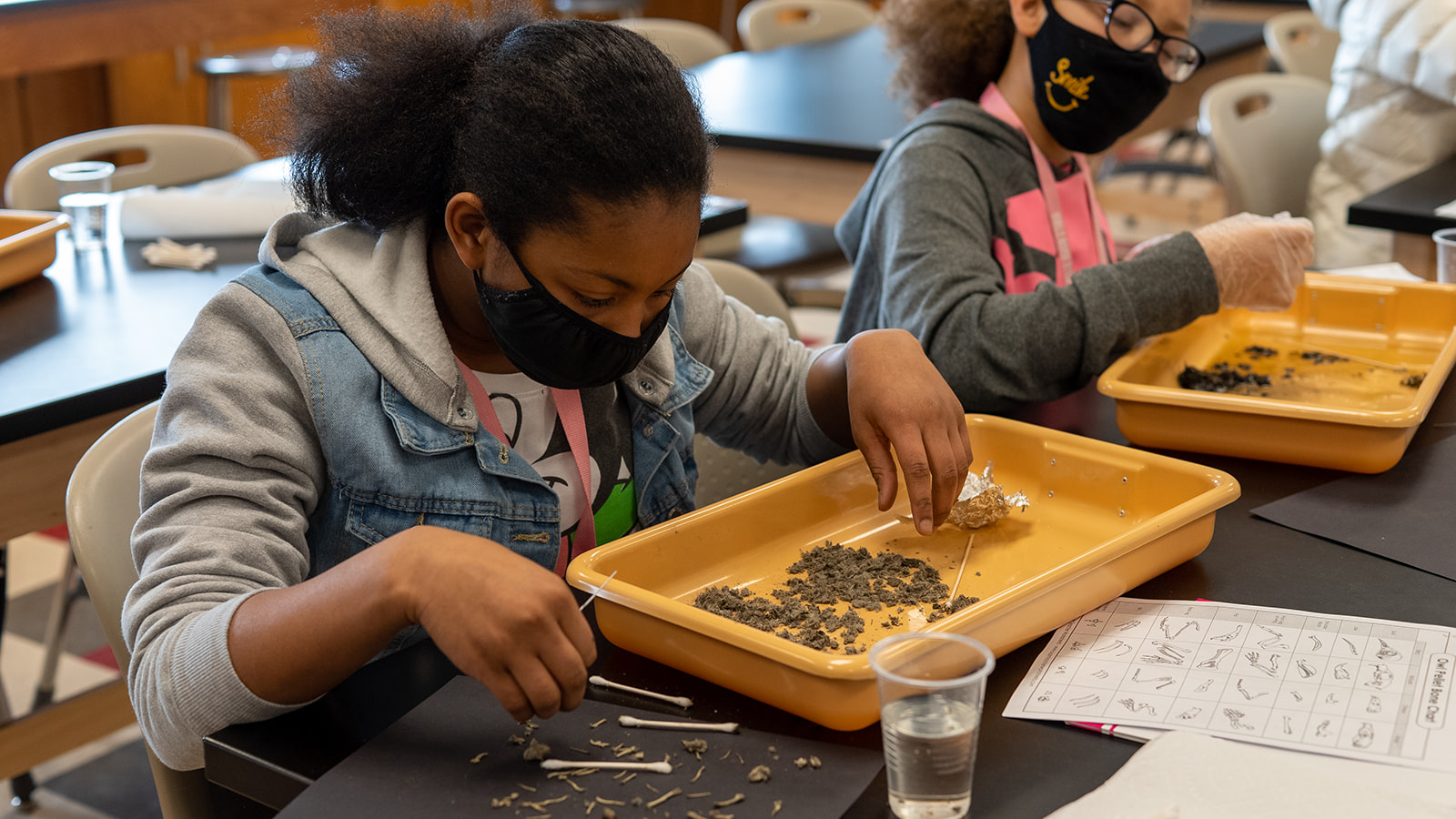
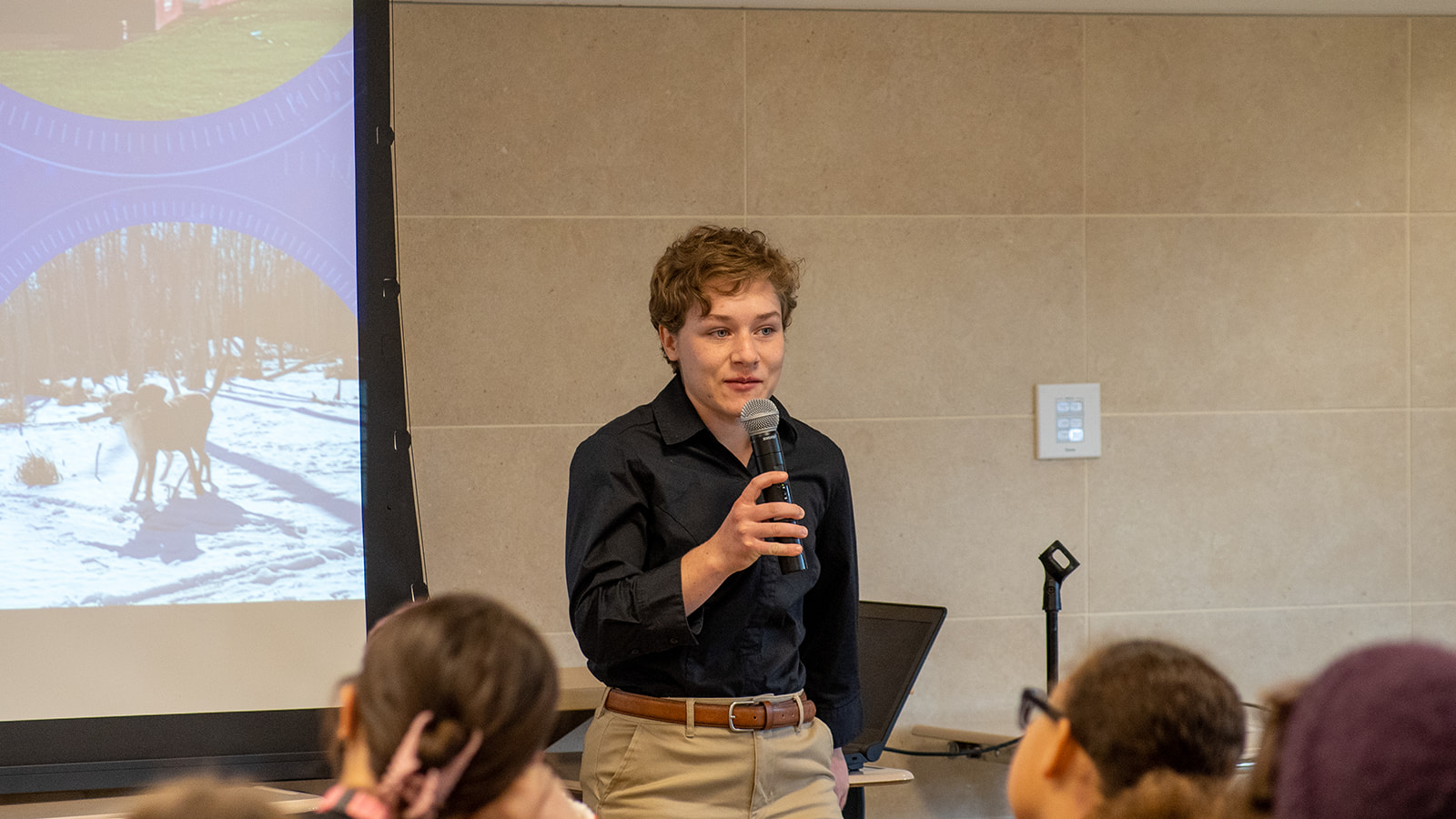
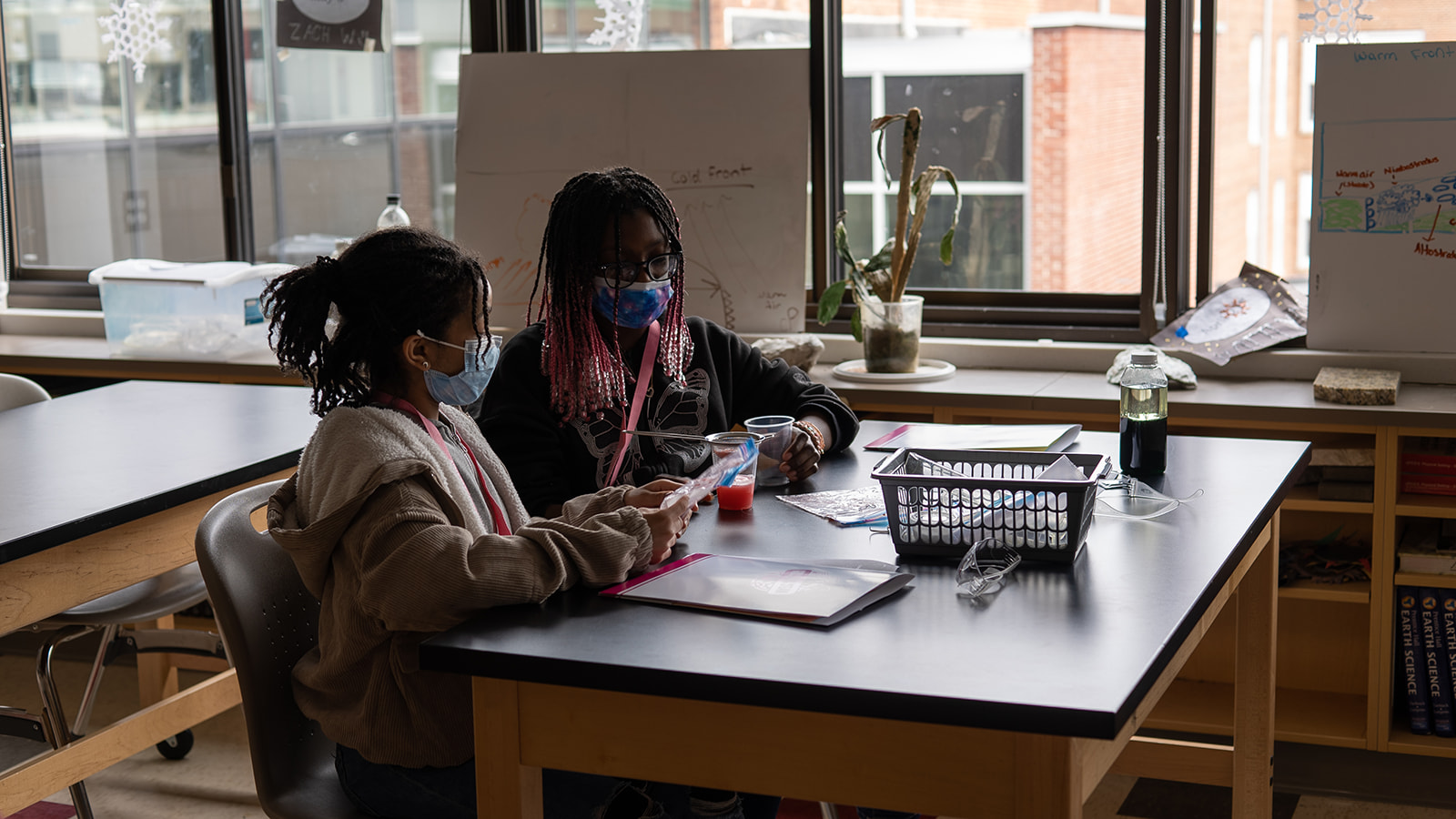
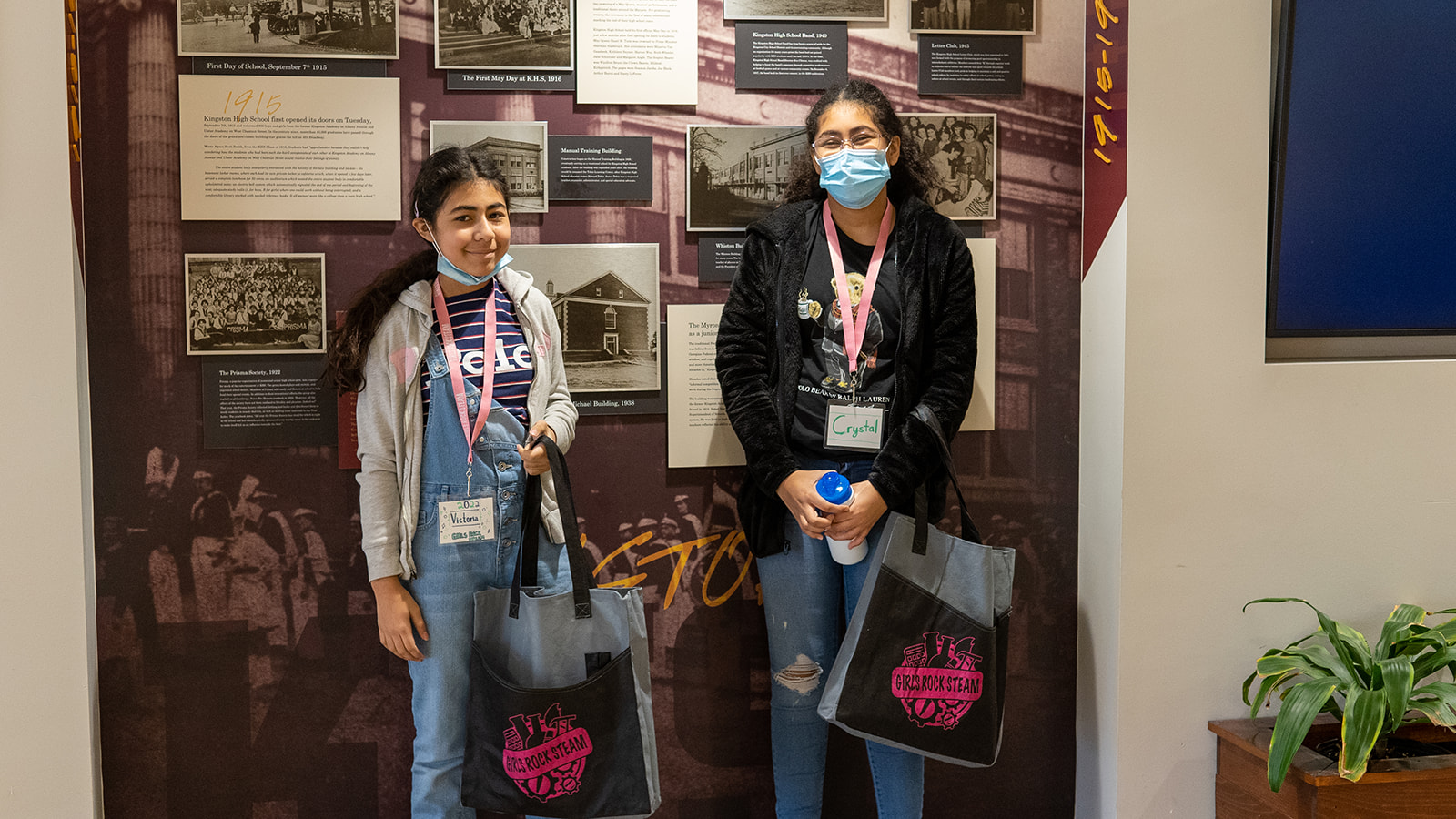
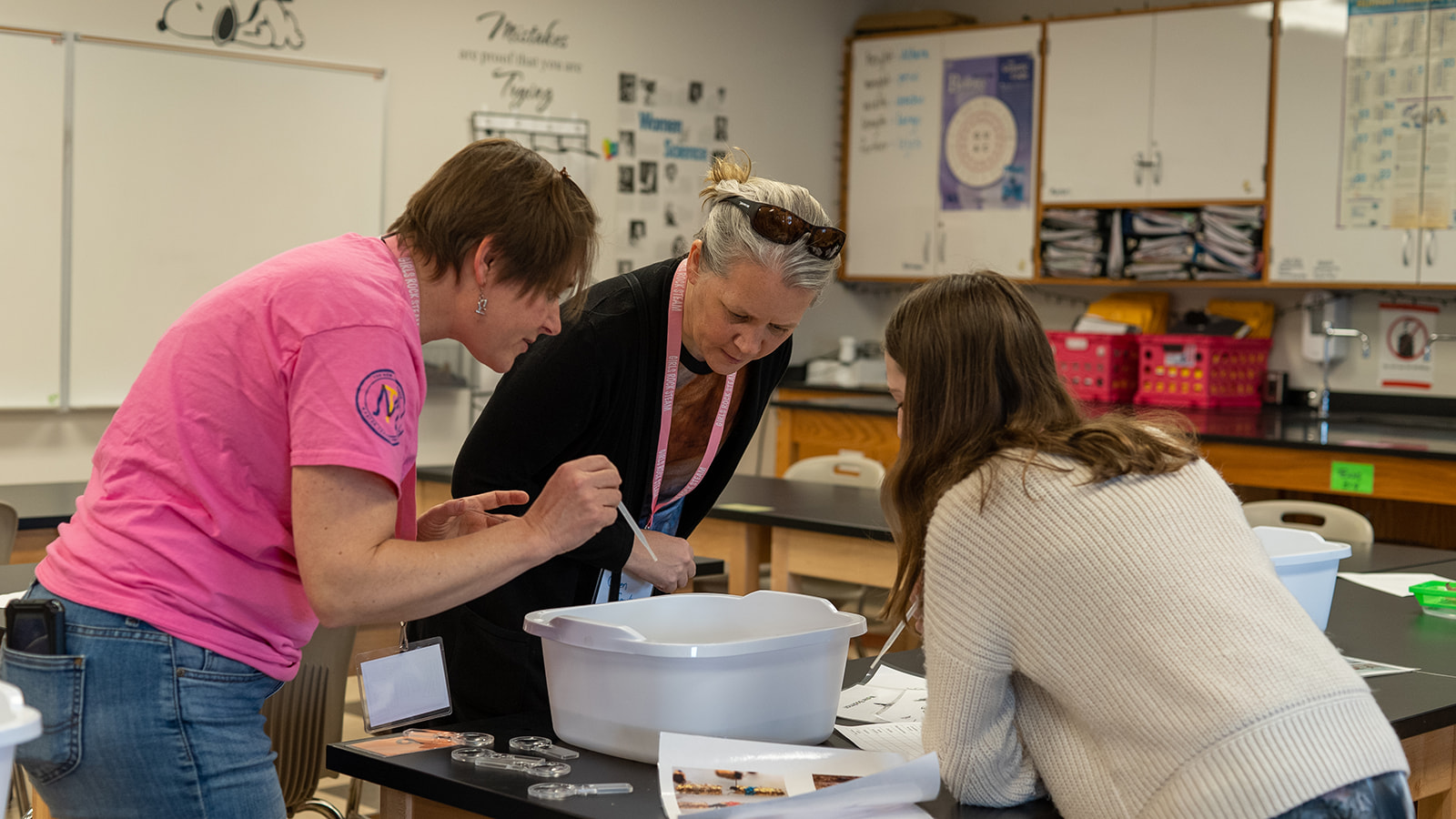
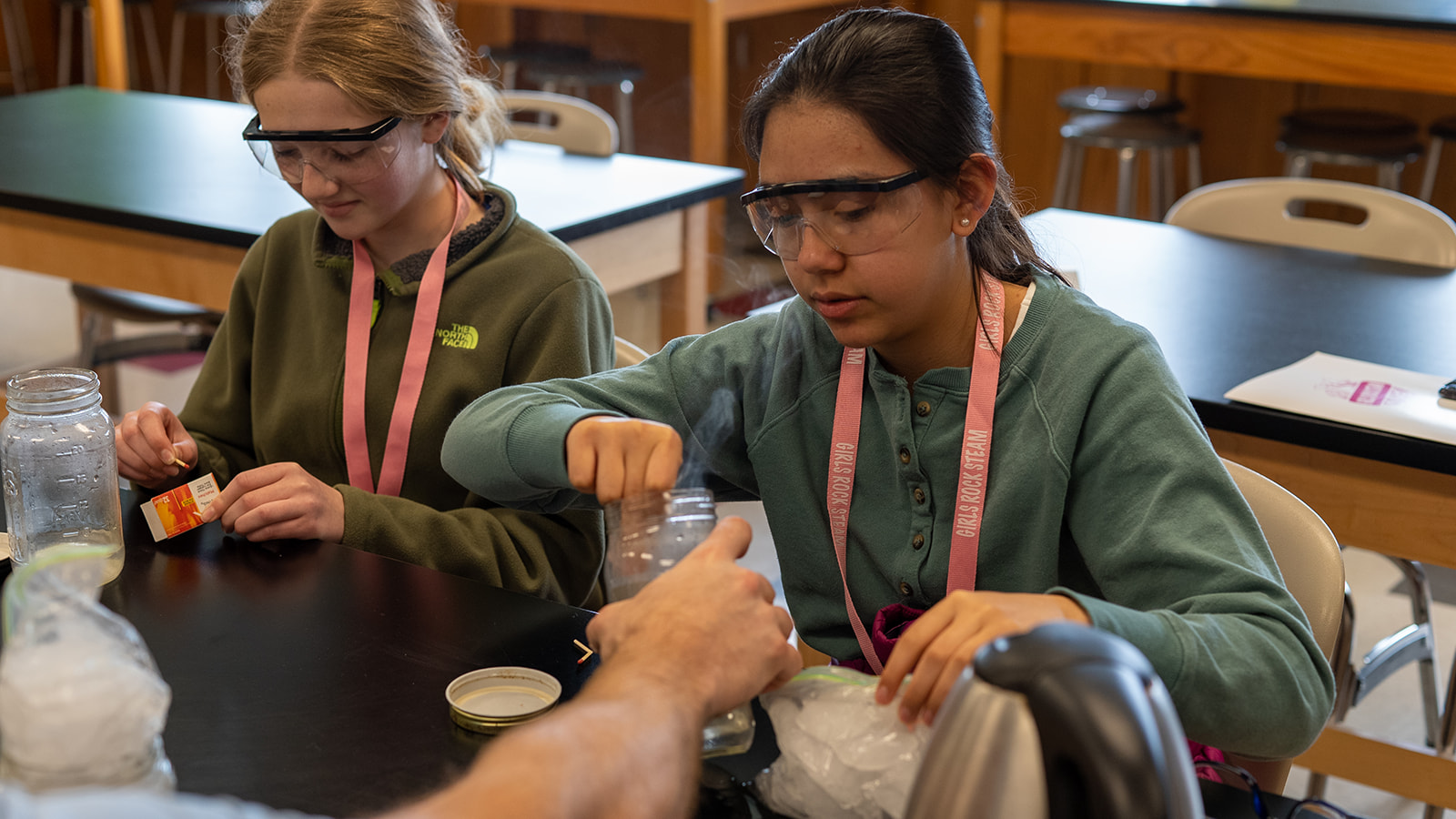
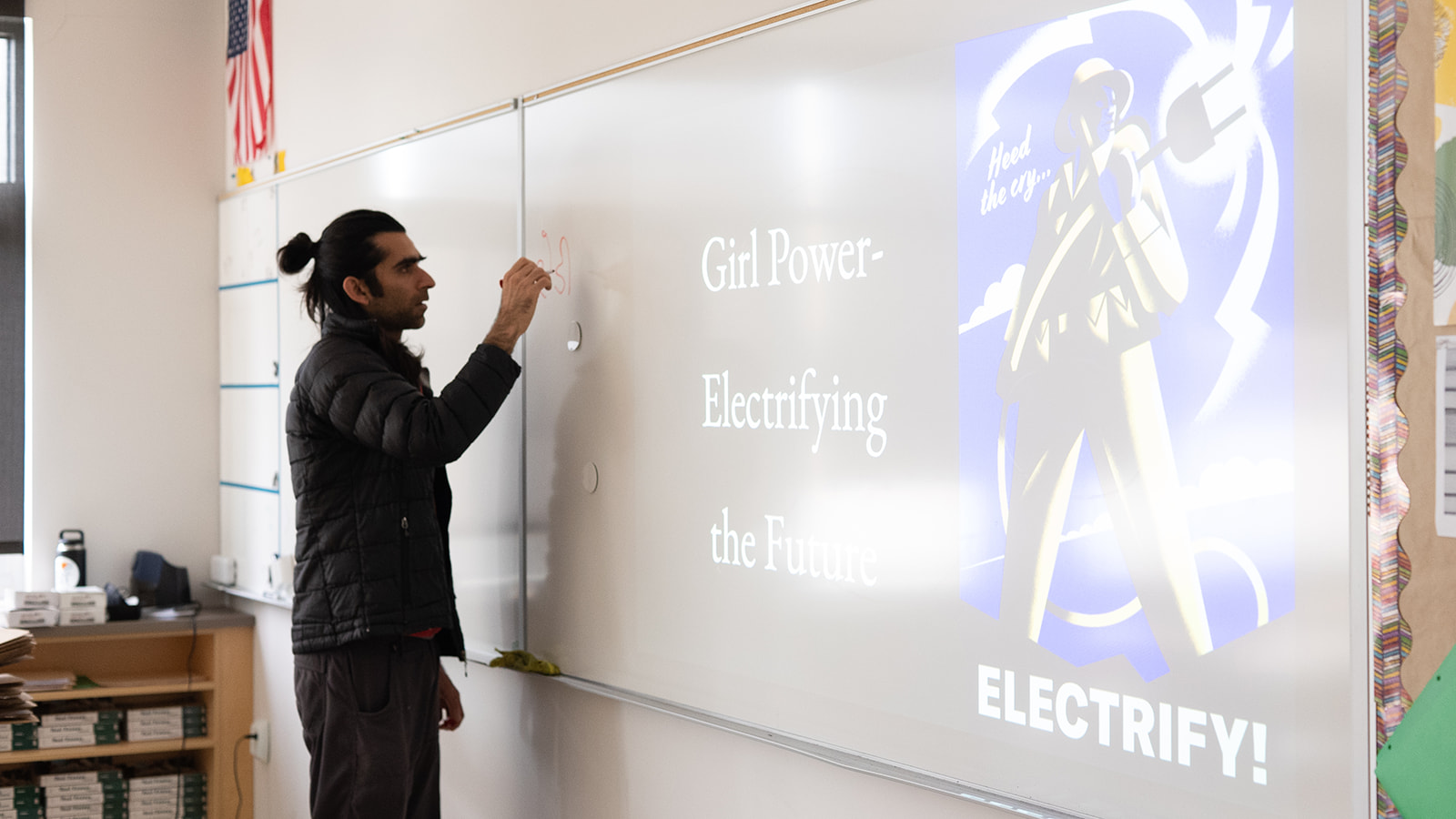
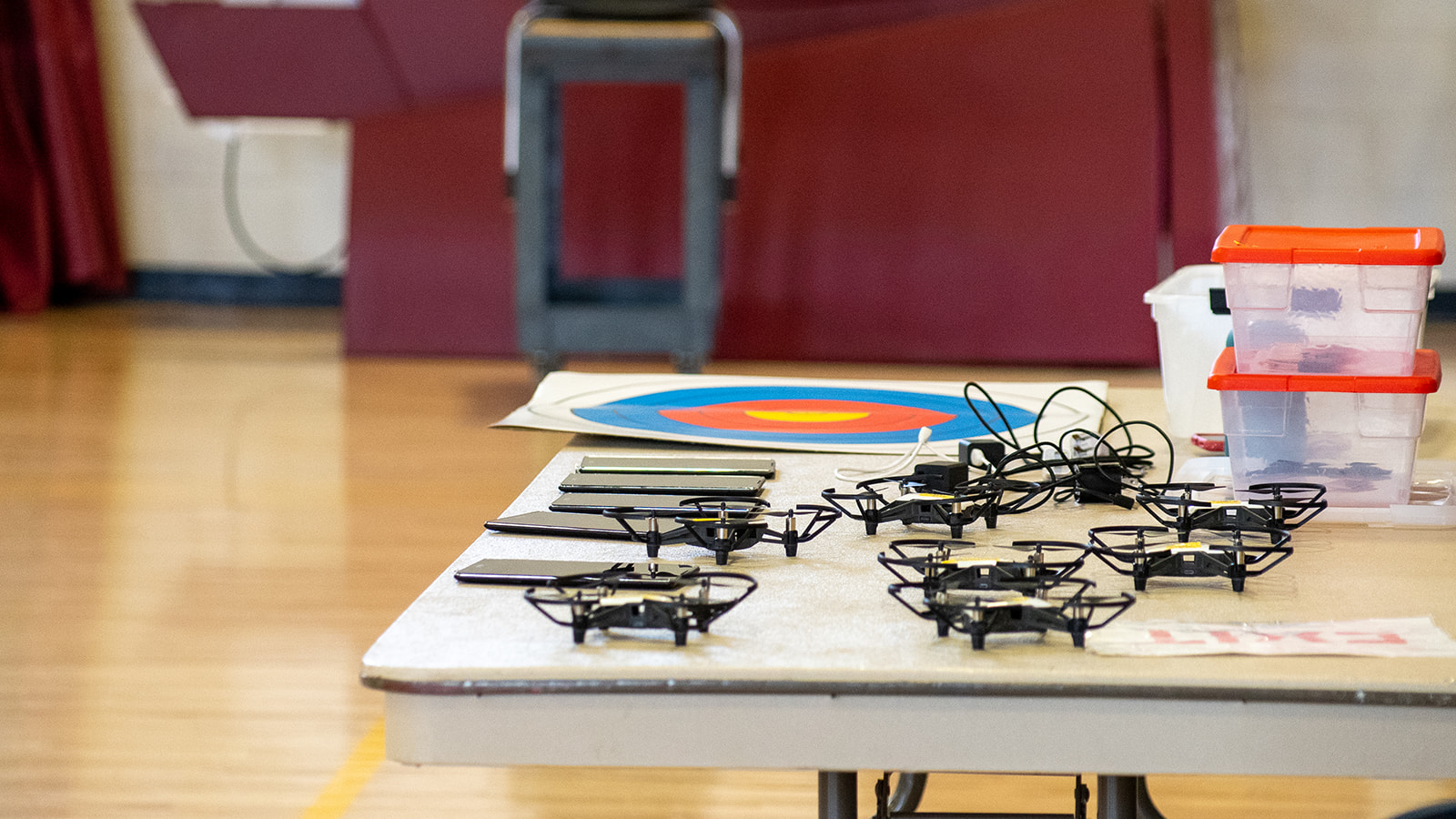
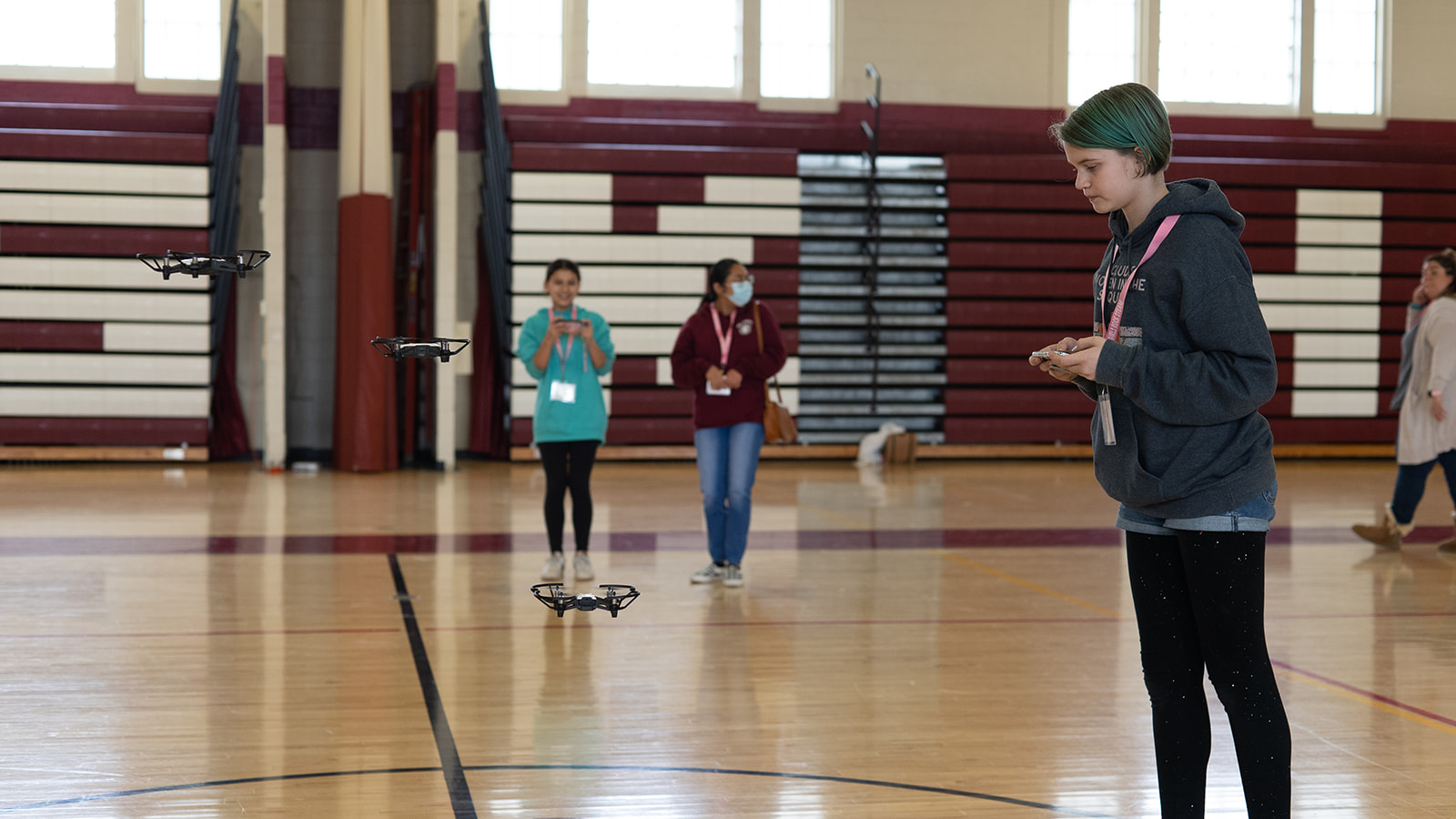
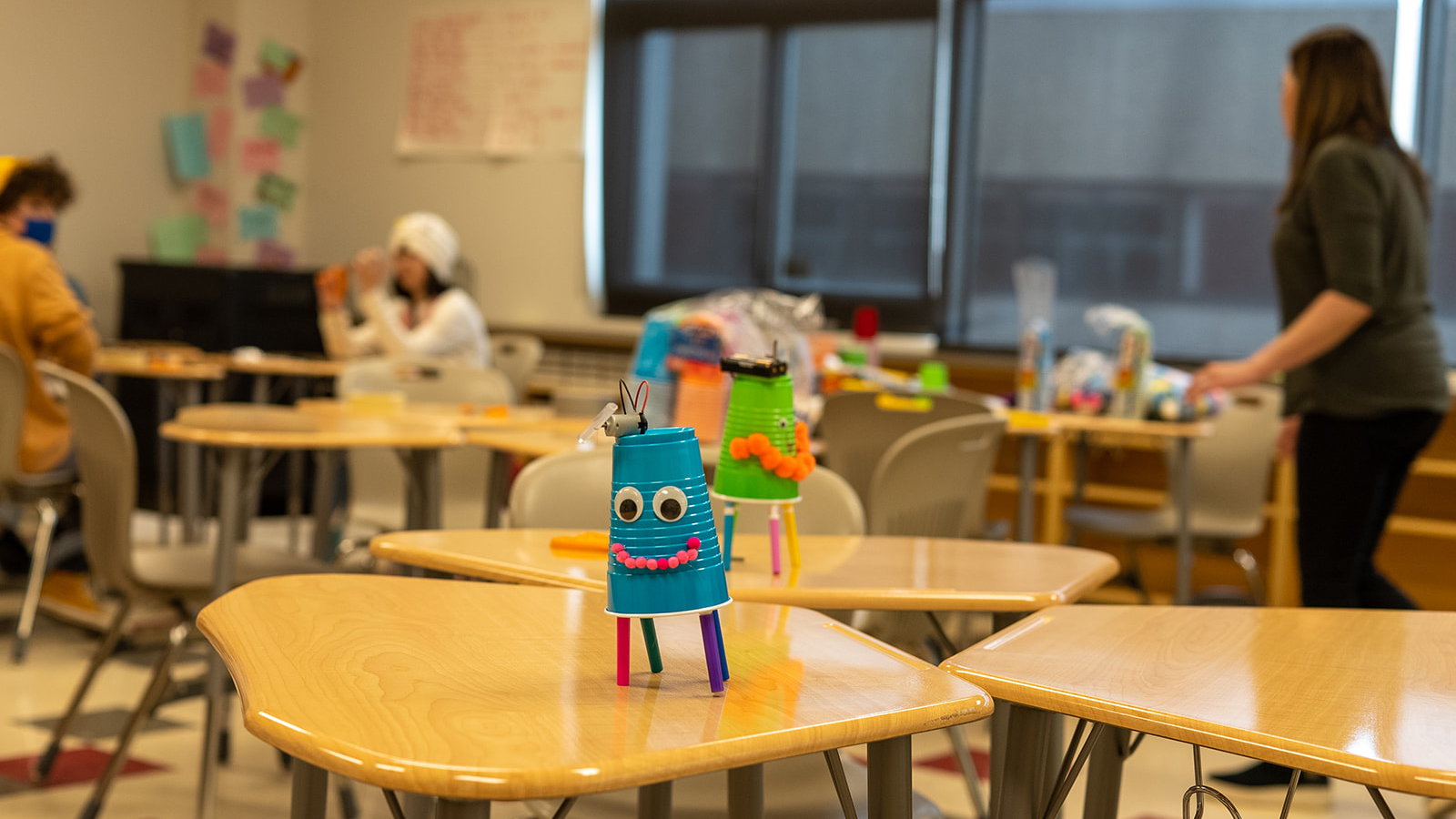
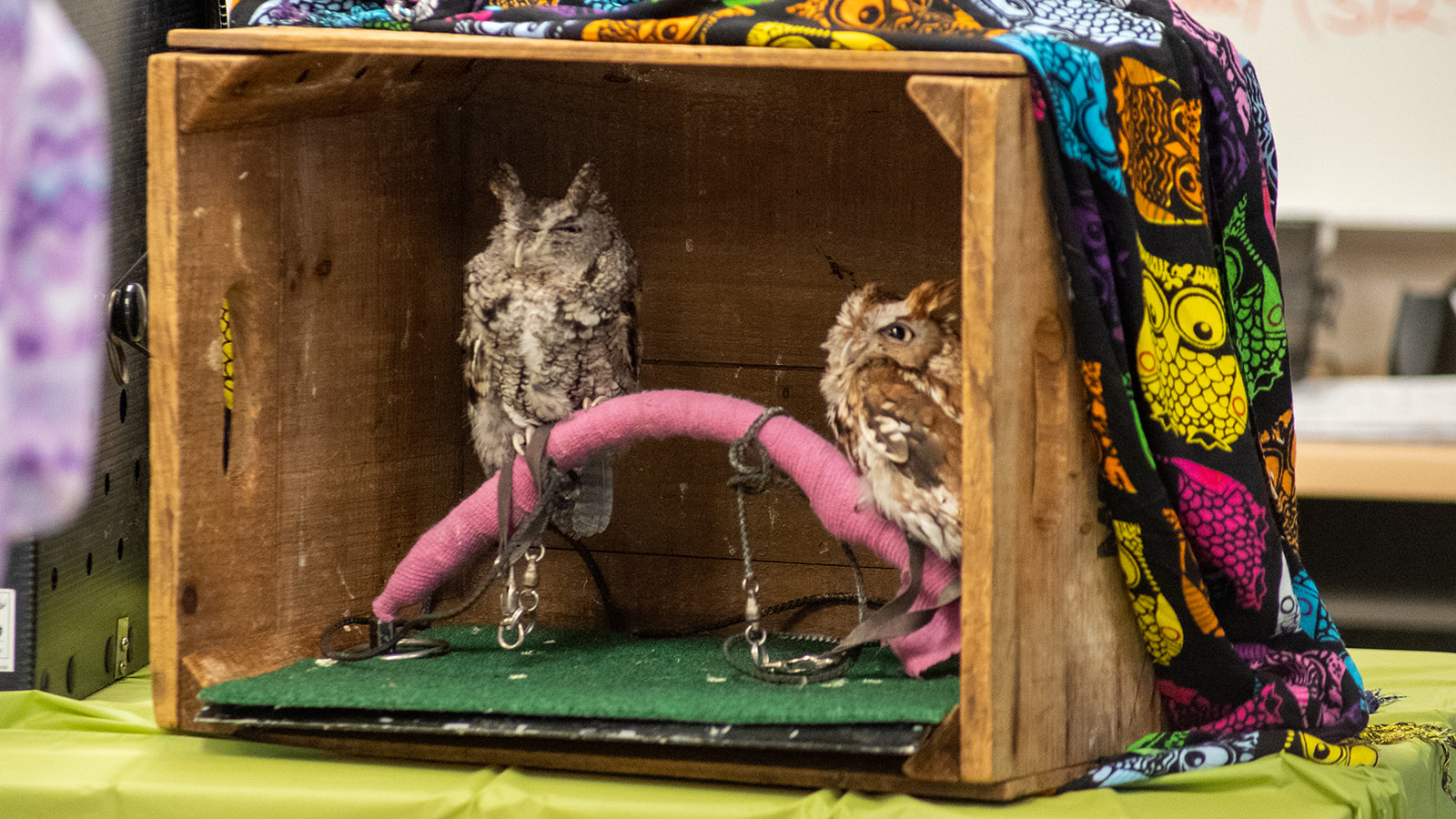
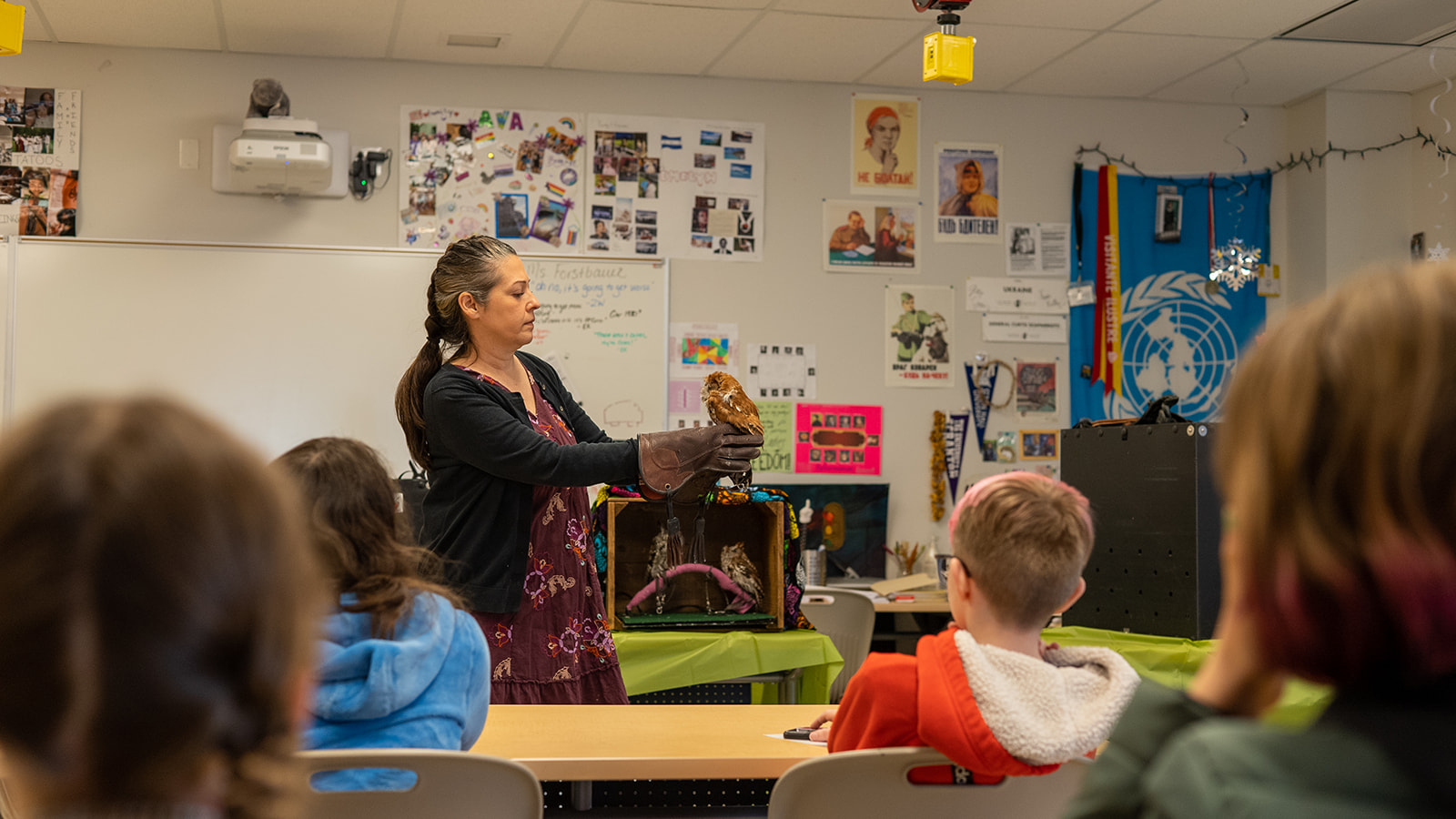
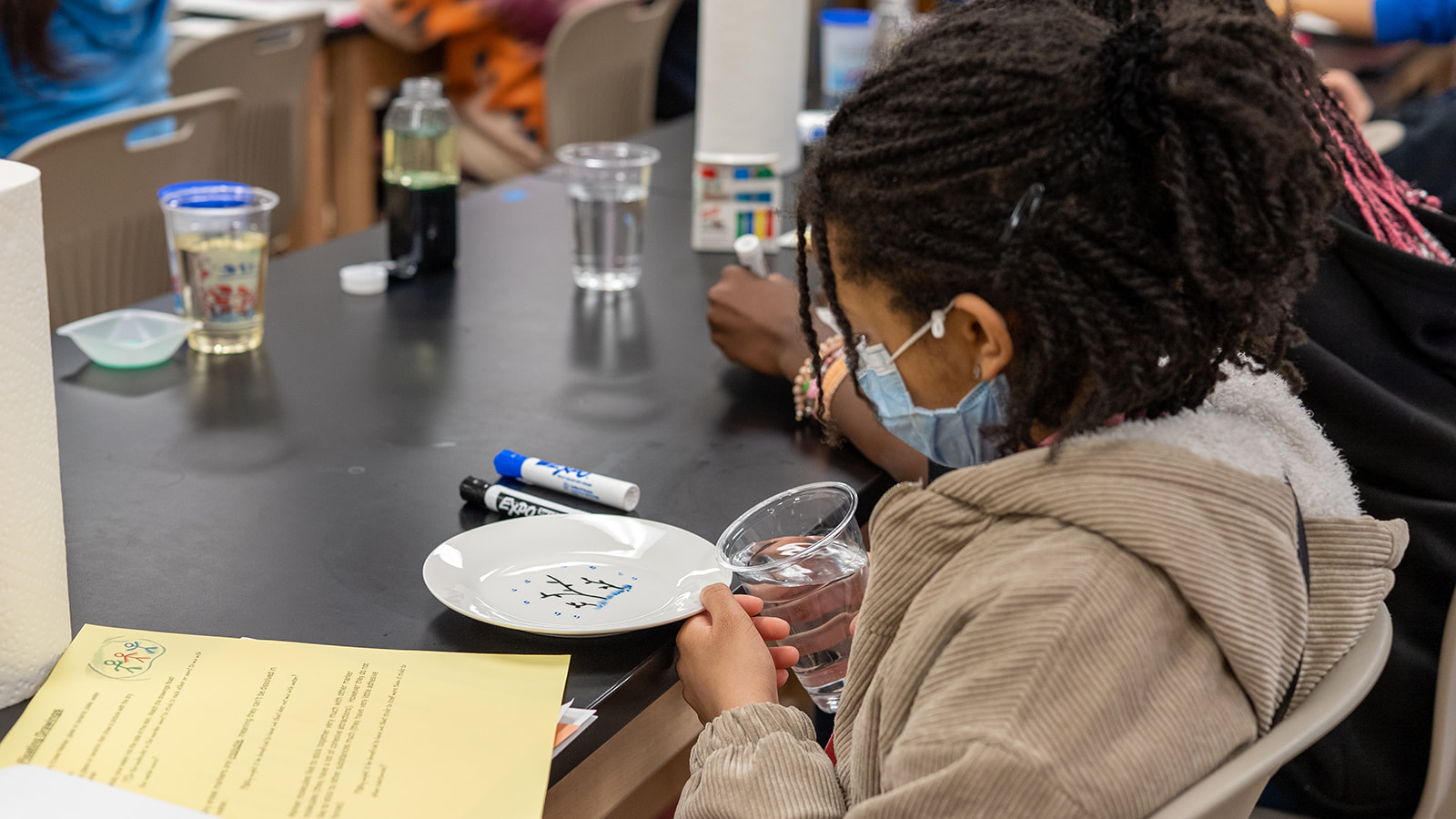
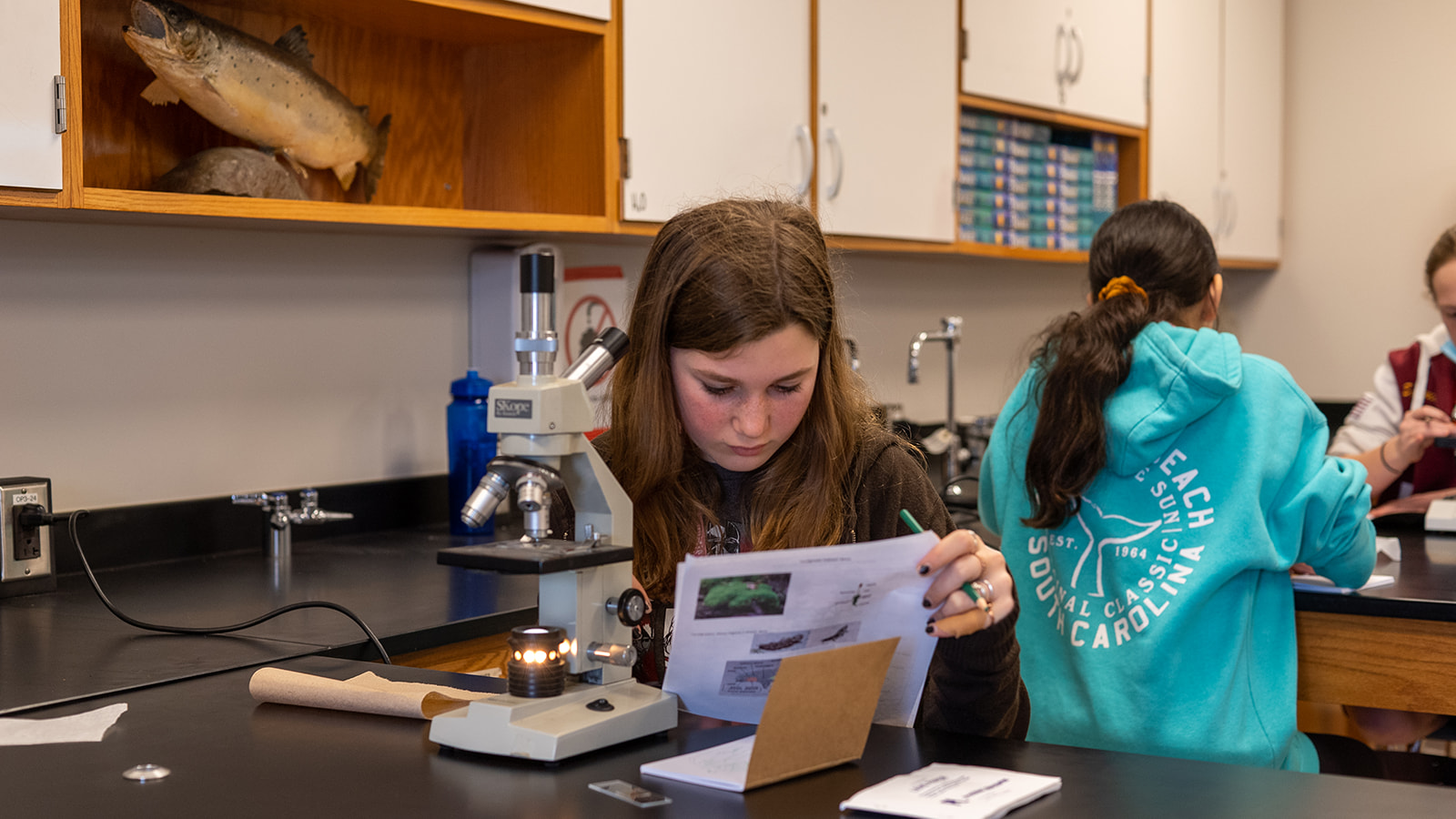
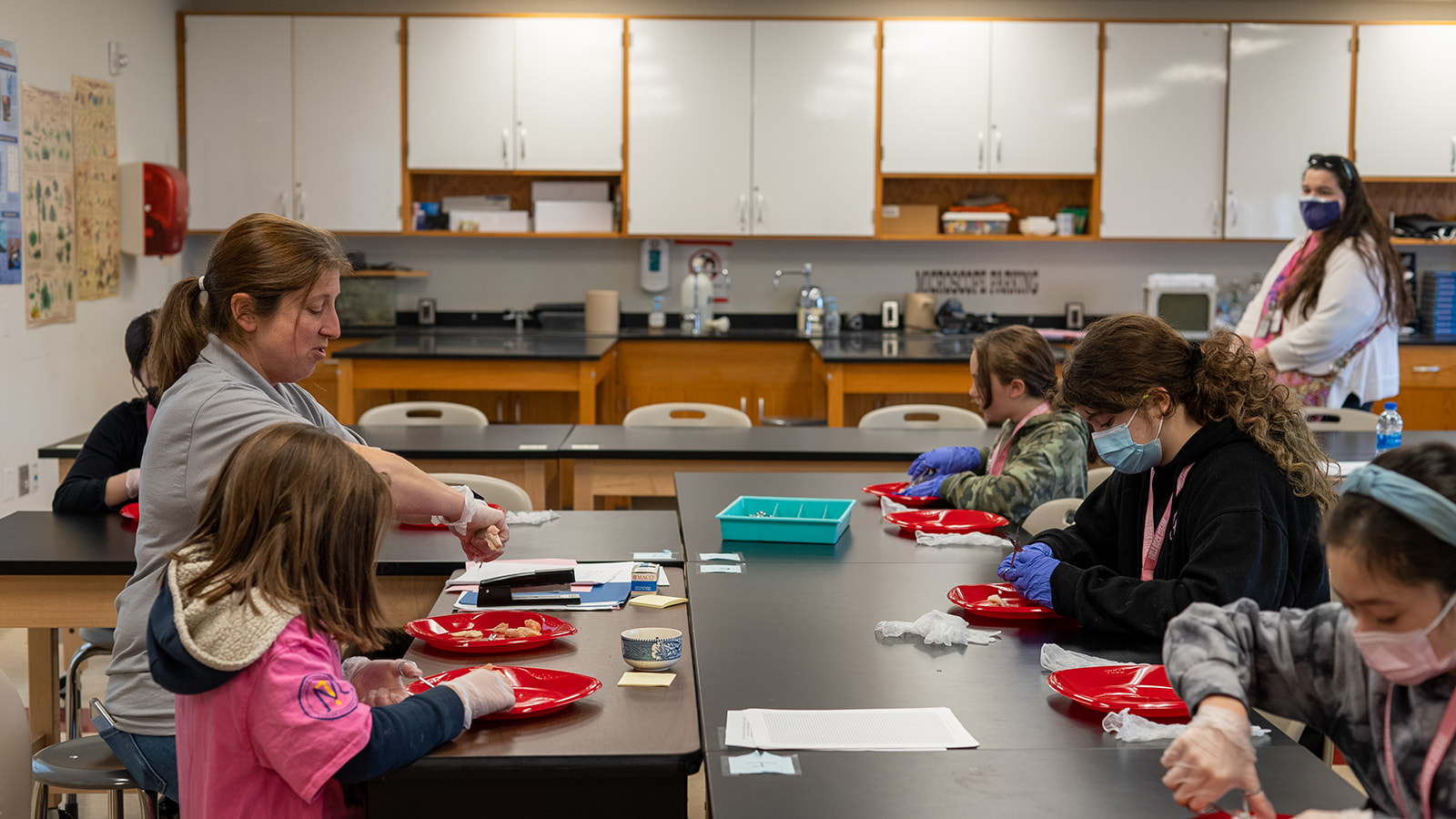
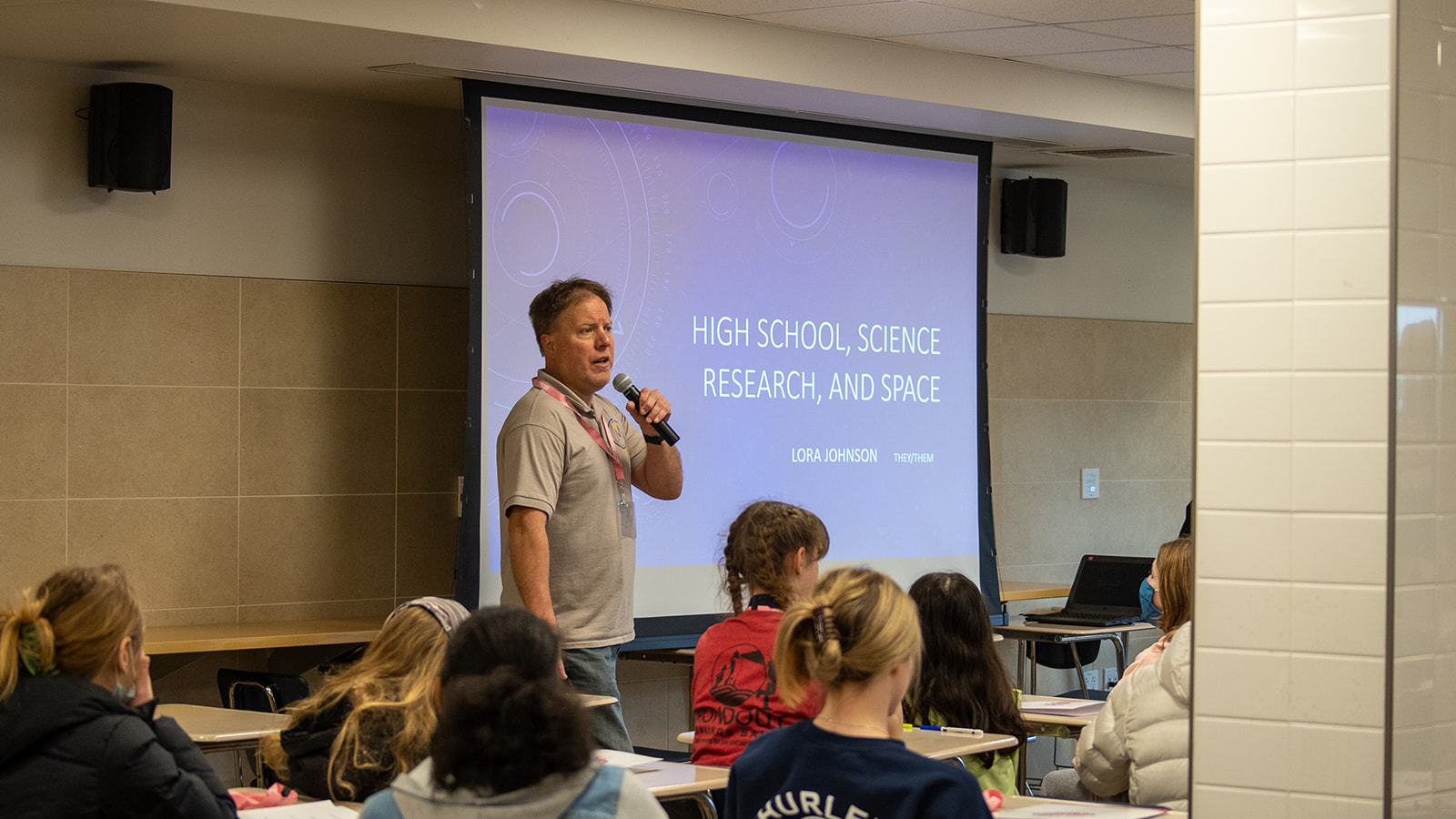
Participants were able to follow their interests choosing from building simple circuits, learning how to code to fly drones, dissecting to understand musculoskeletal anatomy, honing their microscope skills in search of tardigrades (aka moss piglets), learning the chemistry behind lava lamps and tie-dye, taking a turn at engineering design for tower-building, meeting raptors from the Wild Mountain Bird, a wildlife rescue and rehabilitation center, and more.
A theme running through the day was seeing STEM as it is part of their world—their hobbies and their day-to-day routines. The keynote speaker was a senior at New Paltz High School, a student in the Science Research in the High School program through University at Albany. She shared her experiences as a young researcher, helping the 5th-8th graders see a future where they can pursue STEM studies and a career.
Great reflection of a successful event. I'm looking forward to helping with next year's event. I would like to collaborate with other science teachers in my district to recruit MS girls as well as presenters.
Carrie Schlagler, Marlboro Central School District
I look forward to participating in the Girls Rock STEAM event annually to continue to promote the importance of STEAM in the lives of women and girls in our region. This has been such a rewarding experience for me and I am so thankful for the opportunity to see new things in the field of education and experience new learning opportunities thanks to the mini-courses and cohort meetings offered through the NYSMTP program.
Brian Halling, Bronxville Union Free School District
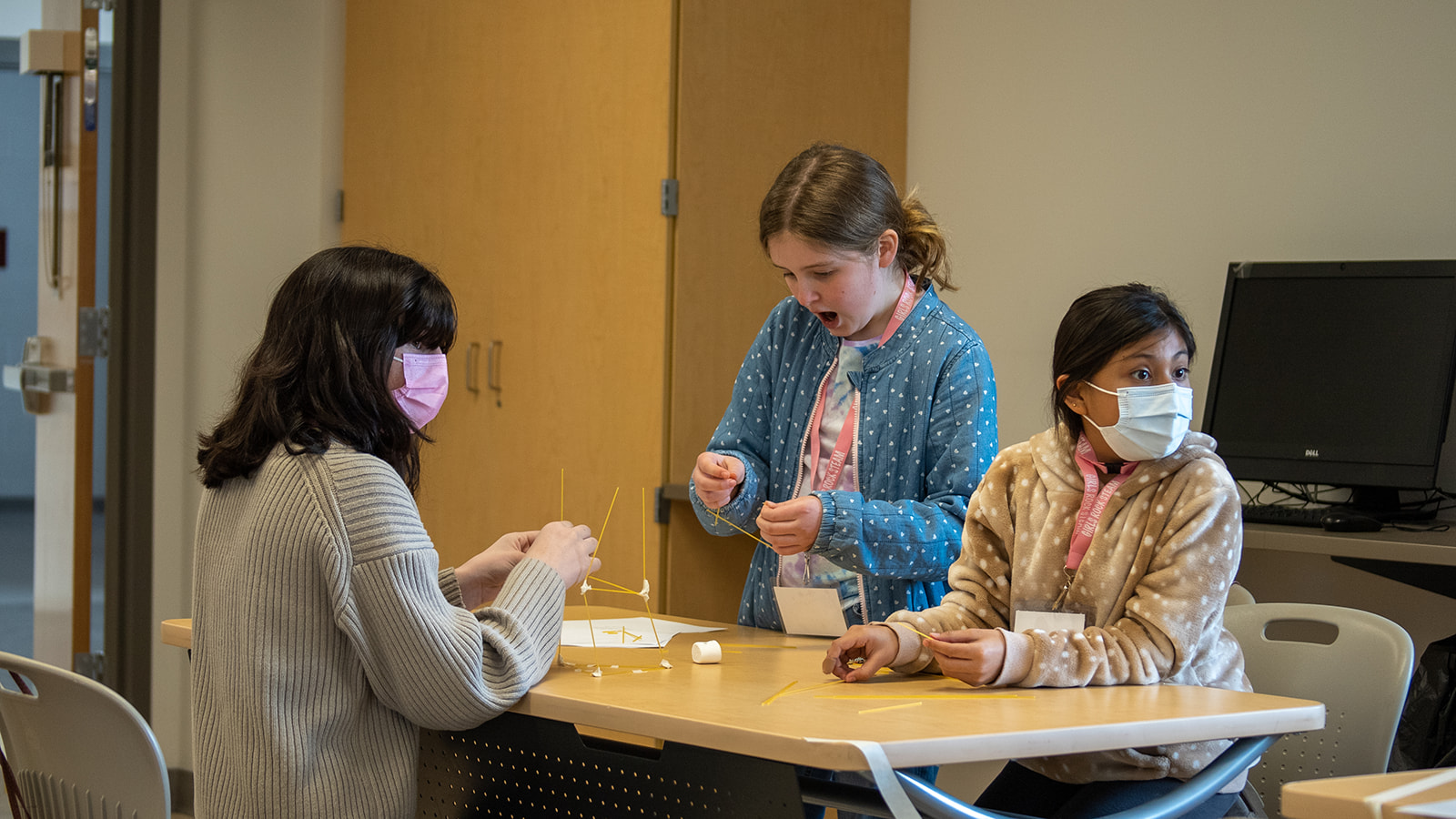
Supporting 5th through 8th grade girls in experiencing STEAM opportunities that interest them. While the value was mainly in how it serves and motivates our potential leaders of tomorrow, it was also valuable for my own classroom work by showing me various resources (material and personnel) that can be used with my own students.
Marianne Strayton, Clarkstown Central School District
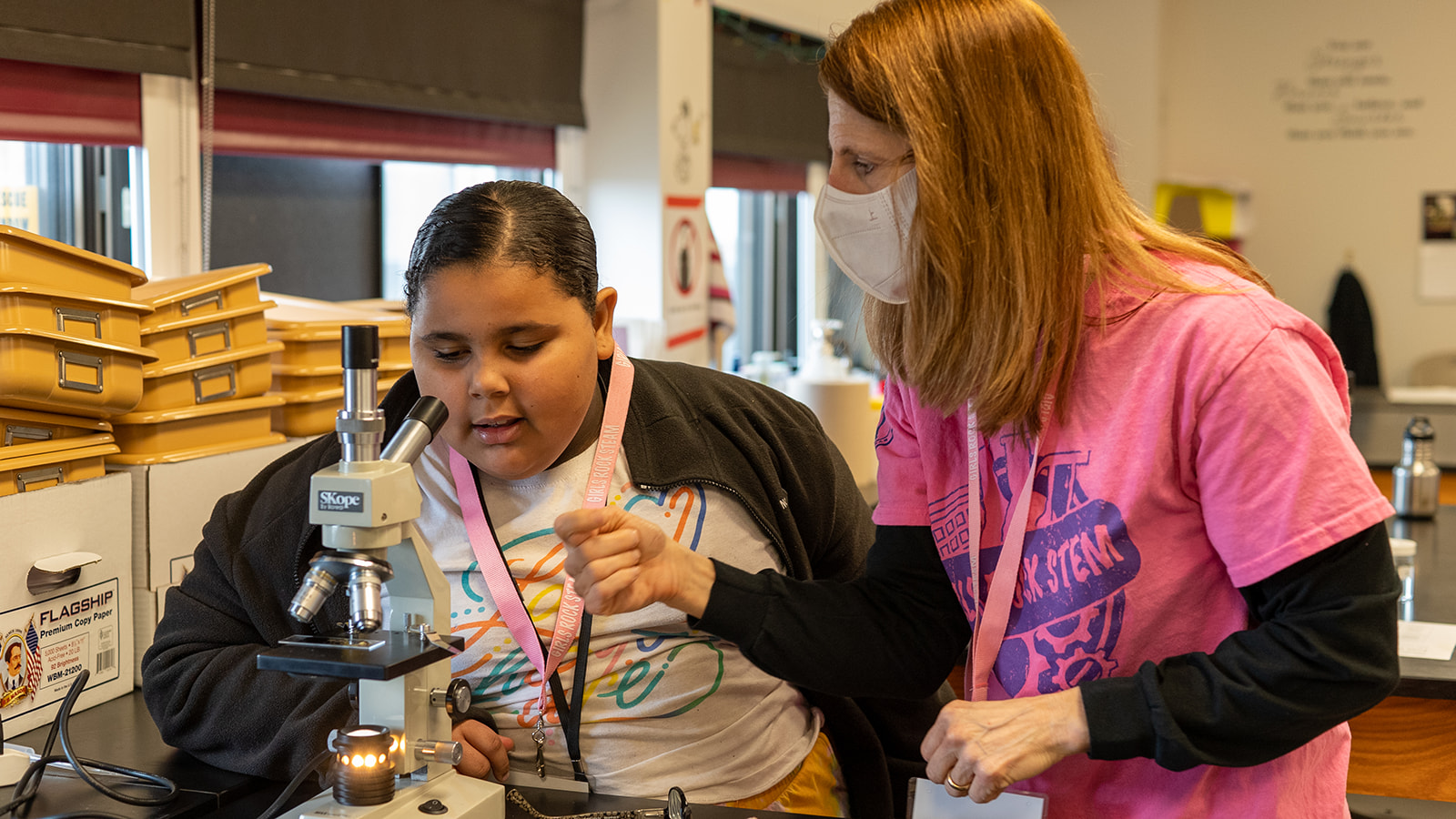
As a STEM educator, this program helps me to coordinate and provide high quality STEAM education to a variety of young women throughout the Mid Hudson region. This program also allows me to network with other MT's as well as community members and educators from the Kingston School district to engage our youth.
Bruce Cobb,
Lead Facilitator, Kingston City School District
We recognize and celebrate the teachers for their dedication to their students:
From the Kingston City School District, Lauren Hutton, Kate Johnson, Marin Malgieri, and lead event facilitator, Bruce Cobb.
From the Arlington Central School District Cindy Binnie and Stephanie Marden.
From the Bronxville Union Free School District, Brian Halling.
From the Clarkstown Central School District, Marianne Strayton.
From the Hendrick Hudson Central School District, Allen Zollner.
From the Katonah-Lewisboro Union Free School District, Ann Marie Lipinsky.
From the Marlboro Central School District, Carrie Schlagler.
From the Pine Plains Central School District, Mark McGuire.
From the Poughkeepsie City School District, Donald Stark.
From the South Orangetown Central School District, Karen Connell.
From the Wallkill Central School District, Samrat Pathania.
From the Wappingers Central School District, Patty Nardone.
From the Washingtonville Central School District, Greg Bartholdi.
From the Yonkers City School District, Sunitha Howard.
Annie Mardiney, Wildlife Rescuer and Rehabilitator.
Cheryl Spada, Mid-Hudson Regional Director based at SUNY New Paltz,
and the Kingston City School District staff that hosted the day.
June 10, 2021
The New York State Master Teacher Program is a vibrant network of more than 1400 outstanding public school teachers throughout the state who share a passion for their own STEM learning and for collaborating with colleagues to inspire the next generation of STEM leaders. Master Teachers have a leadership role in determining their professional learning activities allowing them to meet the needs of their students and tailor the learning to their curriculum.
Two Master Teachers, Jim Burdick, based at SUNY Plattsburgh, and Annette Sebuyira based at the University at Albany, are leveraging the statewide network of outstanding STEM teachers to facilitate a now year-long collaboration with the national organization Beyond Benign to bring the practice of green chemistry into the classroom.
The fact that they launched this collaboration in the midst of districts’ changing to remote or hybrid teaching makes their effort all the more valuable. They understood the power of on-line learning: Jim is a Chemistry and Living Environment teacher in the Canton Central School District in the North Country. Annette teaches Chemistry in the Guilderland Central School District in the Capital Region .
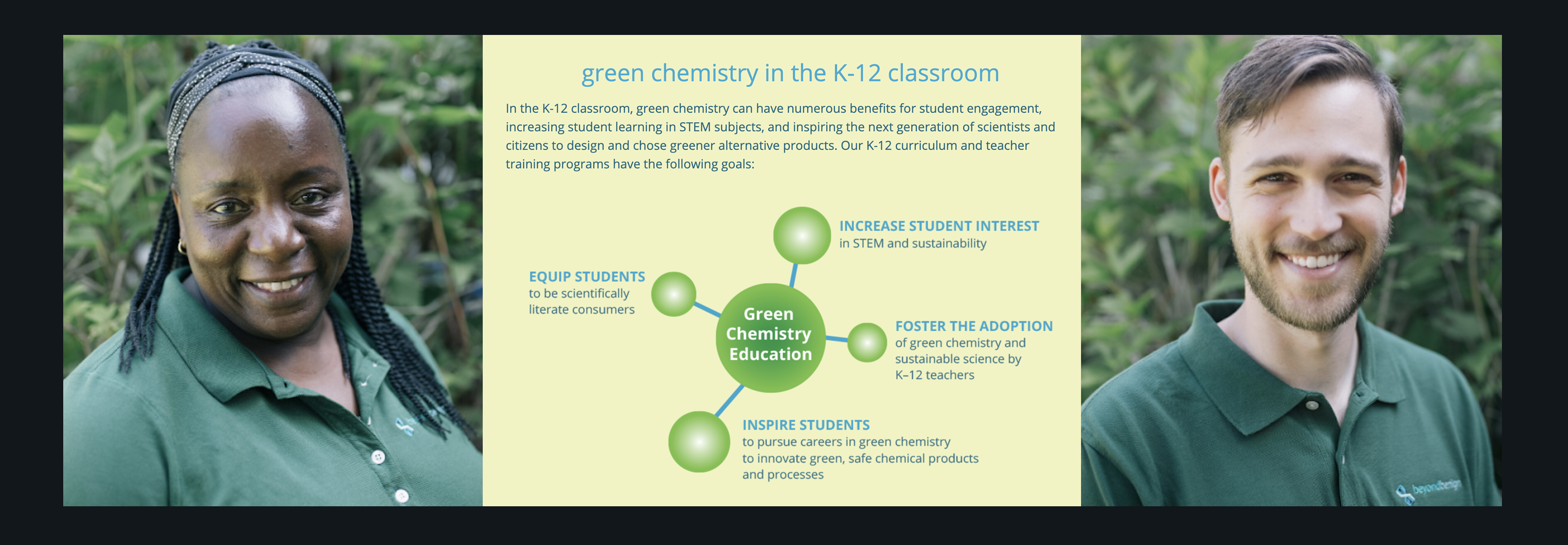 Beyond Benign is an organization dedicated to fostering a green chemistry community that empowers educators to transform chemistry education for a sustainable future.
Teachers from across New York State have participated in the monthly meetings this school year. As expected, many teach Chemistry, but the opportunity to integrate sustainability into the curriculum has engaged elementary and secondary teachers of General Science, Earth & Space Sciences, Food Science and Physics. The group counts teachers from urban, suburban and rural school districts.
The ability to network with like-minded teachers from across the state to share best practices in not only a chemistry context but in the context of greener methods has been a wonderful experience. Students will benefit greatly from experiencing chemistry with familiar materials, making content more relatable. Connecting with experts from industry has also helped to deepen my practice and bring a richer experience of chemistry in context to the classroom.
- Green Chemistry PLT participant
Reducing the use of toxic chemicals in chem class IS important, but Green chemistry is more than cleaning out classroom labs. Green chem crosses disciplinary boundaries beyond chemistry and extends to innumerable aspects of the choices we make each day, individually and collectively, that have an impact on the sustainability of life on this planet.
To gauge interest in Green chem, Annette and Jim co-facilitated a summer workshop in 2020. Feedback was very positive from inservice teachers,
I liked the intro activities and the resources on the beyond benign chemistry website! I love the idea of transforming my labs to be based on the 12 principles of Green Chemistry.
I teach Physical Science at BOCES Career & Tech Ed. I would like to use Green Chemistry labs for my chemistry unit and tie it into an environmental unit.
and pre-service teachers from Stony Brook University. About to embark on their teaching career, a graduate student shared:
I will be more aware of what is being used and how it can be greener. I also loved the at-home, safe ideas for labs online…. I thought it was very informative and worth being a part of. I got a lot out of it.
Following the success of the summer 2020 workshop, Jim and Annette had an idea to form a collaborative partnership between the Beyond Benign team and the statewide network of the NYSMTP and thus, the Green Chemistry monthly meetings began.
Janie Butler, K-12 Program Manager of Beyond Benign, sees the value of the group lies in “the ability for the teachers to work together to cultivate ideas as a cohort. Considering that Green chemistry is a science that’s constantly evolving, constantly bettering itself, together the teachers are able to work on customizing sustainability science to fit into the classrooms.”
Kate Anderson, Beyond Benign’s Director of K-12 Education, notes the “power of the peer to peer network the shared experience of the teachers allows them to build off of each other’s ideas and collaborate in deeper meaningful ways.”
Laura Hoch, a Materials Innovation chemist for clothing and gear company Patagonia, met with Green Chem to discuss how she uses green chemistry principles and practices to design sustainable and durable outdoor apparel.
About Laura Hoch's presentation, one attendee shared:
My students will be researching green ways to counteract the negative aspects of human impact on the environment. I have also been able to reference the Patagonia speaker with my 6th graders as we learned about climate change!
Green Chem also met with Dr. Amy Cannon, Co-Founder and Executive Director of Beyond Benign who holds the world’s first Ph.D. Dr. Cannon focuses on chemistry education to better prepare students and scientists to enter the workforce trained with the skills to create sustainable materials and products. During her session with the teachers, she shared information about future job prospects for students.
In addition to learning from outside experts, monthly meetings devote time to members’ discussing their lessons to share with all.
I appreciate sharing ideas with other chemistry teachers. Now I feel safer and I know my students are safer. And because the materials we are using are everyday materials that they are already familiar with, they can relate better to the chemistry learning. For example, if I say we’re going to use copper(II) sulfate, that doesn’t mean a thing; but, if I say we’re going to use green tea or black tea...they can understand the materials better, it brings it to their level better, as well as making it safer.
- Barb Melby, Owego-Apalachin Central School District, Biology, Chemistry and Human Anatomy teacher
 Co-facilitator Jim Burdick shares an engaging green chemistry lab he has created about Anaerobic Manure Digestion Systems, of particular relevance to students living in agricultural regions.
As teachers share ideas about green approaches to chemistry labs, many state that their students are not only safer, but can relate better to the chemistry they are learning. Students have commented on their experience:
Green chemistry means the world to me. Our oceans and earth need to be cleaned because of the trash. I went for a walk a couple weeks ago and I saw so many plastic water bottles on the grass and in the sewer. We need to recycle more so the earth cleans itself. - Earth Science Student
What excites me the most about green chemistry is the possibility of being able to help out our world and our future by minimizing hazardous items from substances and experimentation. - High School Student
Based on the value of what they have learned and what they have been able to bring back to their students, some of the members are thinking about continuing their own green chemistry learning. Catskill CSD Chemistry and Physics teacher Stefanie Loomis applied and was selected to the Beyond Benign Lead Teacher Program .
 We asked Stefanie what she had found most valuable about her experiences with the Green Chem meetings this year. She told us:
The real life applications, the speakers that we’ve had, and all of the ideas that everyone has been sharing has helped me with the challenges of teaching students in a hybrid setting this year. I've been trying to figure out how to create experiences for my students who are learning from home. I want them to be able to have hands-on experiences, and not watching the kids at school conduct labs.
We are grateful to Annette and Jim, members of the Green Chem meetings, and the staff of Beyond Benign for sharing their green chemistry knowledge and enthusiasm to create innovative STEM learning experiences for their students.
Interested in joining the monthly Green Chem meetings? New members welcome!
Registration Link
Although the content is targeted to middle/high school teachers all NYS K-12 teachers are welcome to join.
Next meeting is June 7, 2021. The group is not meeting July & August but you are welcome to register now to receive info before the September meeting.
Green Chemistry for In-Service Teachers
Visit the Beyond Benign website to learn about courses available (currently online).
Green Chemistry for Pre-Service Teachers
For pre-service educators, a free online course offering that will be tailored to your classroom. Learn more about the offerings at Beyond Benign Pre-Service Teacher Training.
CleanSweepNY
Does your school have chemicals that are in need of safe disposal?
Click here for information
Scholarships for course costs are available: Apply here.

May 4, 2021
NYS Master Teachers based at SUNY Geneseo coordinate with faculty at several nearby colleges and universities to mentor students who are preparing to become STEM teachers. Over the past few years, they have held events and developed partnerships with education majors attending SUNY Geneseo, SUNY Brockport, University of Rochester, Rochester Institute of Technology (RIT), and Nazareth College. Prior to the pandemic, the work was mainly on campus. When the shift was made to remote instruction at both the college campus and K-12 districts, the sessions continued in a virtual format.
A special feature to the mentoring partnerships is that a few of the Master Teachers are alumni of the colleges. Bloomfield High School Biology Master Teacher Kaitlin Calabresi writes,
Obviously, we've had to switch to zoom meetings, but it's fitting with how we currently provide instruction. When we 'went remote' last Spring I had some Nazareth students develop a virtual lesson that I implemented with my students and collected feedback on. I was the contact person between the Nazareth professor and the PLT [Professional Learning Team] because I did my undergrad there.
 Merton Williams Middle School Science teacher Reggie Gerig (L) with his 2019-2020 student teacher, Ryan. The two met at one of the Master Teacher Program Pre-Service events the previous fall. As a pre-service teacher Ryan immediately recognized qualities he saw in Reggie that could help him refine his craft. Ryan requested to be placed with Reggie for student teaching, resulting in a valuable, long-term mentoring partnership.
SUNY Geneseo School of Education Instructor Nikkie Allen sees how her education majors have benefitted from the mentoring partnership:
I think this is the 3rd or 4th year I have worked with MT's during the spring semester. These mtgs/panels have always been very beneficial to the pre-service teachers in the Methods course. They are able to discuss what is really going on in classrooms and have concrete examples to take with them that they utilize in their unit plans or during their practicum placements. There are usually broader discussions about management, grading, feedback, and engagement at the end of the sessions as well...and those real-world conversations help support what they have been learning about.
Dr. Carol Wade, Associate Professor Adolescence Inclusive Mathematics Education at SUNY Brockport, echoes the value of working with the team of Master Teachers, organized for Brockport by Hilton Central School District High School Algebra and International Baccalaureate Math teacher Nicole Coppola:
Nicole and I had scheduled a meeting with the NYSMT for the middle school [math teaching methods] class. The teacher candidates enjoyed it so much they asked if they could come back for the high school methods course. This was arranged and the students were quite pleased. […] I have found that […] the group of mathematics teachers that regularly connects with our preservice mathematics teachers, works to present content to future mathematics teachers that address such high level of thinking about what it means to teach mathematics for learning.
The collaboration with Rochester Institute of Technology (RIT) is a little different in that the Master Teachers are sharing their experience with the RIT Learning Assistants (LAs). LAs are undergraduate students who are selected to facilitate small-group interaction in a classroom setting for all disciplines.
4th year, Physics Major and LA Ashley writes:
It was really awesome to talk with teachers about what is going on. I think they had a unique perspective to share with us, and I took a lot from that. I got to see how hard teachers were working and see what kind of traits made someone a good and motivated teacher. I really hope that, if I can become a professor, I can be someone students look up to or are glad to have as a professor. I hope to have the same sort of passion the teachers had last class.
And 3rd year Bioinformatics Major and LA Makayla shared:
This was really eye opening and fun to do, I had a wonderful time talking to all of the teachers I had a chance to meet with. It was cool to hear their stories about how they became a teacher, where they've taught, and tips/tricks they gave us.
Dr. Emily Mehlman, RIT’s LA Program Coordinator, described a particular set of mentoring meetings that focused on research of best pedagogical practices:
LAs also perform a research project where they spend the semester asking questions and learning more about the practice of teaching and learning in their specific classroom. In the past, the Master Teachers have visited to provide feedback to the LAs in the final phases of this project as the LAs were creating their final research posters for presentation. This was an amazing experience for the LAs to engage in professional conversation with the Teachers about their insights into pedagogy research and ideas about how teaching can be refined based on discipline-based education research.
The successful partnerships have developed over time. Hilton Central School District Biology and Forensics Master Teacher Jennifer Howell describes the variety of mentoring formats that expand beyond the traditional student teacher + experienced teacher pairings, saying our group has been able to accommodate the diverse needs of the particular college we are working with. Often, we bring an interactive lesson and/or teaching strategy to share with the students that addresses NGSS [Next Generation Science Standards]. We are often asked to serve as a panel for the students. At last night’s Nazareth [College] event, we listened to the Capstone presentations that were presented by Graduate students and then provided them with feedback and asked deeper questions. We then worked with individual students in a number of breakout rooms, leading discussions with the students and sharing strategies that we are using in the classroom.
Rochester City School District High School Mathematics Master Teacher Michael Meise encapsulates the personal and professional benefits of engaging with aspiring STEM educators as he writes,
Personally, I have found these sessions truly beneficial. I can only hope that I have helped them as much as they have helped me. During these trying times, seeing the energy from these young people, and appreciating how thoughtful they are in their questions, has served to help me re-energize myself at a time when it is very easy to feel down about the state of things.
George Reuter has a particular vantage point for this Master Teacher collaboration: He teaches the education majors in the SUNY Geneseo’s Mathematics Department and serves as the NYSMTP co-Regional Director for the Finger Lakes region at SUNY Geneseo. He shares the following reflecting on the efforts of the Master Teachers to initiate the mentoring partnerships to support ed majors at various colleges:
I am convinced that young teachers are better prepared to work with students because they are connecting with outstanding experienced teachers who are themselves developing as professionals. The Master Teachers' willingness to reach out to several colleges in our region and to help as many people as they can is admirable, particularly during pandemic.
Since the start of the NYSMTP in 2013, the Master Teachers have dedicated themselves to supporting in and pre-service teachers through partnerships such as these developed by the teachers based at SUNY Geneseo. They are outstanding ambassadors for the teaching profession, demonstrating their love of learning and their commitment to helping prepare the next generation of STEM leaders.
April 19, 2021
Dr. Debra Adair, SUNY New Paltz Department of Biology, led “Chasing COVID-19,” a workshop for NYS Master Teachers on the virology of COVID-19 and how teachers can incorporate relevant, real-world COVID-19 data into their classroom lessons.

136 teachers from over 90 school districts across New York State, including large city, urban/suburban, and rural locations attended the evening session to learn about the current STEM topic. As teachers are quite adept with on-line learning tools, they made the most of the synchronous workshop. While Dr. Adair was responding on camera to questions about the virus and vaccines, the Master Teachers were trading pedagogical ideas in the Zoom text box.
Following the workshop, Master Teachers shared thoughts about bringing the information back to their classroom and colleagues:
Randy Gunnell, Physics and Science Research teacher in the Harrison Central School District, summed up the event saying that Dr. Adair developed “the workshop from relatively simple concepts about COVID, how it spreads, it's structure, etc. to jumping into great detail later in the presentation helped me understand it at a very deep level. I really appreciated learning so much.”
Dr. Adair began working with the NYS Master Teacher Program in 2018, and her collaborations directly support the program mission to deepen and broaden educators’ knowledge of STEM content. Cheryl Spada, who serves as the Mid-Hudson Regional Director and based at SUNY New Paltz, notes “Dr. Adair has an innate ability to know what content will best benefit our teachers. She welcomes questions and enjoys brainstorming ways teachers can use content in their K-12 teaching. She works diligently in designing workshops that address their requests for information and each offering is built around teacher input.”
Reflecting on the NYSMTP’s year of professional learning opportunities, Karen Bertram in the Cato-Meridian Central School District reflected, “I teach earth science but one of the most impactful experiences I have had this [school] year is the talks discussing COVID. My students are curious and really do want to talk about what is going on. We discussed how the vaccine works and how it was developed. They are learning how the scientific process works live.”
Ms. Spada adds, “As educators, we know that authentic learning experiences are the most impactful for students. In providing opportunities to discuss current events through the lens of the latest advancements in knowledge and objective analysis of data, we are offering our students a platform towards creating a deep understanding of STEM content. The powerful outcomes of providing teachers a forum to work with an expert such as Dr. Adair to ask their high-level questions and be provided resources for further information are that the teachers become better informed educators and are able to help students learn science in a clear and unbiased manner.”
The New York State Master Teacher Program is a vibrant network of outstanding public school teachers throughout the state who share a passion for their own STEM learning and for collaborating with colleagues to inspire the next generation of STEM leaders. SUNY New Paltz, one of nine SUNY campuses that serve as the “hub” for professional programming, is dedicated to our K-16 partnership to support teacher professional growth and development that is directly tied to student learning and success. Dr. Adair, we thank you.
March 8, 2021
 June Wang, University at Albany Research Associate Professor in the Department of Atmospheric and Environmental Sciences, led a workshop for K-12 teachers about Mesonet’s network of environmental monitoring stations and the vast amount of data and resources available to K-12 teachers. Dr. Wang is the Quality Control Manager for NYS Mesonet, and was recently named a Fellow of the American Meteorological Society in recognition of her outstanding contributions to atmospheric science and its application.
More than 60 teachers from across NYS attended the workshop, representing 49 school districts and all grades, from kindergarten through twelfth. Attendees teach different STEM courses including elementary level math and science, Physics, Biology, Living Environment, Chemistry, Drone Technology, Computer Science, and Astronomy.
Mesonet, a network of 126 weather stations across NYS with at least one site in every county and borough, is dedicated to “providing the best meteorological data, the best products, and the best services possible with the goal of saving lives and property while building a smart weather economy.” It serves as the key component of the NYS Early Warning Weather Detection System that was designed, installed and is operated by the University at Albany. Mesonet is funded by a collaboration between NYS and the Department of Homeland Security and Emergency Services.
 Crystal Perno, Capital Region Master Teacher Emeritus, joined Dr. Wang as co-presenter to share how she uses the Mesonet resources in her classes. Crystal, a middle school science teacher in the Shenendehowa Central School District, learned of the Mesonet resources through her participation in the STEM Research Institute sponsored by Questar III BOCES summer 2020. Her presentation inspired attendees to consider applications to their own curriculum and grade levels. “Dr. Wang gave a great overview of all the resources and the technology behind Mesonet and Crystal Perno showed some applications of what can be done with the data...I cannot wait to use this site with my students,” commented an elementary school teacher in the Vestal School District in the Southern Tier.
Teachers in attendance from across all grade levels found the session equally valuable. Several noted the relevance of the resources in support of their NYS Science Learning Standards implementation efforts. “The data is great to be used for evidence for Claim, Evidence and Reasoning in Science.” A third grader teacher in the Lowville Academy & Central School District in the North Country appreciated the relevance to her curriculum, “There are 3rd grade weather standards and the information in this workshop connects beautifully with them.” An Advanced Placement Statistics teacher added, “a student may want to access this data to analyze and utilize in my classroom for a project/unit assessment.”
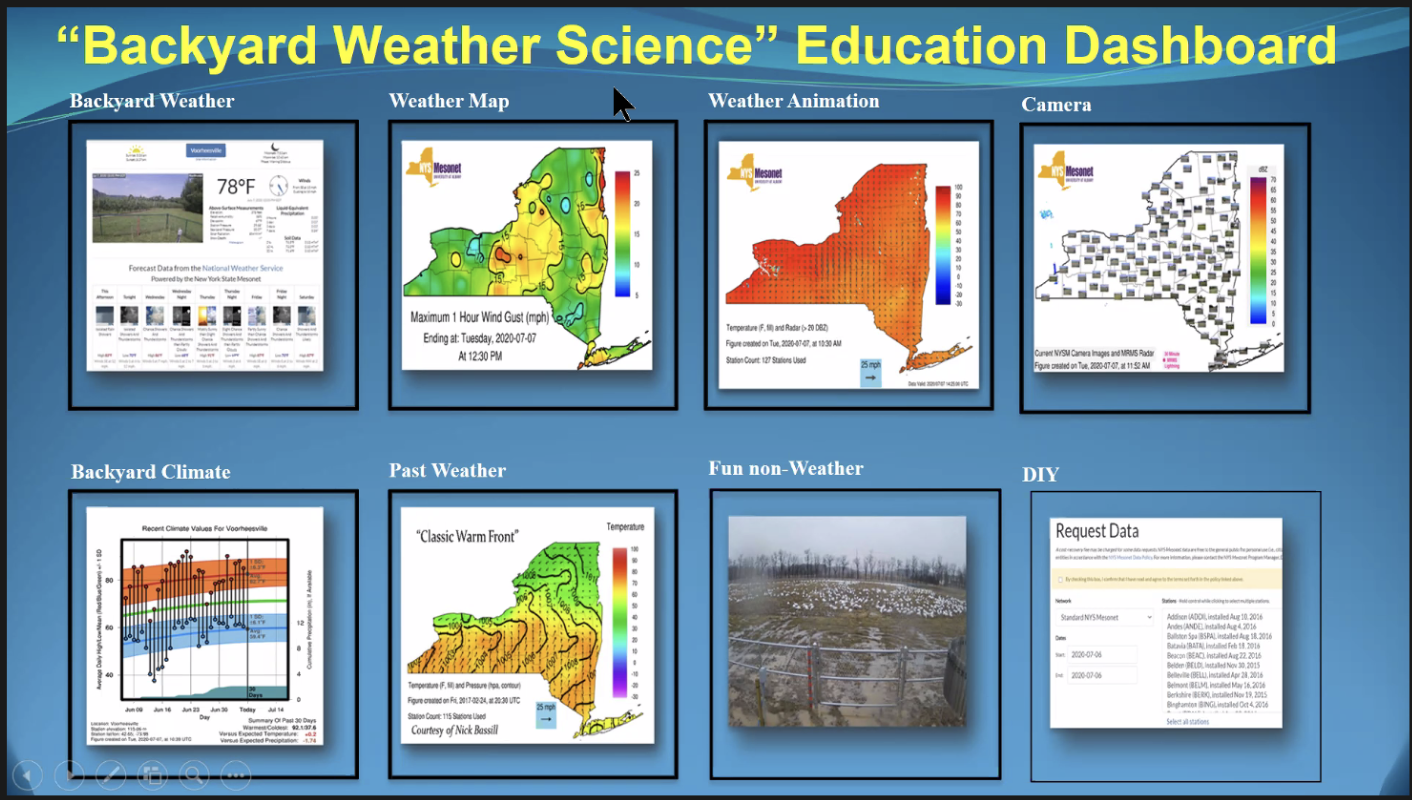 The Mesonet Dashboard includes frequently updated, current and archival data from 126 weather stations across the state, allowing students to access very detailed local info. A Biology teacher in Skaneateles High School summed up her main takeaways from the workshop as “Fabulous pictures, terrific explanations and easy access to great data.”
Pamela Herringon, member of the NYS Academy of Master Teachers and Central NY Master Teacher emeritus, attended the workshop. Currently serving as the Science Instruction Specialist for the East Syracuse Minoa Central School District, Pamela suggested that “Participants might want to apply for the Project Atmosphere Program offered through NOAA and AMS. I believe due to COVID it will be a virtual event- so no travel during the summer away from families- making more people interested in participation?” A terrific idea to continue the professional learning.
We thank Dr. June Wang, Master Teacher Emeritus Crystal Perno, and the University at Albany for bringing these resources to NYS classrooms, ultimately helping to provide students with innovative, engaging STEM learning experiences.
Visit NYS Mesonet at http://www.nysmesonet.org/about/welcome
Visit the Mesonet Dashboard, which includes a video tutorial of how to access the archived data, at https://operations.nysmesonet.org/~nbassill/dashboard/
February 19, 2021
NYS Master Teachers in Long Island are meeting regularly to focus on helping students connect to their classwork and to their classmates whether in remote, hybrid or in-person settings. Their focus on equity in the classroom began with discussion of vast differences in access to devices and broadband and now encompasses many ways to support student success, including differentiated ways for students to demonstrate their understanding and how to address social and emotional learning (SEL) issues that can exacerbate struggles. Participants consider their monthly meetings an essential professional collaboration to discuss ideas to bring back to their classrooms and colleagues.
Starting in June of the 2019-2020 school year, Jessica Chilton (Bellmore-Merrick Central High School District), Nick Lorenzen (Copiague Union Free School District), and Robyn Tornabene (Long Beach City School District) co-facilitate a monthly meeting of teachers representing a diversity of school districts from across Long Island to explore ways to support student learning.
A typical meeting begins with the questions or current situations: Which online programs work best for families sharing the at-home broadband connection? Or how can students write math problems so the teacher can see their work process, not just the final answer?
Participating teachers include math and science, elementary, middle, and high school, and bilingual, ESL and special education teachers, and represent high needs, average needs and low needs school districts. The diversity of the group has been a great asset for deepening insights about the vast array of challenges teachers and students are facing and for generating strategies to address them.
So many things are going on - and you can’t do what you would normally do. It feels like you’re just surviving. Everything is different in the current circumstances - assessment, engagement, attendance, meeting the needs of ENL and Special Education students in a remote setting, using different platforms and extensions (and the platforms you are using often change and are typically more oriented to business and less to education so you have to continually adapt), and there’s the vast difference in household resources, including bandwidth and access to the technologies used for remote learning.
- Nick Lorenzen, Copiague Union Free School District
As facilitators, Jessica, Nick, and Robyn prep for each meeting by discussing available research and deciding the best format to allow time for all teachers to speak about their particular challenge or success with strategies.
Robyn shared, "We wanted to know what the literature says about remote teaching and learning, but realized that the research is based on the very different situation of when students are choosing to take a remote course. We keep looking for the research, but we’re actually on the frontier of this inquiry in our own practice. We have all of these diverse scenarios and need to keep looking at what is working and what isn’t, on many different scales.
One of the most fundamental challenges of teaching during the pandemic that they’ve discussed, though, is not related to content, pedagogy, technology, or managing routines. Nick reflected that, "One of the major things that is missing, even in in-person instruction, due to the physical separation, is social interactions - they’re SO missing…. You have to think about new ways to form connections with students. Normally, you chat as they come into the room, now you have to ask yourself, ‘how can I translate this to remote learning?’”
David Kommor (Bellmore-Merrick Central High School District) shares that he initially viewed “inequities solely through an economic lens, understanding that some of my students do not have access to the technology necessary to excel in a virtual classroom.” Talking with his teacher peers, he is exploring how “inequities exist on an emotional level as well. The home atmosphere has a tremendous impact on students, and I have become more cognizant of how this affects them on a social, emotional, and academic level.”
He continues by noting a few changes to his teaching practice and the feedback from students and families:
I am moving away from summative assessments in favor of project-based assessments. The feedback from my students have been very positive and many of my students said that they have had difficulty with traditional multiple-choice tests and the projects have given them an opportunity to “show” what they know and allows them to be creative at the same time.
David started a new way to engage parents and families
“selecting “Students of the Week” and recognizing students who are working hard and staying engaged. Besides a little certificate and recognition, I also call the parents to let them know personally. This has paid off in dividends and many parents have expressed that they have never received such positive messages about their children. The positive reinforcement has resulted in students remaining engaged and feeling as though they really do matter! While the inequities still exist, we can bridge the gap by helping to meet the needs of our students using a multitude of strategies.
Through their exemplary collaboration with colleagues, these NYS Master Teachers are not merely surviving, they are thriving, even under so much adversity. Robyn closed our interview reflecting on the value of being part of the NYSMTP network.
We’re growing and flourishing as educators, and we’re a part of transforming education in the 21st century for all students. Plus, we are always taking what we learn back to our districts and sharing it with our colleagues."
The NYS Master Teacher Program is grateful for the exemplary work of this team of NYS Master Teachers who, even in these extraordinary times, dedicate themselves to striving for equity in STEM learning for every one of their students.
December 15, 2020
Despite the challenges and limitations related to the COVID-19 pandemic, NYS Master Teachers and Regional Directors are creating inventive ways to connect, collaborate, and share expertise within and beyond the NYSMTP.
With keen awareness of the pandemic’s impact on opportunities for pre-service students to access field placements and mentoring support from practicing teachers, Master Teachers from around the state joined Tuesday/Thursday evening conversations with SUNY Oneonta undergraduates who are majoring in Adolescence Education in STEM fields.
These future STEM educators are finding the opportunity to engage in conversation with experienced classroom teachers invaluable.

Here are a few of their comments:
Through the information provided and the questions asked, I have learned about facets of teaching that I have not truly thought about in great detail until now. I appreciate the tips and advice from the master teachers very much and hope to incorporate their ideas into my classroom someday.
- Emily, Adolescence Chemistry MajorI have found the different perspectives and teaching styles the most valuable from the Master Teachers zoom meetings....The various answers I received from the teachers allowed me to understand the importance of supplementary materials and finding what works best for my future students and I.
- Kerri, Adolescence Education Biology MajorBeing able to bounce ideas between educators is such a joy, and I learn so much information from the wonderful teachers on the panel. I am passionate about finding ways to provide science content to students with a wide range of skills, and the conversations about the different tools experienced teachers use to keep students engaged in their classrooms is beyond valuable to me. ...these meetings have taught me that teaching is an art, and it is connected in ways that newer teachers may not notice yet.
- Jenna, Adolescence Chemistry MajorI think it is so incredible to get the perspective of so many different and amazing teachers. It was great to hear about student teachers they had and things they did wrong, so that I will not end up making those mistakes. The big mistake that some of these student teachers did was not asking for help from the people around them. Now that I know how important it is to ask questions when I am a student teacher I will not be afraid to do this.
- Samantha, A Noyce Scholar
Noyce Scholars are among the students who are involved in the Master Teachers Mentoring Undergraduates in STEM Education series. NSF - SUNY Oneonta Noyce Scholars in Science Education Program prepares, places, and supports qualified Adolescence Education majors who commit to teach STEM in high needs rural or urban schools for at least four years. Offering these discussions as Zoom events has allowed pre-service students to learn from NYS Master Teachers across the state, including several who teach in Large City and Rural, Suburban, and Urban High Needs Districts.
And the Master Teachers involved are also learning from their interactions with SUNY Oneonta pre-service students:
Young teachers always bring fresh ideas and often remind us of ones we have forgotten. That is exciting! Asking questions, gathering data and making conclusions is not just integral to science content, but how we all navigate an ever-changing world with confidence. We know how thrilling (and daunting) the journey into education is and their willingness to participate, ask questions and share ideas is inspiring. How lucky we are to have an opportunity for a series of conversations with preservice teachers. A great idea in a very timely era of unknowns.
- Carla, Utica City School DistrictCreating an opportunity that allows pre-service students to pose questions for experienced teachers who are extremely passionate and honest about their profession and day to day tasks, is a wonderful opportunity that I’ve wanted to be part of for some time now... As excited as a student might be to begin teaching in their own classroom, there are a lot of other emotions and questions that come along on this journey, and I’m so happy that I can help answer some of their questions.
- Jason, Rhinebeck Central School District
This Fall series was instituted by SUNY Oneonta professors who direct the Mohawk Valley Region of the NYSMTP for the Mohawk Valley, Paul Bischoff, Ray Siegrist, and Paul French.
 Paul Bischoff, Professor of Science Education and Noyce Scholars Director, writes from his two hats,
Regarding the undergraduates, engaging in professional dialogue with NYS Master Teachers provides an outstanding opportunity to discuss and reflect on what they are learning in their undergraduate education and content course work, and to realize that even Master Teachers are reflective practitioners always seeking to improve.
And regarding benefits to participating Master Teachers, he writes,
When the Master Teachers listen to, think about, and thoughtfully respond to the questions posed by the undergraduates they reflect on their own practice. Their own thinking about how to best meet the needs of the students they teach may be modified by what they think and the thinking around them.
We are grateful for the exemplary work of this team of educators who, even in these extraordinary times, dedicate themselves to sharing best practice with future teachers. As we have seen, the Covid-19 pandemic has changed many aspects to K-12 education, but it has not hindered the dedication of teachers to collaborate to provide the best learning experience for their students.