


In her 2022 State of the State Address, Governor Hochul set an ambitious goal of increasing the healthcare workforce by 20% to meet the critical shortage that poses a challenge to providing quality healthcare services. The demand for healthcare workers continues to exceed available supply, as we face alarming shortage projections by 2030. Considering the Governor's goal and the shortage, SUNY Chancellor John B. King, Jr. created the SUNY Future of Healthcare Workforce Task Force to leverage SUNY's role in ensuring the availability of highly trained, diverse, and sustainable care. The Task Force called together a vast variety of experts, ultimately engaging over 125 individuals across the SUNY System and healthcare industry to develop recommendations for action and investment of $47 million annually and $75 million in one-time capital.

In March of 2023, the Legislature passed, and the Governor signed, Chapter 134 of the Laws of 2023, permitting nursing programs to utilize simulation based clinical education for 1/3 of clinical hours. This change supports expansion of SUNY capacity- if we ensure our nursing programs have the equipment, staff and training, and physical space to broadly offer quality simulation experience and physical space to broadly offer quality simulation experience.
$3.7 million investment supports 150+ faculty and staff simulation trainings across 24 campuses, the acquisition of 53 new state-of-the-art simulation manikins, and the purchase of essential simulation and medical equipment.
Establishment of centers to provide training, micro-credentials, and inter-professional exercises for SUNY campuses.
A central repository of vetted simulation scenarios, innovative teaching strategies, and best practices for all SUNY campuses.
Fellows gain advanced professional development and leadership opportunities in nursing simulation and contribute to the creation of the SUNY Simulation Shared Resource Library.
$40M allocated to selected state-operated campuses to create exemplary simulation spaces to increase nursing program enrollment through simulation-based education.
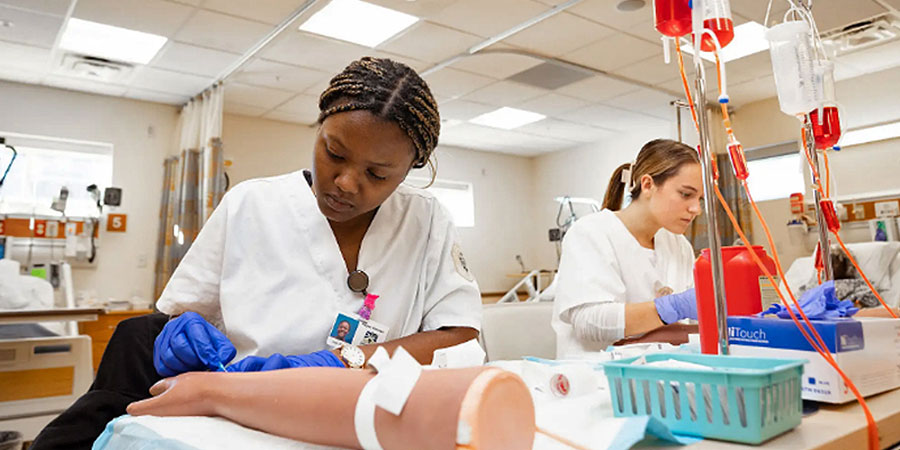
Amidst the shortage of healthcare workers that we are currently facing, another major concern is the lack of healthcare educators. Currently postsecondary health specialty and nursing educators face over 30% employment growth projection by 2030 yet healthcare programs have cited the shortage of healthcare educators as a significant obstacle to increasing healthcare program enrollment. In fact some programs have even had to turn away qualified students because of a lack of educators.
Support baccalaureate-prepared nurses pursuing a master's in nursing at SUNY institutions. Recipients must teach at a SUNY community college for 3 years, creating new nursing educators and increasing capacity by up to 700 students.
Planned lifting of the state retirement cap for recently retired healthcare workers/educators thus encouraging them to return to teaching roles.
Launch of a program where clinicians will serve part-time as SUNY faculty while continuing their clinical roles, aiming to increase program capacity by up to 300 students, and SUNY will pay the differential between faculty and clinician part-time rates.
Establishment of a tuition credit program for healthcare preceptors.
Expansion of healthcare program capacity, including up to 300 additional students, increased funding for additional faculty and more clinical placement opportunities.
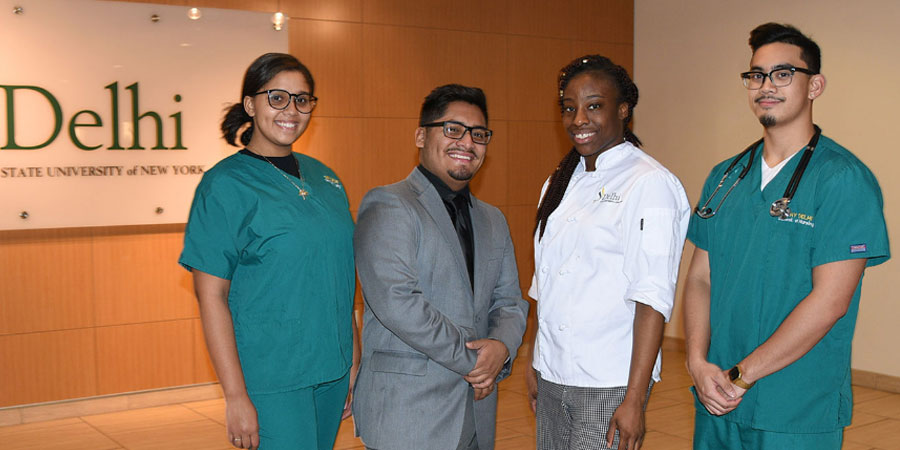
At this time, the healthcare workforce suffers from a lack of diversity, which directly impacts the public health outcomes of those seeking care. SUNY must identify ways to expand the pool of underrepresented students in healthcare professional programs in order to meet the wide range of needs present in the State of New York.
Pilot pre-professional EOP for students interested in mental health careers that will include academic support, guidance, supplemental financial aid, and more to enhance the mental health career pipeline.
Program that provides scholarships, internships, professional/career development workshops, mentoring, and more to students who demonstrate potential for positively affecting the quality of mental health care for NYS residents.
New scholarship program for part-time working adults at SUNY Community Colleges pursuing healthcare pathways to increase accessibility for those entering healthcare fields.
Creation of models to grow the pool of underrepresented students in healthcare professional programs, such as post-baccalaureate programs.
Provides the opportunity for New Yorkers between the ages of 25 and 55 to receive free high quality education in high demand field.
Selected SUNY students engage in paid public service work for 300 hours over the course of an academic year. This opportunity allows students to be paid for meaningful work that can provide lifelong skills as well create lasting impacts in their community.
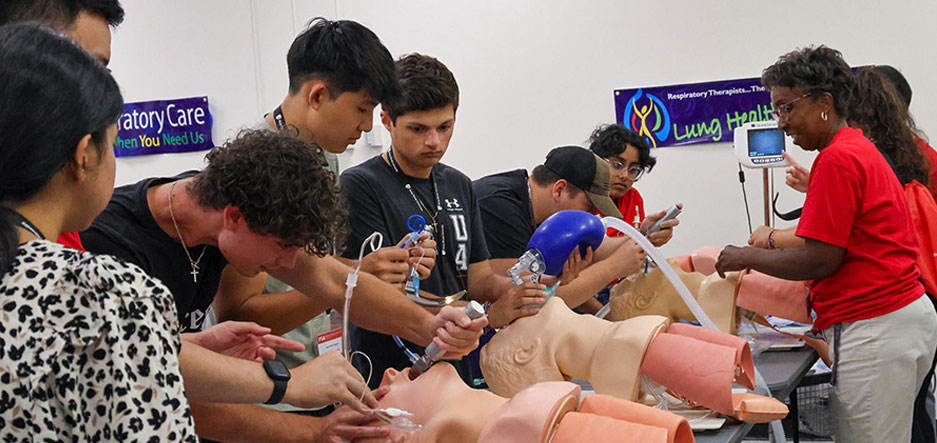
Clear pathways and opportunities for accelerated training into healthcare professions are essential to ensuring a sustainable healthcare workforce. To meet this need, SUNY must develop more accelerated healthcare programs while also fostering strategic partnerships with primary and secondary education, high schools, and industry. These efforts will help enhance the healthcare education pipeline, making it more accessible and responsive to the growing demand for skilled healthcare professionals.
Promote partnerships that provide early exposure to healthcare professions and clarify pathways to healthcare careers.
Support the creation of accelerated healthcare pathways designed to reduce student costs, addressing healthcare workforce shortages, and making training more efficient.
Expand SUNY partnerships and the creation of healthcare program satellites to increase capacity in educating and training merging healthcare professionals in the workforce.
Establish new campus health programs based on demonstrated community need, like at SUNY Sullivan.
Engagement with Workforce Investment Organizations (WIO) to support eligible health programs, including RNs, Mental Health Counselors, Social Workers, and more.
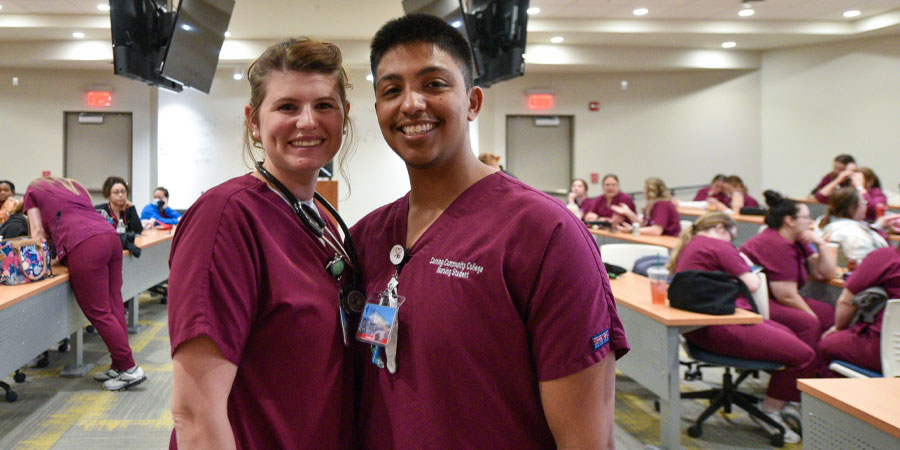
SUNY’s 30 different community colleges offer students the opportunity to save thousands on college with supportive faculty and career focused programs. Last year, our community colleges received $8 million in additional Direct State Tax Support. Each community college that had healthcare programs was rewarded for healthcare workforce development and $100,000 for mental health initiatives. Currently $5 million in ongoing funding has been allocated to support investments by Community Colleges aimed at increasing capacity, enrollment, and completion rates in health programs.
Over 50 new faculty members will be hired across SUNY community colleges (including Finger Lakes Community College Community, Genesee Community College and North Country Community College) to teach in health programs, including 780+ additional nursing faculty slots to reach full capacity.
9 SUNY community colleges will develop 15 new simulation-based faculty positions and invest in simulation equipment at 18 campuses to support multiple health programs.
10 new pathways will be created between SUNY community colleges and other SUNY health programs, along with the development of 2 new healthcare degree programs.
8 community colleges are investing in the development of new health programs and forming partnerships with high schools, BOCES, and community organizations to enhance job placements and create educational pathways.
New collaborations will be established between campuses and employers/labor organizations to strengthen the workforce pipeline.