

Provides strategic oversight for SUNY’s Becoming a Future President Institute, guiding program direction and advancing the broader leadership development portfolio.

Zulaika Rodriguez-Awoliyi serves as the Associate Vice Chancellor for Executive Recruitment and Leadership Development at the State University of New York (SUNY) where she leads the system’s presidential and senior executive recruitment and leadership development strategy across the nation’s largest public higher education system. With more than 20 years of experience in system-level administration, Zulaika is widely recognized for her expertise in identifying, supporting, and advancing transformational leaders.
Her portfolio spans the full executive leadership cycle, including presidential and senior executive searches, onboarding and transition planning, leadership development, performance evaluation, and succession planning. In this role, Zulaika serves as a trusted strategic advisor to the Chancellor, Boards of Trustees, campus presidents, and search committees, guiding high-stakes decision making and ensuring search and evaluation processes reflect SUNYs mission, values, and long-term strategic priorities.
Zulaika also provides leadership for SUNYs system-wide leadership development ecosystem, overseeing the Hispanic Leadership Institute (HLI), Black Leadership Institute (BLI), Disability Support Leadership Institute (DSLI), and the Asian American, Native Hawaiian, Pacific Islander Leadership Institute (AANHPI-LI). Through these programs, she has helped cultivate robust leadership pipelines and expand pathways to advancement for emerging leaders across SUNYs 64 campuses.
Since joining SUNY System Administration in 2004, Zulaika has served under multiple Chancellors, Provosts, and Boards of Trustees in a variety of leadership roles, including Director of Operations and Special Assistant to the Chief of Staff. This breadth of experience has given her a deep institutional knowledge of SUNYs governance, policy environment, and operational complexity, as well as a reputation for discretion, sound judgement, and steady leadership in moments of transition.
A proud first-generation college graduate, Zulaika was born in Rio Piedras, Puerto Rico and raised in Brooklyn, NY. She holds a Bachelor of Arts in English from the College of Saint Rose and a Master of Public Administration (MPA) from the University at Albany. Her personal and professional journey continues to inform her commitment to public higher education as a powerful engine for opportunity, mobility, and community impact.
Known for her exceptional organizational skills, integrity, and human-centered systems thinking, Zulaika brings a strategic yet relational approach to executive leadership work. Her contributions have helped shape SUNYs leadership infrastructure and advance a cohesive, equity-driven approach to developing and identifying the next generation of public higher education leaders. Beyond SUNY, Zulaika serves as a board member of 518Elevated, a College Access and Success organization serving Albany, Schenectady, and Troy, NY, where she supports efforts to connect local students with mentorship, resources, and pathways to higher education and long-term success.
The BFPI Advisory Committee brings together leaders from across higher education. The committee provides strategic guidance and support to help strengthen the institute, enhance the Fellow experience, and sustain BFPI's long-term growth.
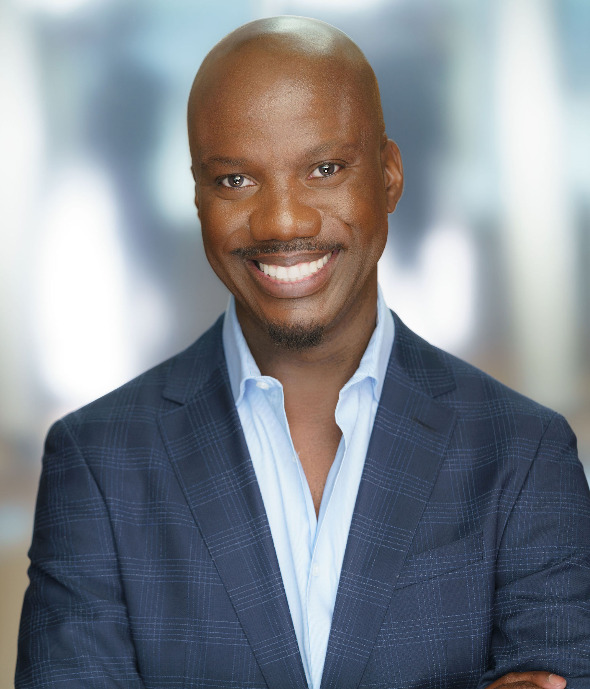
Dr. Shaun Harper is one of the nation’s most highly respected racial and gender equity experts. He is a Provost Professor in the USC Rossier School of Education, Marshall School of Business, and Price School of Public Policy. In 2022, he was appointed University Professor, a distinction bestowed only to 30 of 4,700 USC full-time faculty members. Dr. Harper also is the Clifford and Betty Allen Chair in Urban Leadership, as well as the USC Race and Equity Center's founder and Chief Research Scientist. He served as the 2020-21 American Educational Research Association president and the 2016-17 Association for the Study of Higher Education president. Additionally, he was inducted into the National Academy of Education in 2021 and appointed by U.S. President Joe Biden to the National Board for Education Sciences in 2022.
Dr. Harper’s research focuses primarily on race, gender, and other dimensions of equity in educational, corporate, and policymaking contexts. He has published 13 books and over 100 other academic publications. Review of Research in Education, Teachers College Record, Harvard Educational Review, American Journal of Education, Journal of Higher Education, and Review of Higher Education are some journals in which he has published. His research has been cited in over 28,000 published studies across a vast array of academic fields and disciplines. Atlantic Philanthropies and the Bill & Melinda Gates, Lumina, Ford, Kellogg, ECMC, College Futures, Kresge, Walton, Sloan, and Open Society Foundations have awarded him $26 million in grants. The center he founded also procured more than $25.5 million in contracts and investments during his 14-year tenure as executive director.
The New York Times, Washington Post, Wall Street Journal, Chronicle of Higher Education, and hundreds of other news outlets have quoted Professor Harper and featured his research. He has interviewed on CNN, MSNBC, ESPN, and NPR. He also has testified three times to the United States House of Representatives and spoken at numerous White House convenings. Dr. Harper served on President Barack Obama’s My Brother’s Keeper Advisory Council; on the national education policy committee for the Biden-Harris Campaign; and on California Governor Gavin Newsom’s statewide task force on higher education, racial equity, and COVID-19 recovery. More than 5 million people have read op-eds and essays he has published in the Washington Post, Forbes, TIME, Rolling Stone, Los Angeles Times, Education Week, Inside Higher Ed, and the Chronicle of Higher Education.
The recipient of dozens of top awards in his field and six honorary degrees, Professor Harper has been repeatedly recognized in Education Week as one of the 10 most influential scholars in the field of education; in 2026, he was ranked #3 overall and for the second consecutive year, #1 in education policy. The L.A. Times named him a top diversity, equity and inclusion visionary in 2023 and 2024, as well as one of the top 100 Hollywood entertainment industry business leaders in 2025.

Dr. Donna Linderman is the Senior Vice Chancellor for Student Success for the State University of New York.
In this role, Senior Vice Chancellor Linderman is leading SUNY's systemwide investment through the SUNY Transformation Fund, which is supporting many campus initiatives including the replication of the evidence-based ASAP|ACE degree completion model, upward mobility initiatives, multi-campus transfer partnerships, operational efficiency and essential student supports.
As Senior Vice Chancellor for Student Success at SUNY, Donna's portfolio includes Enrollment Management and Financial Aid, University Life and Opportunity Programs, Transfer and Articulation, the Transformation Fund, Higher Education in Prison, and the Center for Professional Development.
SVC Linderman is also co-leading the SUNY Transfer Task Force which was established to bring together experts from across the SUNY System to be assured that transfer opportunities - particularly vertical transfer between associate and baccalaureate programs - are more fully realized.
Donna previously served as Associate Vice Chancellor for Academic Affairs at the City University of New York (CUNY). Where she led the design and implementation of nation-leading student success initiatives. Linderman was a principal architect of the design and scaling of the CUNY Accelerated Study in Associate Programs (ASAP) model, which has been shown in rigorous, randomized, controlled trial evaluations to double community college completion rates and has been successfully replicated at campuses in New York and other states. Linderman also led the development and execution of CUNY Accelerate, Complete, and Engage (ACE), ASAP at four-year institutions, along with CUNY Start, a nationally recognized initiative to help first-year students with academic gaps successfully enter and succeed in college, and has led successful CUNY system-wide initiatives to improve completion by strengthening academic momentum, reform developmental education, improve educational and employment outcomes for student fathers, and more.
Linderman began her academic career as an Assistant Professor at Brooklyn College and holds a BFA in Drama from the University of Southern California, an MFA in Theatre from Brooklyn College, and an EdD in Higher Education Administration from Northeastern University.
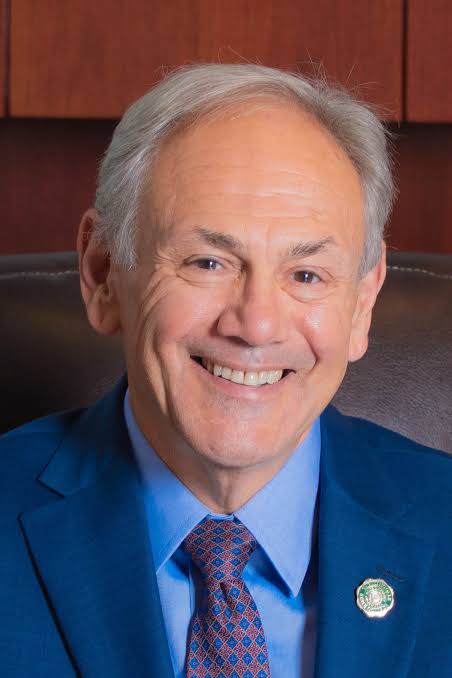
Dr. John S. Nader is the former president of Farmingdale State College, where he served from 2016 to 2024 and helped strengthen the college’s role as a vital public institution serving Long Island and the broader State University of New York system. During his tenure, he focused on expanding academic programs, building partnerships with industry and community colleges, advancing applied learning opportunities, increasing support for student scholarships, improving student services, and enhancing campus facilities.
Under Dr. Nader’s leadership, Farmingdale State College adopted a new strategic plan and mission statement, grew its regional profile, secured significant philanthropic support, and advanced major capital projects, including funding for a new Center for Computer Science and Information Technology Systems. He also worked closely with civic, business, and institutional leaders to align the college’s strengths with regional workforce and economic development needs.
Before joining Farmingdale, Dr. Nader served as provost at SUNY Delhi from 2009 to 2016, following a long career in academic leadership, teaching, and public service. He previously served as mayor of the City of Oneonta, as an Otsego County legislator, and as a community leader involved in efforts such as the establishment of a homeless shelter and the revitalization of a long-dormant downtown property.
Dr. Nader has held leadership roles with regional and higher education organizations, including the Long Island Regional Economic Development Council, the Long Island Regional Advisory Council on Higher Education, the Skyline Athletic Conference, and the NCAA President’s Advisory Group. He also served as president of the SUNY Chief Academic Officers organization and has been active in community and nonprofit governance.
He earned a bachelor’s degree in Politics from Ithaca College and master’s and doctoral degrees in Economics from the New School for Social Research.
Dr. Elsa M. Núñez served as president of Eastern Connecticut State University from 2006 until her retirement in 2024, becoming the first Latina president of a public college or university in New England. With over 20 years of experience as a senior administrator at institutions such as the City University of New York and the University of Maine System, she significantly enhanced Eastern’s academic reputation, leading it to be ranked among the top public universities in the North Region by U.S. News & World Report and recognized by The Princeton Review. Dr. Núñez was a strong advocate for educational access and success for underrepresented students. Under her leadership, Eastern has achieved an 84% retention rate. She also served as chair of the American Association of Colleges and Universities and on the Board of Directors of the Nellie Mae Education Foundation. Committed to environmental sustainability, Eastern was awarded "Green Campus" status by The Princeton Review for 14 years and holds a Gold STARS rating from the Association for the Advancement of Sustainability in Higher Education. Dr. Núñez aimed for carbon neutrality by 2030.
An accomplished author, Dr. Núñez wrote two books, six book chapters, and numerous articles on diversity, equity, and higher education. She will be joining The Harvard University Graduate School of Education as president-in-residence, teaching public policy in higher education.

Dr. Melur K. "Ram" Ramasubramanian currently holds the position of Executive Vice Chancellor for Academic Affairs and Provost; and serves as the President of the SUNY Research Foundation. In this capacity, his focus revolves around collaborating with various stakeholders within SUNY including campus presidents, provosts, vice presidents for research and economic development, deans, faculty, students, and leadership within the SUNY System and Research Foundation.
As the leader of SUNY's academic enterprise, Ramasubramanian's main goal is to drive the implementation of innovative programs, initiatives, policies, and infrastructure. These initiatives strongly support SUNY's academic mission and research objectives, aligning with the Chancellor's strategy of excellence, accessibility, and affordability across all SUNY academic programs.
Before joining SUNY System Administration, Ramasubramanian served as the Vice President for Research at the University of Virginia starting in 2017. His career trajectory includes pivotal roles such as the program director for the Engineering Research Centers program and the lead program director for the Integrative Graduate Education and Research Traineeship program at the National Science Foundation (2009-2012) at the National Science Foundation.
His extensive professional journey features significant contributions including holding the position of D.W. Reynolds Distinguished Professor and department chair of Mechanical Engineering at Clemson University. During his tenure at Clemson, he also held a joint faculty appointment as a professor of bioengineering. Prior to this, he contributed as a professor of mechanical and aerospace engineering at North Carolina State University and held research roles at the James River Corporation (now Georgia-Pacific) and Syracuse University.
Ramasubramanian's research interests span a wide interdisciplinary spectrum encompassing engineering, biology, physical sciences, and medicine. His work delves into diverse areas such as mechanics of manufacturing processes, constitutive models for short fiber composites, bio-manufacturing and tissue engineering, scalable microfluidics, biomimetics, mechatronics, and biomedical devices. His contributions to the field have been extensively published in engineering and biomedical journals, and he has notably served as an associate editor for IEEE Access - The Multidisciplinary Open Access Journal. He continues his research pursuits in tissue engineering, actively advising a PhD student at the University of Virginia.
He received his BSME from the National Institute of Technology, India; MS from Miami University, and a PhD in Mechanical Engineering from Syracuse University. He is a fellow of ASME, TAPPI, AIMBE, and a senior member of IEEE.

Currently serving as the sixth full President in the history of SUNY Old Westbury, Dr. Timothy E. Sams has spent the last 30 years driven by the principles of access, excellence, success, and impact. His trail of accomplishments attests to his unwavering commitment to delivering on higher education’s promise of using excellence to achieve student transformation and social progress. His impressive career has taken him to an array of selective institutions around the country and the world. As he moved from learning the fundamentals of building student success programs to innovating new ones as a senior leader, Dr. Sams’ commitment to educational justice by inclusive excellence, praxis, and purpose-driven education has characterized his work of elevating the student experience and transforming liberal arts education.
Never losing sight of his opportunity program roots as an Upward Bound and an Educational Opportunity Program student in his youth, and Higher Educational Opportunity Program Counselor early in his career, Dr. Sams held fast to the belief that “to whom much is given, much is required.” As he moved toward senior leadership positions, first as Associate Dean of Students at NYU-Abu Dhabi, his approach to student success became even more entrepreneurial in spirit. For the upstart global university, he inaugurated the Student Affairs office that supported students within a residential college framework. Moving to the STEM education space as Vice President for Student Life at Rensselaer Polytechnic Institute, and with a keen interest in STEM success for underrepresented students, he strengthened student support for key populations, increased staff diversity, and oversaw the creation of a STEM bridge program that increased retention rates for underrepresented students.
As a Senior Vice President for Student Development at Morehouse College, Dr. Sams initiated a residential college program that galvanized the student experience and improved upon educational outcomes. Partnering with faculty leaders, Dr. Sams constructed a holistic learning environment guided by the principle that “learning is everywhere.” Under his leadership at Morehouse, the nation’s first ROTC Center of Excellence and the nation’s second campus-based PrEP program were formed. These measures, coupled with his efforts to improve operational efficiency, provided for a seamless and comprehensive educational experience, leading Morehouse to raise student satisfaction and success rates, and to send greater numbers of students off to pursue terminal degrees.
Led by his desire to elevate institutions through strategic change management and an innovative residential college framework, Dr. Sams moved to Prairie View A&M University (PVAMU) as its Vice President for Student Affairs in 2018. In his short time at PVAMU, he increased the number of divisional units by 20%, and improved student support through the creation of the university’s first emergency resource center and LGBTQ+ resource center. Also, he launched the residential college, adding a 550 bed Global Challenges capstone living experience, a second-year experience, a badging program, and enhanced the first-year experience.
Raised by his paternal grandparents, Dr. Sams grew up on the south side of Syracuse, New York, where he was an avid Boy Scout, basketball player, and student activist. He earned his Bachelor of Arts degree in History and Sociology from Union College in Schenectady, New York, and Master of Arts degree in Africana Studies from the State University of New York at Albany. He earned his Ph.D. in African American Studies from Temple University. His research and teaching interests are Ancient Egypt, West African Literature, the African American Family and Community, and Pan Africanism. He is a Minority Serving Institute Aspiring Leaders Fellow and recipient of the 2020 Champions for Student Success Award from American Campus Communities.

An internationally distinguished researcher and higher education leader, Satish K. Tripathi, PhD, is President Emeritus and University Professor at the University at Buffalo. As the longest-serving president (2011-2026) in UB’s history, he oversaw a period of significant growth in research and scholarly activity, enhancing its stature as a premier public research university.
Prior to his presidential tenure, Tripathi served as UB’s provost from 2004-2011. From 1997-2004, he was the dean and William R. Johnson Jr. Family Chair and Distinguished Professor of Computer Science and Engineering at the Bourns College of Engineering at the University of California, Riverside. Previously, he spent 19 years as a professor of computer science at the University of Maryland, including seven as department chair.
In 2024, Tripathi was elected to the American Academy of Arts and Sciences. A fellow of the Institute of Electrical and Electronics Engineers, the American Association for the Advancement of Science and the International Academy of Artificial Intelligence Sciences, he has published more than 200 scholarly papers, supervised more than 30 doctoral and postdoctoral students and served on program committees of numerous international conferences.
Tripathi graduated at the top of his class from Banaras Hindu University (BHU). He holds a master’s degree and doctorate in computer science from the University of Toronto, as well as master’s degrees in statistics from the University of Alberta and BHU. He has received honorary doctorates from Maharaja Surajmal Brij University, the Indian Institute of Information Technology, Allahabad, and Brock University.